Thailand
Thailand's Oil Plan 2026: Phasing Out Gasohol 91 and Promoting E20
The Thai government unveils its Oil Plan 2026, targeting a transition to biofuels and the elimination of Gasohol 91 by 2027, amid rising global energy pressures.
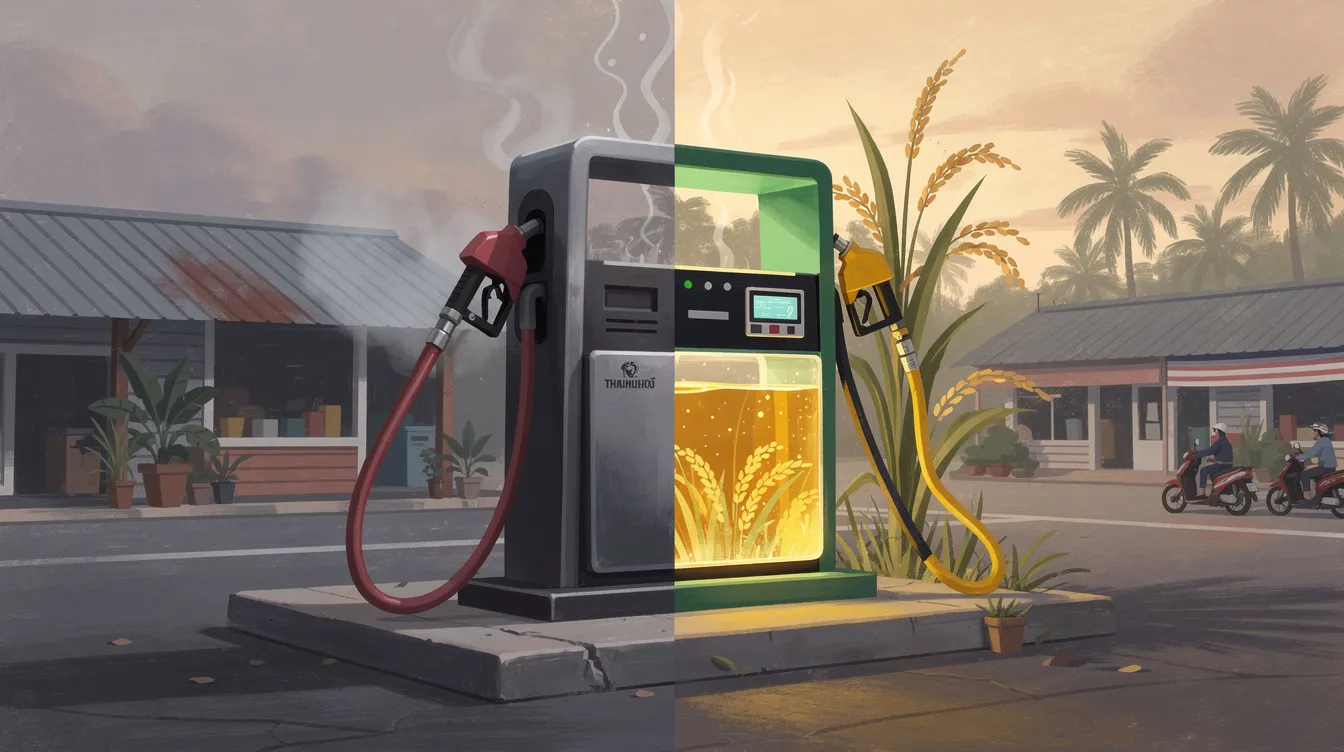
The Thai government has announced its Oil Plan 2026, which sets ambitious targets for the country's energy transition, including the elimination of Gasohol 91 by 2027 and the promotion of E20 as the primary fuel. This plan reflects a broader strategy to integrate biofuels into the national energy mix, aligning with global sustainability goals.
According to Wuttitak Tantivess, Deputy Director-General of the Department of Energy Business, the new plan is not starting from scratch but builds upon the previous Oil Plan 2024. The revised strategy aims to respond to changing global energy demands and geopolitical pressures. The government intends to push for a significant increase in the use of E20, targeting it to comprise 50% of the fuel mix by 2032, while also promoting B20 diesel to absorb excess palm oil production for domestic energy use.
Three key factors are driving this energy transition. First, Thailand has accelerated its net-zero emissions goal from 2065 to 2050, as announced at the COP26 climate summit. This shift necessitates a drastic reduction in greenhouse gas emissions from 293 million tons of CO2 equivalent in 2025 to 152 million tons by 2035, ultimately reaching zero by 2050.
“We must ensure that the transition does not lead to increased energy costs for consumers.”Anukorn Charnveerakul, Minister of Interior
Secondly, the ongoing geopolitical crisis, particularly the conflict involving the U.S., Israel, and Iran, has led to a 20% drop in global oil supply, pushing prices above $100 per barrel. This situation has prompted Thailand to rethink its energy security and reliance on imported fossil fuels.
Lastly, the rise of electric and hybrid vehicles is changing consumer behavior, with many drivers now filling up less frequently. This trend is expected to continue, further influencing fuel demand in the coming years.
As part of the energy transition, the government plans to phase out Gasohol 91 and replace it with E20 and B7 diesel as the base fuels. The transition is designed to be gradual, ensuring that consumers have confidence in using biofuel blends. Currently, the daily consumption of E20 has increased from 5-6 million liters to 15-20 million liters, indicating a positive shift in public acceptance.
“This plan is not starting from zero; it builds on previous strategies to adapt to new global demands.”Wuttitak Tantivess, Deputy Director-General of the Department of Energy Business
Despite these changes, there are concerns about the implications for fuel prices and energy costs. Anukorn Charnveerakul, Thailand's Minister of Interior, emphasized that any structural changes to the fuel market must be supported by data and public trust in biofuels. The government aims to ensure that the transition does not lead to increased energy costs for consumers.
Industry experts have pointed out that the removal of Gasohol 91 could alleviate some financial burdens associated with the fuel subsidy fund, which has become a significant liability. However, they stress that the government must clearly articulate how these changes will address existing energy price issues.
As Thailand embarks on this energy transition, the Oil Plan 2026 will play a crucial role in shaping the country's fuel landscape for the next three decades, with a clear focus on sustainability and energy security.