Philippines
Philippines Launches $1 Billion Subsidy to Boost Electric Vehicle Manufacturing
The Philippine government introduces a substantial incentive program to enhance local production of electric vehicles and attract foreign investments.
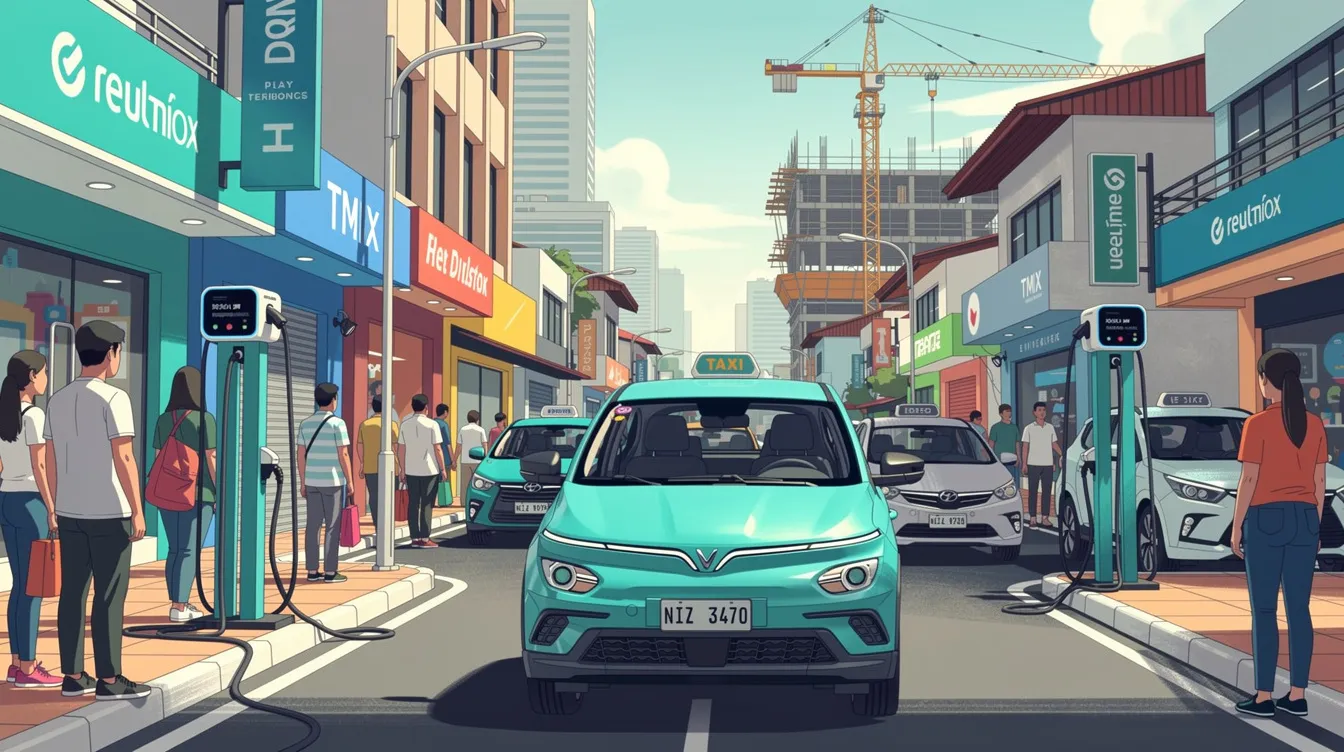
In a strategic move to bolster its automotive industry, the Philippines has unveiled a $1 billion subsidy program designed to stimulate local electric vehicle (EV) manufacturing. This initiative aims to provide up to 40% co-funding for battery production models, thereby enhancing the country’s supply chains and positioning it as a competitive player in Southeast Asia's burgeoning EV market.
The Philippine Department of Trade and Industry (DTI) has emphasized that the subsidy is part of a broader effort to attract foreign investments in the EV sector. This follows a regional trend, as neighboring countries like Thailand have also ramped up their investments in electric vehicle manufacturing, with Thailand recently reporting a surge in EV investments totaling $3.8 billion, according to InsideASEAN.
Officials anticipate that this subsidy will promote local manufacturing, create jobs, and stimulate economic growth. The DTI noted that the program is expected to attract global automotive players looking to establish production facilities in the Philippines. Trade Secretary Cristina Roque referred to the initiative as a landmark policy that strengthens the Philippines’ position as an emerging regional hub for EV manufacturing, thanking President Ferdinand Marcos Jr. for his support.
Roque highlighted that the program fulfills the Electric Vehicle Industry Development Act’s mandate to boost domestic manufacturing capacity and accelerate the local automotive industry’s shift to electric mobility. The incentives will be performance-based, tied to actual investment and production outcomes, ensuring that government support translates into tangible gains such as higher local output and job creation for Filipino workers.
In addition to the manufacturing subsidy, the Philippines has been actively seeking to secure financing for development projects, particularly as it transitions to upper-middle-income status. This shift may limit the country's access to concessional loans, making the timely implementation of such initiatives crucial for sustaining economic growth. The DTI and the Board of Investments (BOI) plan to collaborate with industry stakeholders to ensure the effective rollout of the program.
As the Philippines embarks on this initiative, it faces competition from established players in the region. For instance, Mitsubishi Motors has announced a $470 million investment in Thailand's EV sector, further intensifying the competitive landscape. Analysts suggest that the Philippines must leverage its unique advantages to differentiate itself in the market. Notably, the BOI is exploring ways to position the Philippines as a regional hub for EV talent development, addressing the shortage of skilled technical professionals, which remains a major hurdle to attracting high-value investments.
Indonesian coverage of the subsidy program has focused on the broader implications for regional competitiveness and the potential for increased collaboration within ASEAN. Indonesian outlets have pointed out that the Philippines' initiative could foster stronger ties among member states, enhancing collective efforts towards sustainable transportation solutions. In contrast, Philippine media framed the initiative as a critical step towards self-sufficiency in EV production and a means to attract foreign investments. This divergence highlights differing national priorities, with Indonesia emphasizing regional integration and collaboration, while the Philippines underscores domestic capacity building and economic independence.
Furthermore, Philippine outlets have reported on the urgency of this initiative, citing the need to catch up with neighboring countries that are already advancing in the EV sector. The Manila Times noted that the subsidy is part of a larger strategy to ensure that the Philippines does not fall behind in the global EV race, reflecting a national concern for economic competitiveness.
Meanwhile, Thai media have reported on the competitive landscape within the region, noting that Japanese automakers are actively seeking to capture a share of the EV market. According to Prachachat, companies like Honda and Mazda are preparing to introduce new EV models, leveraging trade agreements to enhance their market position against Chinese manufacturers. This focus on competition and market dynamics contrasts with the Philippines' emphasis on domestic production capabilities, further illustrating the differing national narratives surrounding the EV sector.