Thailand
Thailand's EV Investment Surges to $3.8 Billion Amid Global Supply Chain Push
The Board of Investment (BOI) reports significant growth in electric vehicle investments, aiming to position Thailand as a regional EV manufacturing hub.
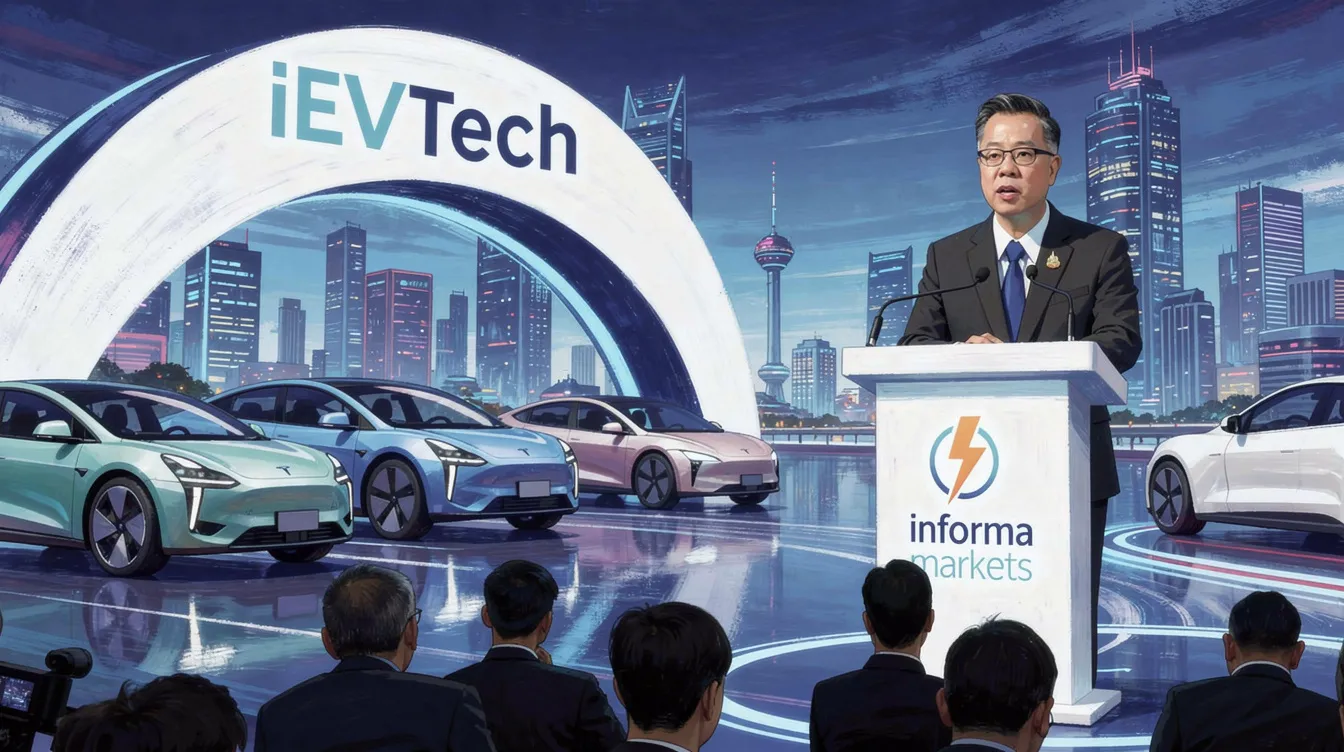
Thailand's electric vehicle (EV) sector is experiencing substantial growth, with the Board of Investment (BOI) announcing the approval of 198 projects valued at approximately 137 billion baht ($3.8 billion) as of May 2023. This investment encompasses a wide range of activities, including the production of battery electric vehicles (BEVs), hybrid electric vehicles (HEVs), batteries, essential components, and charging stations.
According to Naruetum Therdsathira, Secretary-General of the BOI and Secretary of the National Electric Vehicle Policy Committee, the investments include 39.5 billion baht ($1.1 billion) for 18 BEV projects, 29.9 billion baht ($850 million) for seven HEV projects, and 9.4 billion baht ($265 million) for seven plug-in hybrid electric vehicle (PHEV) projects. Additionally, 33.5 billion baht ($950 million) is allocated for battery and energy storage systems across 57 projects.
The BOI has also facilitated the establishment of 42 charging stations, with plans to install over 22,900 charging points nationwide, including more than 10,000 fast chargers. This infrastructure is critical as Thailand seeks to enhance its EV ecosystem and support the growing demand for electric mobility.
In recent years, several major automotive manufacturers have begun production in Thailand, including Mercedes-Benz, Great Wall Motor, and BYD, among others. By 2026, new manufacturers such as BMW and Hyundai Mobility are expected to join the market. Currently, these EV projects have created over 16,000 jobs for Thai workers, reinforcing Thailand's position as a manufacturing hub for electric vehicles in the region.
“This shift presents both challenges and opportunities for Thailand to become a central hub for the EV supply chain and ecosystem in the region, alongside job creation and the development of skilled labor.”Naruetum Therdsathira, Secretary-General of the BOI
Furthermore, the BOI is actively promoting Thai companies' participation in the global EV supply chain through joint ventures with foreign firms. Initiatives such as business matching events at Subcon Thailand and Sourcing Day have facilitated over 1,200 partnerships, connecting more than 800 capable Thai parts manufacturers with EV automakers. The BOI anticipates that these efforts will generate domestic procurement value exceeding 60 billion baht ($1.7 billion).
Naruetum emphasized the significance of the transition to electric vehicles, stating, "This shift presents both challenges and opportunities for Thailand to become a central hub for the EV supply chain and ecosystem in the region, alongside job creation and the development of skilled labor." His comments were made during the opening of the International Electric Vehicle Technology Conference and Exhibition (iEVTech) 2026, which gathered various EV stakeholders from across Asia.
The iEVTech 2026 event, organized by the Thai Electric Vehicle Association (EVAT), aims to foster collaboration and innovation in the EV sector, with participation from organizations such as the Asian Electric Vehicle Federation and counterparts from Malaysia, Indonesia, Singapore, the Philippines, Laos, China, and Hong Kong.