Philippines
Philippines Coffee Production Faces Decline Due to El Niño
As El Niño threatens agricultural yields, the Philippine Coffee Board anticipates a significant drop in coffee output, urging farmers to adapt to changing climate conditions.
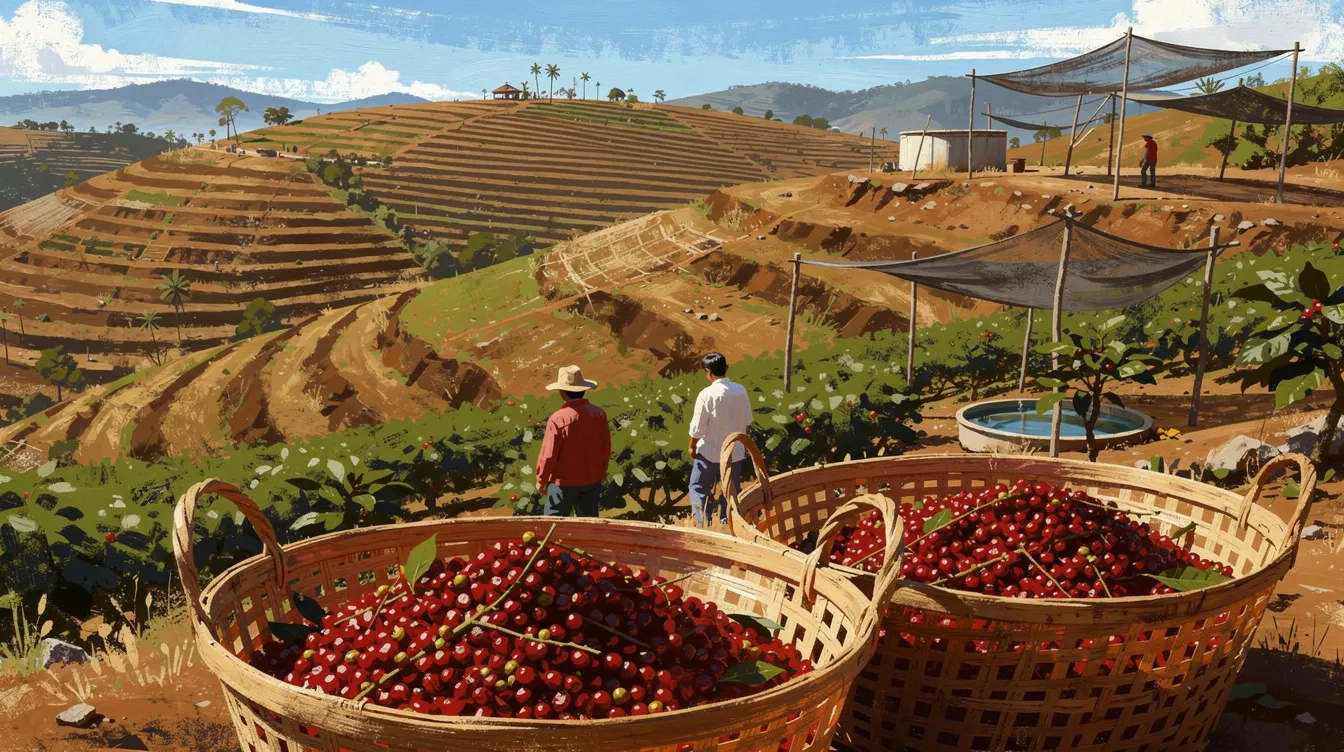
The Philippine Coffee Board Inc. (PCBI) has projected that the country's coffee production may fall below 30,000 metric tons (MT) in 2026, a significant decline attributed to the ongoing effects of El Niño and rising global temperatures. PCBI Chairman Pacita “Chit” Juan emphasized that the changing climate is forcing coffee cultivation to higher elevations, with traditional growing areas becoming less viable.
Juan noted that the Philippines produced approximately 35,650 MT of green coffee beans in 2025, marking an increase from 31,980 MT in 2024. A reduction in output below 30,000 MT would represent a decline of more than 15 percent. Juan said they might not reach 30,000 metric tons because of the rate it’s going during the 2nd Philippine Coffee Sustainability Congress held in Makati.
“They might not reach 30,000 metric tons because of the rate it’s going.”Pacita 'Chit' Juan, Chairman, Philippine Coffee Board Inc.
To combat the challenges posed by El Niño, Juan suggested that farmers consider planting coffee varieties better suited to warmer, drier conditions, such as Liberica, Excelsa, and Robusta. These species can thrive at lower elevations, unlike Arabica, which is planted at cooler sites at elevations of 1,800 to 2,000 meters. Juan explained that Liberica, Robusta, and Excelsa currently grow at 200 to 300 meters and could be planted where Arabica is currently grown, so coffee production can be sustained.
PCBI plans to help farmers by providing planting materials for these varieties. Juan highlighted the importance of local government units (LGUs) in supporting farmers by providing fertilizer and building dryers, emphasizing that support happens at the grassroots level.
“Their solution is really to give farmers alternatives.”Pacita 'Chit' Juan, Chairman, Philippine Coffee Board Inc.
The total annual coffee requirement for the Philippines is estimated to be between 150,000 to 200,000 MT, with imports currently fulfilling a significant portion of this demand. Mindanao remains the leading region for coffee production, particularly for Robusta, which is favored for its adaptability to local conditions.
“Juan highlighted the importance of local government units in supporting farmers by providing fertilizer and building dryers.”Pacita 'Chit' Juan, Chairman, Philippine Coffee Board Inc.
Moreover, the Philippine Council for Agriculture, Aquatic and Natural Resources Research and Development (DOST-PCAARRD) has initiated training workshops aimed at equipping coffee and sugarcane farmers with tools to assess and adapt to climate change. These workshops focus on developing actionable strategies to enhance resilience against climate-induced vulnerabilities, emphasizing participatory decision-making among farmers.
As the country grapples with the implications of El Niño, local initiatives such as the “A Farm to Cup Project” in Batangas City, which involved the planting of 1,000 Liberica coffee seedlings in December 2025, reflect a growing commitment to bolster the local coffee industry amidst these challenges.