Philippines
Philippine Government Allocates Billions to Combat Super El Niño Effects
In preparation for the anticipated super El Niño, the Philippine government has earmarked substantial funds to support agriculture and disaster management.
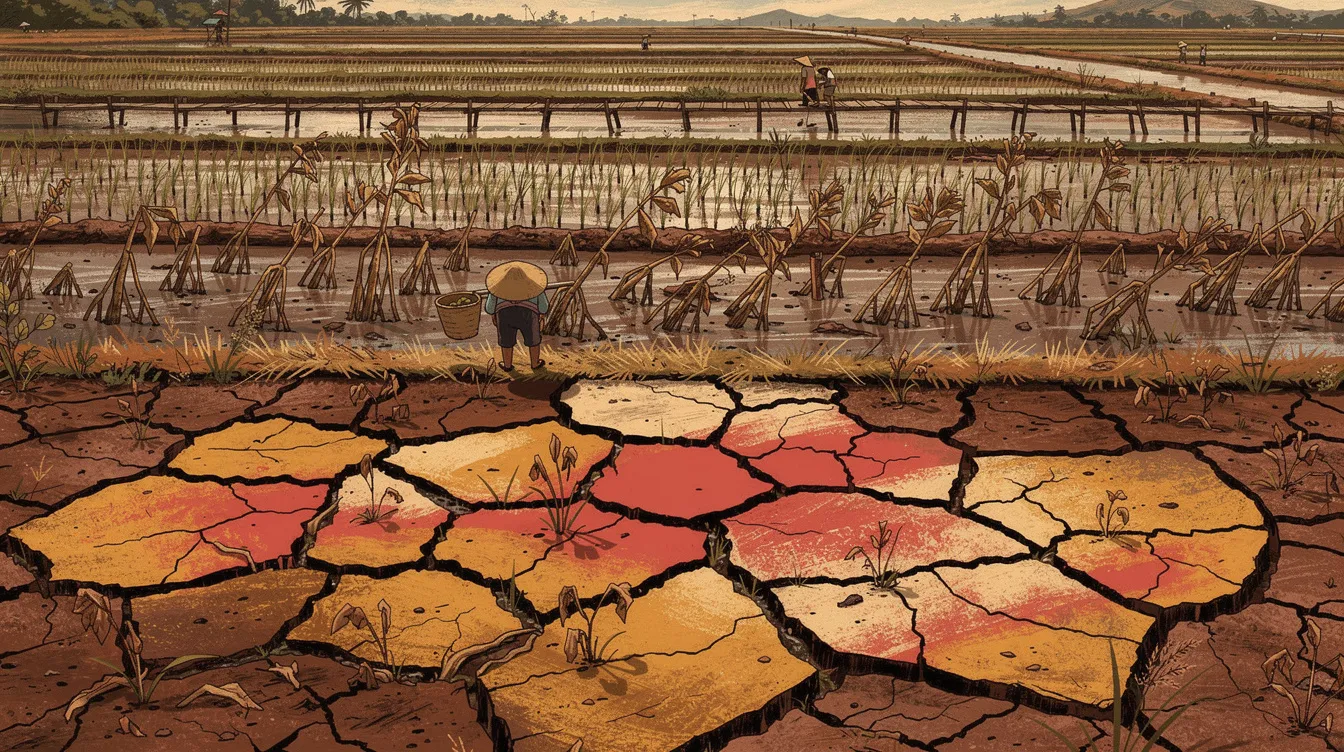
The Philippine government has announced a significant allocation of funds aimed at mitigating the effects of the impending super El Niño, which is expected to exacerbate climate-related challenges across the nation. In a recent press briefing, Palace Press Office spokesperson Claire Castro detailed that for the year 2026, the government has earmarked ₱6.2 billion (approximately $110 million) for the Department of Agriculture (DA) to assist farmers and fishermen impacted by adverse climate conditions and rising fuel costs.
Additionally, a total of ₱39.83 billion (around $710 million) has been designated under the 2026 National Disaster Risk Reduction and Management Fund (NDRRMF) to address climate-related events. For the proposed 2027 budget, allocations include ₱45.67 billion (about $810 million) for the NDRRMF, ₱9.885 billion (approximately $175 million) for Quick Response Funds, ₱11.18 billion (around $200 million) for rice buffer stocking by the National Food Authority, ₱4.5 billion (about $80 million) for crop insurance, and ₱46.356 billion (roughly $820 million) for the National Irrigation Administration (NIA).
“The DBM itself has stated that we really need government spending, because low government expenditure impacts our economy. So, this really needs to be prioritized — especially infrastructure.”Claire Castro, Palace Press Office
Castro noted that despite warnings from the Department of Budget and Management (DBM) regarding a potential slowdown in government spending—particularly in infrastructure—government expenditure remains a priority. She mentioned that the DBM has indicated the necessity of government spending, as low government expenditure impacts the economy, and emphasized the need for prioritization, especially in infrastructure.
In light of the looming climate phenomenon, President Ferdinand Marcos Jr. has reiterated the government's commitment to increasing public works spending to bolster economic growth. The reactivation of the Task Force El Niño under Executive Order 53 aims to coordinate national action plans to manage the anticipated impacts on water, food, energy security, and public health. This task force includes various agencies such as the Department of Science and Technology-Philippine Atmospheric, Geophysical and Astronomical Services Administration (DOST-Pagasa), the DA, and the NIA.
“If the drought persists, not only will farmers lose their harvests and income, but food prices will also rise — and our poorest countrymen will be the first to suffer the consequences.”Senator Erwin Tulfo
In a related development, Senator Erwin Tulfo has urged the government to accelerate preparations for the super El Niño, advocating for stronger measures to safeguard food production, water supplies, and public health from prolonged heat and drought. He cited data from the DA showing that agricultural losses had reached ₱6.87 billion (approximately $122 million) as of late September, affecting over 223,000 farmers. Tulfo warned that if drought conditions persist, not only will farmers suffer financial losses, but food prices are likely to rise, disproportionately affecting the country’s most vulnerable populations.
Moreover, Tulfo called for immediate identification of drought-vulnerable areas, enhancement of irrigation systems, and timely provision of crop insurance and market assistance to affected farmers. He also highlighted the interconnectedness of water supplies for households, agriculture, industry, and power generation, urging more proactive management of these resources. He proposed the establishment of a dedicated Department of Water Resources to effectively manage the country’s water resources and mitigate the effects of prolonged drought.
“We should not be caught off guard. The warnings are already there — from our own weather bureau and international experts.”Senator Jinggoy Estrada
Senator Jinggoy Estrada has also initiated a Senate inquiry into the government's preparedness for the anticipated super El Niño, filing Senate Resolution 656 to assess contingency plans and resources. He stressed the importance of ensuring that the government is ready to respond effectively, stating that the warnings are already present from both the local weather bureau and international experts.
As the nation braces for the potential impacts of super El Niño, officials have cautioned against panic-buying and hoarding of essential supplies, assuring the public that necessities will remain available. Castro warned consumers against panic-buying, emphasizing the need for proper preparation rather than panic.