Indonesia
Why the World's Most Optimistic Country Has Young People Trending 'Just Flee First'
Ipsos says 90 per cent of Indonesians expect a better year. Their middle class has lost nine million people since 2019, and one in seven young Indonesians is jobless. Both moods are real — and here they move faster than anywhere on earth.
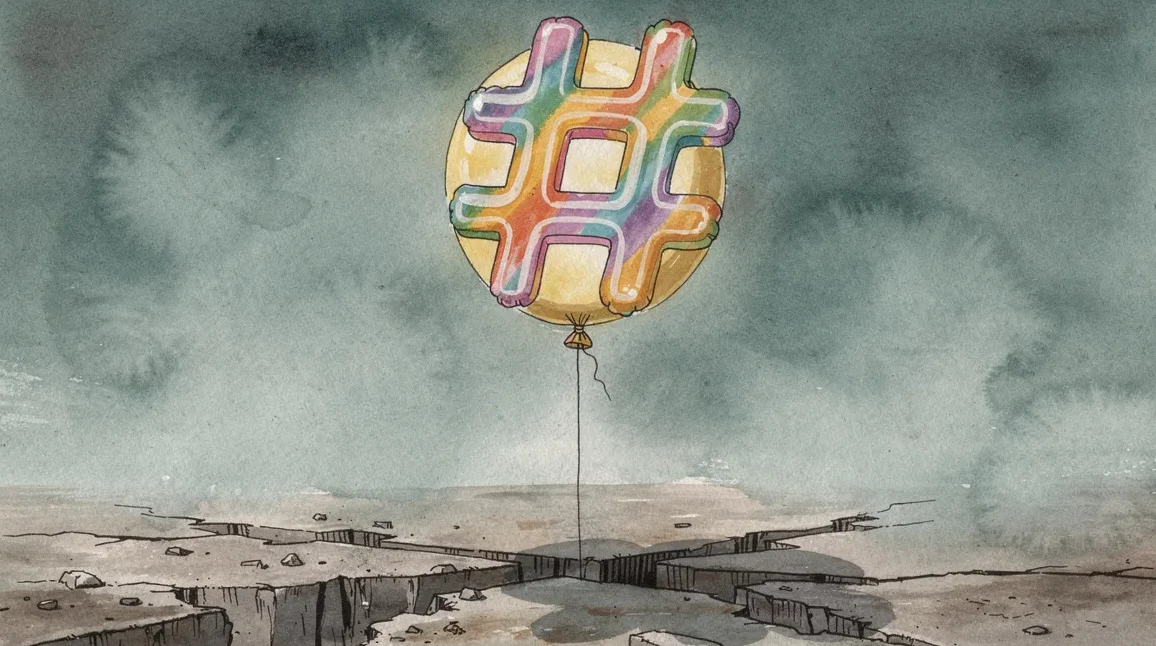
Ask Indonesians how next year will go and you get the most cheerful answer on earth. In Ipsos's global survey, roughly 90 per cent said 2026 would bring more good than 2025 — the highest score of any country polled.
Now look at what young Indonesians have been posting. One of the largest hashtags of the past year translates as "just flee first" — #KaburAjaDulu, a rolling conversation about leaving the country to find work. It gathered something on the order of 20 billion interactions in two months.
Both things are true, at once, about the same country. That contradiction — not any particular hashtag — is the thing worth understanding about Indonesia right now.
The case for gloom is arithmetic
Start with the middle class, because that is where the story lives. It peaked at 57.33 million people in 2019. By 2024 it was 47.85 million. By 2025, 46.7 million — 16.6 per cent of the population, down from 17.1 per cent a year earlier.
| Year | Middle class | Share of population |
|---|---|---|
| 2019 | 57.33m | — |
| 2024 | 47.85m | 17.1% |
| 2025 | 46.7m | 16.6% |
Roughly nine and a half million people have dropped out of Indonesia's middle class since 2019. Sources: BPS figures as cited by UGM economists and The PRAKARSA.
They did not vanish; they slid. Some 142 million Indonesians are now counted as vulnerable — not poor, but close enough that one bad month would do it. The share of workers earning a middle-class income has fallen from 14.5 per cent in 2018 to around 7 per cent.
The jobs that might reverse this are not arriving. Manufacturing has slipped to about 19 per cent of GDP. The manpower ministry logged 88,519 layoffs in 2025, up 13.5 per cent on the year, and another 23,470 in the first five months of 2026 alone. Real wages in the biggest employing sectors — manufacturing, trade, construction — are still contracting. What work does appear is increasingly survival work: gig, informal, low-productivity jobs that cover today and lead nowhere.
It lands hardest on the young. Youth unemployment hit 16.26 per cent in late 2025, the worst of any age group and more than three times the national rate of about 4.9 per cent. The World Bank puts the same fact more bluntly: one in seven young Indonesians is out of work. Seen against that, #KaburAjaDulu is not a mood. It is a labour-market statistic with a punchline.
The case for optimism is also real
And yet the optimism is neither delusion nor invention. The economy is still growing at about 5 per cent a year. That undershoots the government's 5.4 per cent target and badly undershoots the 8 per cent President Prabowo Subianto promised — but it is growth most of the world would take. The rupiah has drifted to around 16,400 to the dollar against a budget assumption of 16,000, which stings importers without breaking anything.
More to the point, Indonesia is young, its domestic market is vast, and its national project — process our own minerals, build our own industry, stop selling raw ore to other people's factories — is one most Indonesians actually want. Optimism is a reasonable reading of a country of some 285 million with time on its side. Pessimism is a reasonable reading of this month's payslip.
Indonesians are not confused. They are holding both at once: sunny about the decade, grim about the quarter. What looks from outside like a mood swing is often just which of those two truths is nearest to hand.
And the mood moves faster here than anywhere
This is where the country becomes genuinely unusual. Indonesia is among the most intensely online populations on the planet: about 230 million people online, 80.5 per cent penetration, some 180 million social-media identities, an average of three hours seventeen minutes a day on social platforms, and TikTok's single largest market by users.
A public that size, moving that fast, does not hold a subject for long. When something breaks here it is, for a few days, the only thing — the country's whole creative energy turns on it, in memes and songs and jokes, until the subject has been wrung dry and there is nothing left to say. Then everyone moves on, together. #KaburAjaDulu gathered its 20 billion interactions and receded, having changed no policy and, so far as anyone can measure, no migration plans.
There is a reading of this that is restorative rather than shallow. A public that metabolises a shock in a week is not a public that carries it for a decade. Nothing is left to linger; whatever that costs in follow-through, it doubles as a kind of health.
Which is why the slogans keep failing
Watch the mood swing in the hashtags and a rhythm appears. A grievance goes vertical; an optimism phrase arrives to meet it.
| The wave | What it was | The optimism answer |
|---|---|---|
| #IndonesiaGelap | Feb 2025 protests over ~US$19bn of budget cuts; ~3 million posts | #IndonesiaTerang — 2,209 posts |
| #KaburAjaDulu | "Just flee first" — young Indonesians on leaving; ~20bn interactions | — |
| Rupiah slide | Falling currency, wobbling confidence | #BuyIndonesia — economic nationalism |
| Mid-2026 unease | Layoffs, squeezed wages, protests back in Jakarta | Optimisme Bangun Negeri · #IndonesiaTakSuram |
"Tak suram" (not gloomy) answers "gelap" (dark) the way "terang" (bright) did a year earlier. Sources: Monash University Indonesia; DataReportal; press reports.
This week's entries are Optimisme Bangun Negeri — "optimism to build the nation" — and #IndonesiaTakSuram, "Indonesia is not gloomy." To an ear that knows the language they read like slogans rather than speech: sunny, civic, faintly formal, the kind of thing printed on a banner. Officials talk this way too. Answering the Dark Indonesia protests, State Secretary Prasetyo Hadi said there was "no dark Indonesia" and that "we as a nation must be optimistic."
The trouble is measurable. When #IndonesiaGelap drew some three million posts, the counter-phrase #IndonesiaTerang managed 2,209 — 0.0007 per cent of the wave it was answering, by Monash University Indonesia's count. A 2026 network analysis in Communication Research and Practice found the pattern held: protest conversation stayed "stable and dominant," while counter-narratives registered as "short-lived spikes" that did not shift engagement.
Counter-narratives registered as short-lived spikes, and did not alter engagement patterns.Network analysis of Indonesia Gelap, Communication Research and Practice, 2026
Who is behind any given optimism phrase is a separate question, and an unsettled one. Analysts at CSIS have documented Indonesia's "buzzer" economy of paid amplification; Amnesty International reported in May 2026 that it had identified accounts appearing to belong to at least 63 military-linked entities targeting people involved in the Indonesia Gelap protests. But not every wave is manufactured, and the people best placed to judge have said so: Drone Emprit, the monitoring system built by Ismail Fahmi and the reference point for this work in Indonesia, examined #KaburAjaDulu and concluded it formed organically rather than through bot networks, judging by the spread of account creation dates. That is the standard of evidence the question demands, and nobody outside the platform has produced it for this week's trend.
The crossroads
What the slogans cannot do is move the number that matters. Indonesians do not need persuading to feel good about their country; 90 per cent already do. What they are waiting on is whether the middle class stops shrinking, whether the jobs start laddering, whether one in seven young people finds work.
That is the crossroads. A nation this optimistic has an enormous amount of patience banked — the willingness to believe the decade will be better than the quarter. It is the most valuable asset any government has, and the only one a hashtag cannot mint. Optimisme Bangun Negeri will be near the top of the trending list today and unfindable by the weekend — not because anyone defeated it, but because that is the speed of the room. The middle class will still be 46.7 million on Monday.