Indonesia
Indonesia's Economic Resilience Amid Global Challenges
Despite global economic pressures, Indonesia's economy shows signs of stability and growth, supported by government measures and a recovering manufacturing sector.
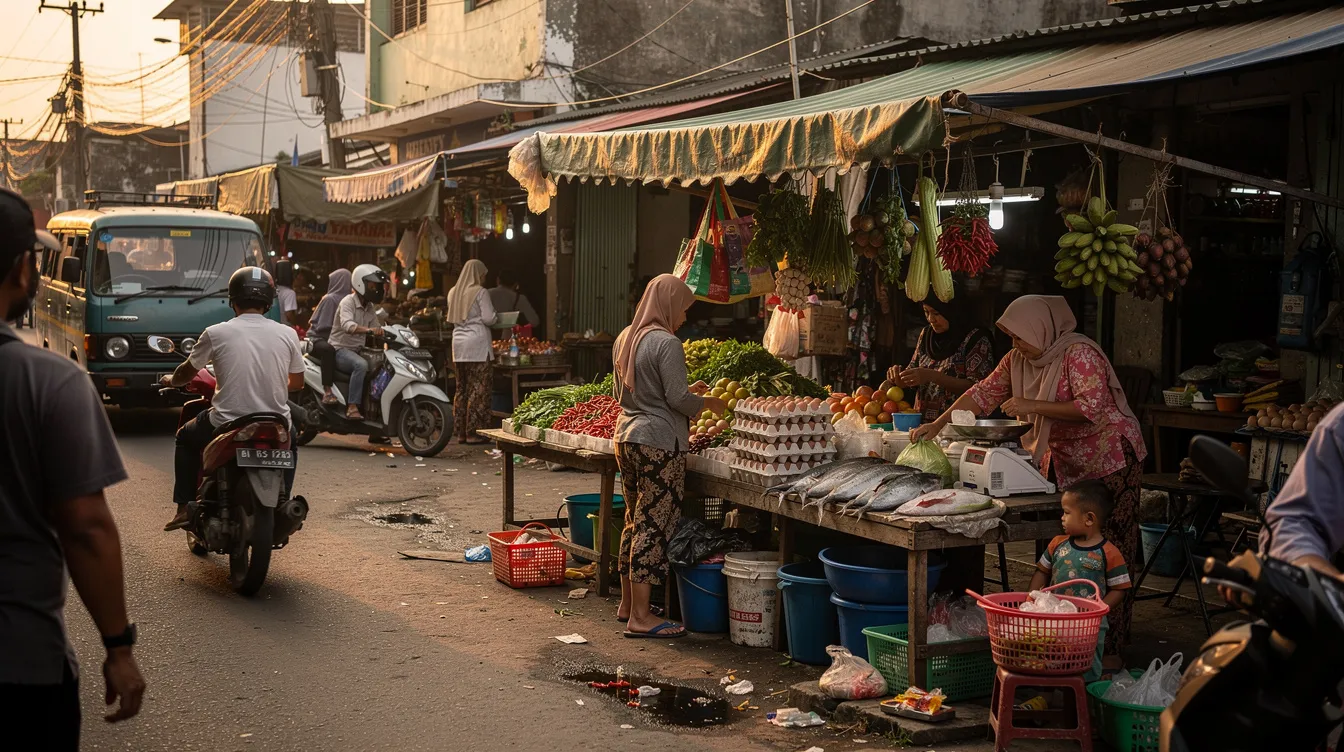
Indonesia's economy is demonstrating resilience amid global uncertainties, as highlighted by recent reports from key government officials. The Coordinating Minister for Economic Affairs, Airlangga Hartarto, emphasized that the nation's economic foundation remains strong, supported by three main indicators: controlled inflation, a recovering manufacturing sector, and an improving trade balance.
As of July 2026, Indonesia's annual inflation rate was recorded at 2.88%, down from 3.34% in June, and well within the government's target range of 2.5±1%. This decline is attributed to a decrease in prices of various food commodities, including shallots, tomatoes, and eggs, as production levels have increased across the regions. Core inflation remained stable at 2.76%, indicating steady public inflation expectations, according to Hartarto.
“The government is committed to maintaining the balance between price stability and economic growth.”Airlangga Hartarto, Coordinating Minister for Economic Affairs
In the manufacturing sector, the Purchasing Managers' Index (PMI) for Indonesia rose to 50.2 in July, indicating a return to expansion after a previous contraction. This recovery is supported by a rise in new orders and increased output, with companies beginning to hire again after several months of stagnation. The backlog of orders also grew at its fastest pace since November 2025, reflecting a rebound in demand.
On the external front, Indonesia's trade balance showed improvement, with a cumulative surplus of $3.58 billion from January to June 2026. The monthly trade deficit narrowed significantly to $450 million in June, a 72% decrease from May's $1.61 billion deficit. This improvement is driven by a rise in non-oil and gas trade surplus, which reached $3.04 billion, alongside a reduction in the oil and gas deficit.
Despite facing external pressures, including rising energy prices and geopolitical tensions, the Financial Stability Committee (KSSK) remains optimistic about Indonesia's economic growth. Minister of Finance Purbaya Yudhi Sadewa noted that the government is implementing various stimulus measures and social protection programs to maintain consumer purchasing power. Projections indicate that Indonesia's economy could grow between 5.6% and 6% throughout 2026, even amidst global economic volatility.
“Despite external pressures, the government remains optimistic about Indonesia's economic growth.”Purbaya Yudhi Sadewa, Minister of Finance
The Lembaga Penjamin Simpanan (LPS) reported stable growth in national banking performance, with annual savings growth ranging from 0.78% to 15.44% across different banking groups as of June 2026. This indicates that the ability to save remains intact across various segments of society.
In summary, Indonesia's economic indicators suggest a path of sustainable growth, supported by government initiatives aimed at stabilizing prices, enhancing food and energy resilience, and fostering a competitive industrial sector. As global challenges persist, the government's coordinated efforts with Bank Indonesia, the Financial Services Authority (OJK), and the LPS are crucial in navigating these turbulent times.
In contrast, Vietnam's media coverage of the regional economic landscape has highlighted a more complex labor market dynamic. Reports indicate that while some sectors are experiencing significant layoffs, particularly in the banking industry, there is a simultaneous surge in demand for skilled labor in infrastructure projects. For instance, major Vietnamese banks have reported substantial workforce reductions, with Sacombank cutting over 3,700 jobs in the first half of 2026. This trend reflects a broader shift towards automation and digitalization within the financial sector, as noted by experts who suggest that many repetitive roles are being replaced by technology.
However, Vietnamese outlets, such as Thanh Nien, emphasize that this contraction in certain industries does not equate to a shrinking job market overall. Instead, they frame it as a transformation where opportunities are shifting towards sectors requiring higher skills and technological proficiency. For example, infrastructure projects like the Long Thanh International Airport are reported to be in urgent need of thousands of workers, indicating a stark contrast to the layoffs in banking. This dual narrative presents a labor market that is not simply contracting but evolving, with a focus on high-value roles driven by technological advancement.
Experts in Vietnam have pointed out that the current labor market is undergoing a significant restructuring rather than a simple reduction in jobs. They argue that while many companies are downsizing in response to automation, others are ramping up hiring to meet the demands of large-scale infrastructure projects. This reflects a broader trend where the economy is expected to grow at a rate of over 10% in the coming years, necessitating a workforce equipped with advanced skills.
Thus, while Indonesian coverage stressed the stability and growth of its economy amidst global challenges, Vietnamese media framed the situation as a complex labor market transition, highlighting both the challenges of layoffs in traditional sectors and the burgeoning opportunities in emerging industries.