Singapore
Singapore's Manufacturing Sector Shows Resilience Amid Supply Chain Challenges
The Purchasing Managers' Index rises to 51.4 in July, buoyed by AI-driven semiconductor demand despite ongoing geopolitical tensions.
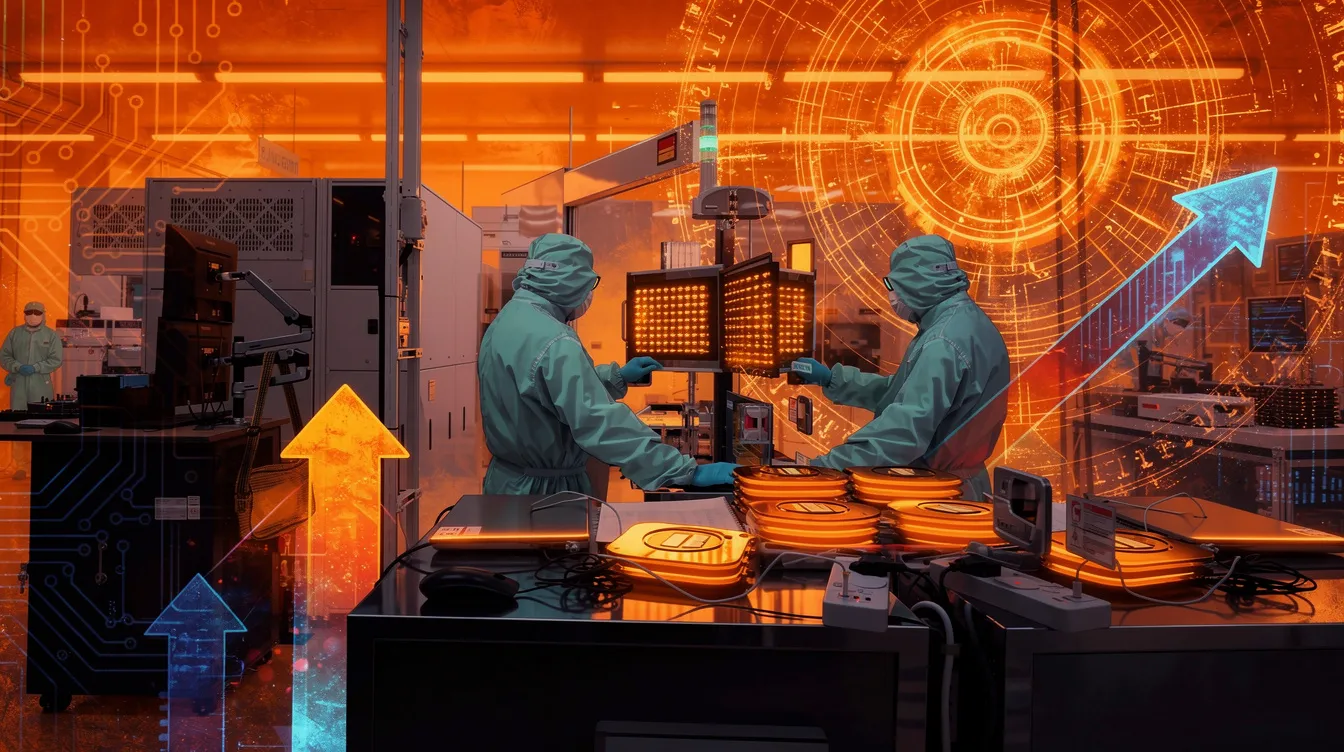
Singapore's manufacturing sector demonstrated resilience in July, with the Purchasing Managers' Index (PMI) rising to 51.4, a slight increase from June's 51.3. This marks the twelfth consecutive month of expansion, as reported by the Singapore Institute of Purchasing and Materials Management (SIPMM) on August 3.
The growth is primarily attributed to a sustained upcycle in artificial intelligence (AI)-related demand, particularly within the semiconductor industry. The electronics sector's PMI increased to 52.4, marking its highest level since November 2018, according to DBS senior economist Chua Han Teng.
Stephen Poh, executive director of SIPMM, highlighted that while the manufacturing sector is buoyed by robust order inflows linked to AI, the ongoing crisis in the Middle East has exacerbated supply chain issues, leading to soaring input prices and delays in supplier deliveries. Poh stated that the collapse of the Middle East ceasefire has triggered a supply chain crisis.
“The collapse of the Middle East ceasefire has triggered a supply chain crisis.”Stephen Poh, executive director of SIPMM
Economists predict that demand for AI-related products will continue to support manufacturing in the near term, although benefits may be concentrated in electronics and related industries. Chua indicated that strong investment from hyperscalers is expected to drive significant export demand for Singapore's electronics products, including memory chips and server-related items.
New export orders in the electronics sector rose to 52.6 in July, the highest since mid-2018, suggesting that demand for semiconductors is outpacing supply. UOB associate economist Jester Koh pointed out that manufacturers are likely depleting inventories to meet rising orders, which should sustain electronics manufacturing in the coming months. However, he cautioned that this growth hinges on manufacturers' ability to expand production capacity.
OCBC chief economist Selena Ling echoed these sentiments, stating that rapidly declining stocks of finished goods alongside rising orders point to a supply crunch rather than a lack of demand. She suggested that conditions are more nuanced among industries not related to AI and electronics.
“Rapidly declining stocks of finished goods, together with rising orders, point to a supply crunch rather than a lack of demand.”Selena Ling, chief economist at OCBC
In contrast, the Philippines also reported a rise in manufacturing activity, with its PMI improving to 51.8 in July from 50.9 in June, marking a five-month high. This increase was attributed to stronger demand and new project wins, as detailed by S&P Global, which noted that the growth in new orders was the fastest since February. The Philippine manufacturing sector's performance was framed as a welcome recovery from subdued conditions earlier in the year, although it still lagged behind the ASEAN average of 52.8.
While both Singapore and the Philippines highlighted the impact of the Middle East crisis on supply chains, the Philippine coverage emphasized a more optimistic outlook for domestic manufacturing, suggesting that the sector is on a solid footing for the second half of the year. S&P Global's economist Maryam Baluch pointed out that the improvement in the Philippines came alongside renewed inflationary pressures, with costs rising due to the ongoing geopolitical situation.
Both countries reported deteriorating supplier performance, with the Philippines experiencing the most pronounced delays since December 2024. However, Philippine outlets framed this as part of a broader recovery narrative, contrasting with Singapore's focus on the immediate crisis implications. The Manila Times noted that despite the challenges, the Filipino manufacturing sector's growth was a positive shift from previous months, indicating a potential for sustained improvement.
In terms of employment, the Philippines saw a moderate decline in manufacturing jobs, with firms attributing this to voluntary resignations rather than a lack of demand. This cautious approach to hiring was echoed in Singapore, where economists warned that the growth in manufacturing would depend on the ability to expand production capacity amid rising orders.
Overall, while Singapore's manufacturing sector remains buoyed by AI and semiconductor demand, the Philippines is experiencing a notable rebound in manufacturing activity, albeit with caution due to ongoing supply chain pressures and inflationary concerns. The contrasting narratives highlight the different contexts in which both countries are navigating their manufacturing landscapes amid global challenges.