Singapore
Singapore's Economy Grows 5.7% in Q2 Amid Geopolitical Tensions
The growth rate slows from 6.3% in Q1, impacted by the US-Iran conflict and its effects on trade and manufacturing.
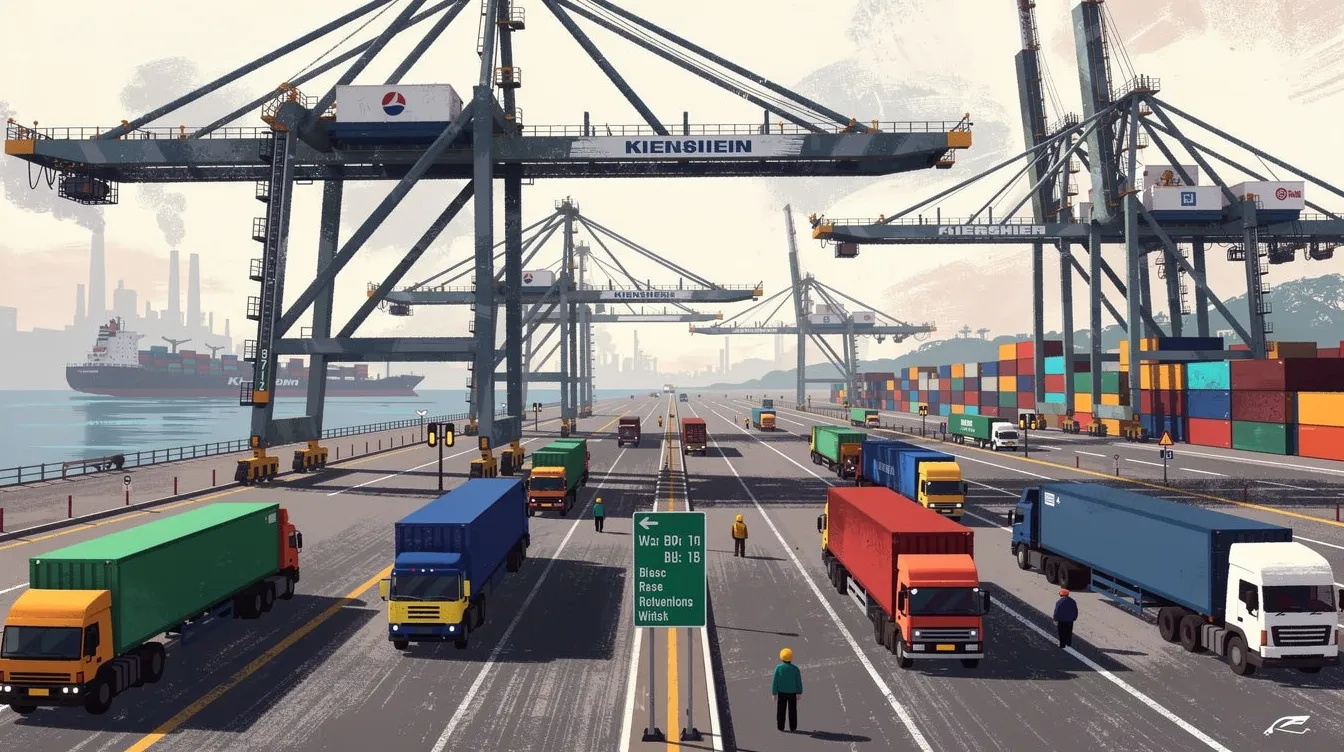
Singapore's economy recorded a year-on-year growth of 5.7% in the second quarter of 2023, a decline from the 6.3% growth seen in the previous quarter, according to the Ministry of Trade and Industry (MTI). This slowdown is attributed to the ongoing US-Iran conflict, which has disrupted trade and energy markets, impacting various sectors.
The wholesale and retail trade sectors, along with transportation and storage, grew by 6.3% in Q2, down from 9.3% in Q1. Construction also saw a significant decrease, expanding by only 6.2% compared to 12.9% in the previous quarter. In contrast, the manufacturing sector experienced robust growth, expanding by 12.2%, driven by strong demand for semiconductors and semiconductor manufacturing equipment related to artificial intelligence (AI) applications.
“These lagged effects typically weigh on household spending, business investment and transport- and trade-related services in the coming quarters.”Sheana Yue, Senior Economist, Oxford Economics
Despite the overall growth, the conflict in the Middle East has led to disruptions in supply chains and increased energy prices, which are expected to weigh on Singapore's economy. Crude oil prices have surged above $80 a barrel following the recent escalation of hostilities, impacting the costs of imported goods and services. Senior economist Sheana Yue from Oxford Economics noted that while AI-related exports remain a key growth driver, the spillover effects from the conflict will likely moderate domestic demand in the second half of the year.
On a quarter-on-quarter basis, Singapore's economy grew by 1.1%, a slight decrease from the 1.3% growth recorded in Q1. The MTI highlighted that the manufacturing sector's growth was largely attributed to the electronics and precision engineering clusters, which benefited from AI-related demand. However, the chemicals and biomedical sectors contracted due to disruptions in feedstock supply caused by the geopolitical tensions.
“A sharper-than-expected slowdown in AI investment would likely dampen global demand for semiconductors and electronics.”Barnabas Gan, Group Chief Economist, RHB Bank
Analysts have expressed caution regarding the future outlook, with Oxford Economics forecasting a full-year growth of 3.4% for 2023, which is at the higher end of MTI's estimate of 2% to 4%. Barnabas Gan, RHB Bank's group chief economist, emphasized that while the AI investment cycle supports Singapore's trade and manufacturing sectors, geopolitical uncertainties and potential corrections in AI markets pose risks to the economy. He stated that a sharper-than-expected slowdown in AI investment would likely dampen global demand for semiconductors and electronics, weighing on Singapore’s exports and broader external demand.
As the situation evolves, Singapore's economy remains closely tied to global trade dynamics, particularly in the context of the ongoing geopolitical tensions that threaten to disrupt the stability of energy markets and supply chains across Asia.