Cambodia
Cambodia's Farmers Confront El Niño: Drought, Rising Costs, and Unreliable Irrigation
Smallholder farmers in Cambodia face severe challenges as El Niño exacerbates drought conditions, disrupts irrigation, and drives up costs.
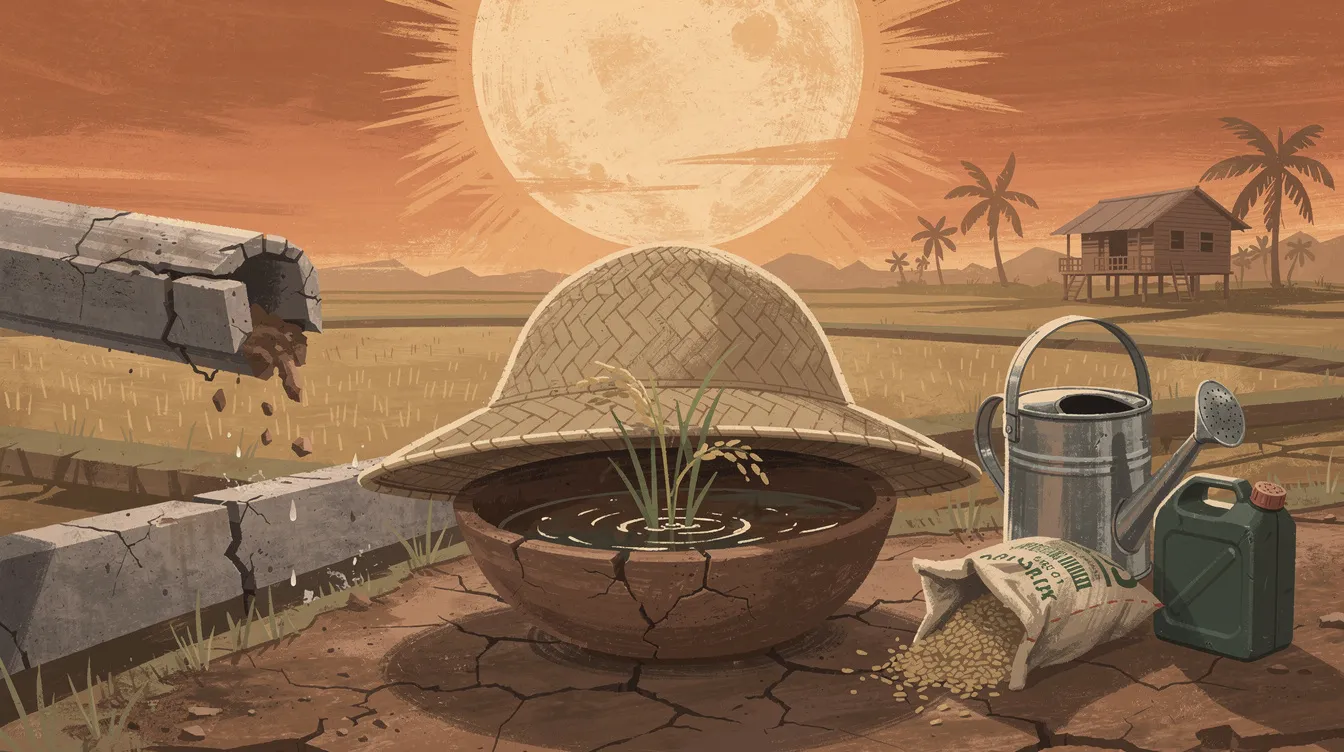
In Siem Reap province, Cambodia, the sun rises over parched fields, signaling a dire situation for local farmers. Sokhoeun Chhut, a 45-year-old farmer, said she has never experienced a drought this long in her life. The ongoing effects of El Niño are evident, with the region suffering from extreme heat and a significant reduction in rainfall, leading to dire consequences for rice production.
El Niño, a climate phenomenon that disrupts global weather patterns, is currently impacting Southeast Asia, including Cambodia. The World Meteorological Organization (WMO) has warned that El Niño conditions are expected to strengthen, increasing the likelihood of heatwaves and droughts. In Cambodia, the Ministry of Water Resources and Meteorology has reported that rainfall has decreased by as much as 50% in some areas, prompting officials to urge farmers to conserve water.
“Sokhoeun Chhut said she has never experienced a drought this long in her life.”Sokhoeun Chhut, farmer
Prime Minister Hun Manet has ordered all government ministries to prepare for a severe El Niño phenomenon expected to bring extreme heat, delayed rains, and potential drought. Farmers are already feeling the effects; Y Phakna, a 57-year-old farmer from Thmar Koul district, said that if it doesn't rain much in the next two weeks, all of the rice sprouts will be gone. He has already invested $2,000 in rice seeds for his 10-hectare farm, but rising costs for fuel and fertilizers, driven up by the Iran-US war, have added to his worries.
According to the Food and Agriculture Organization (FAO), Cambodia is at high risk of severe drought during this El Niño cycle, with approximately 127,300 hectares of farmland potentially affected. This situation is reminiscent of past El Niño events, such as in 1997-98, when the Cambodian government had to appeal for 250,000 tonnes of rice to aid drought-stricken populations.
“Y Phakna said that if it doesn't rain much in the next two weeks, all of the rice sprouts will be gone.”Y Phakna, farmer
Farmers like Sokhom Kha, who have experienced multiple El Niño cycles, recall the hardships of previous droughts. She shared that on some days, they ate rice mixed with red corn just to survive, reflecting on the resilience required to navigate such challenges. The current situation is compounded by inadequate irrigation infrastructure, which leaves many farmers unprepared for the extreme weather conditions.
“Sokhom Kha shared that on some days, they ate rice mixed with red corn just to survive.”Sokhom Kha, farmer
In 2025, drought affected over 300,000 hectares of crops in Cambodia, with more than 17,000 hectares damaged, notably in provinces like Battambang, Kampong Speu, and Pailin. This highlights the scale of the drought impacts beyond the current El Niño cycle. The Ministry of Agriculture reported that by mid-August 2025, crop planting progress was at 92.97% of the plan, slightly ahead of the previous year.
Farmers are facing a complex crisis involving climate change, rising costs, and insufficient irrigation, forcing them to make difficult decisions about their crops while managing scarce water resources.