Vietnam
El Niño's Impact on Vietnam's Mekong Delta: A Looming Crisis for Rice Production
As El Niño intensifies, Vietnam's Mekong Delta faces severe drought and salinity challenges, threatening the region's crucial rice production.
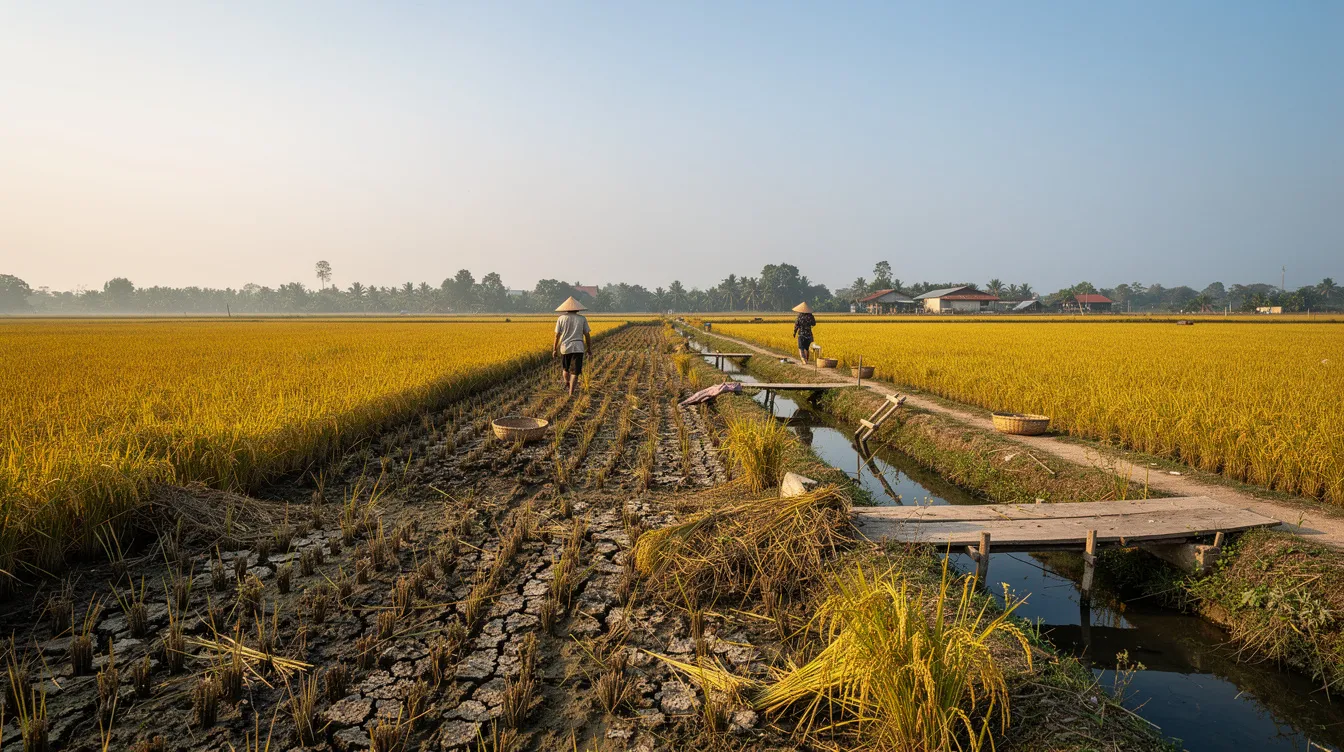
The Mekong Delta, known as Vietnam's rice bowl, is facing significant challenges due to the intensifying El Niño phenomenon, which is expected to have severe implications for agricultural production. Reports indicate that from September to November 2026, El Niño is likely to maintain a strong to very strong intensity, with elevated average temperatures across the country, ranging from 0.5 to 1.5 degrees Celsius above historical averages, according to Vietnam's National Center for Hydro-Meteorological Forecasting.
The El Niño conditions, which officially began in June 2026, are raising alarms among agricultural experts. Đặng Thanh Mai, Deputy Director of the Meteorological and Hydrological Department, said that if the current trends continue, Vietnam could experience higher than average temperatures, a reduction in cold air outbreaks, and widespread rainfall deficits, particularly affecting the Central and Southern regions. This situation poses a serious risk to rice production, especially in the Mekong Delta, where salinity intrusion has already been a concern.
“The impact of prolonged El Niño events can be devastating, especially if water reserves are not replenished during the rainy season.”Nguyen Manh Hung, Head of Operation and Irrigation Management Department at the Department of Water Resources Management and Construction
Officials from the Ministry of Agriculture and Rural Development have reported that while drought and water shortages have been observed in some Central regions, the Mekong Delta has so far managed to avoid severe damage due to effective irrigation management. The region's irrigation systems have successfully mitigated salinity intrusion, which peaked earlier this year without causing significant crop losses. However, as El Niño is projected to strengthen, the risk of drought and salinity is expected to increase, potentially impacting the 2026-2027 rice harvest.
“If the current trends continue, Vietnam could experience higher than average temperatures, a reduction in cold air outbreaks, and widespread rainfall deficits.”Đặng Thanh Mai, Deputy Director of the Meteorological and Hydrological Department
Historically, El Niño events have had profound effects on Vietnam's agricultural output. The last significant El Niño, which occurred in 2015-2016, resulted in widespread drought and crop failures across Southeast Asia. Nguyen Manh Hung, Head of Operation and Irrigation Management Department at the Department of Water Resources Management and Construction, emphasized that the cumulative effects of water shortages from previous years could lead to more severe consequences this time around. He said the impact of prolonged El Niño events can be devastating, especially if water reserves are not replenished during the rainy season.
The government is expected to implement measures to safeguard agricultural production. Experts recommend enhancing irrigation infrastructure and improving water management practices to prepare for the expected challenges.