Vietnam
Vietnam's Shrimp Industry Faces El Niño Challenges: 327,200 Tons at Risk
As El Niño conditions intensify, Vietnam's shrimp farming sector braces for significant challenges, with potential impacts on production and exports.
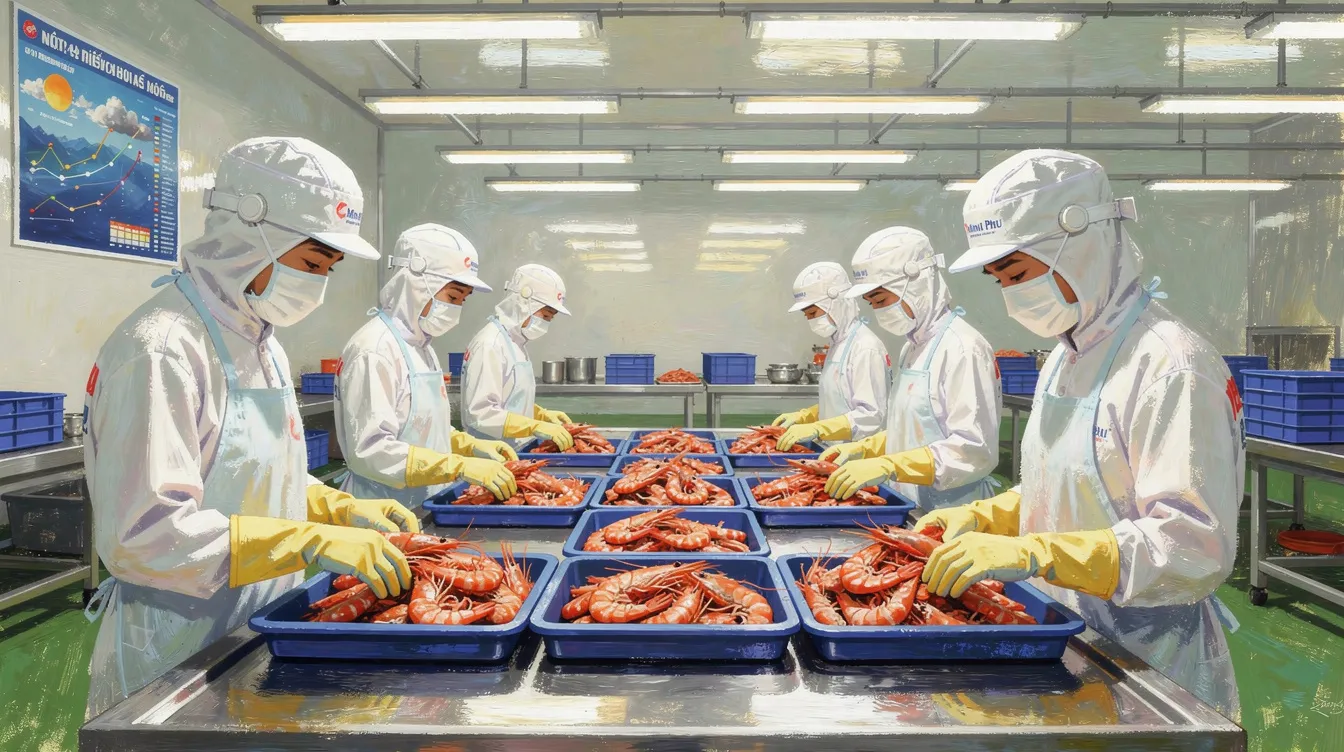
Vietnam's shrimp farming sector is preparing for significant challenges as forecasts indicate a strong El Niño event could impact production and environmental conditions. During a recent workshop in Bac Lieu, officials from the Ministry of Agriculture and Rural Development (MARD) and the provincial Department of Agriculture and Rural Development discussed strategies to ensure shrimp production targets for 2026 amid these challenges.
According to the Directorate of Fisheries, the area dedicated to shrimp farming across Vietnam reached 741,300 hectares in the first nine months of this year, achieving 98.8% of the planned target. The total shrimp harvest during this period was over 1.07 million tons, with 73.8% being white-legged shrimp and 26.2% black tiger shrimp. Notably, the Mekong Delta region contributed 935,000 tons, accounting for 87.1% of the national total. The shrimp export value for the first nine months was reported at $3.75 billion, with a target of $4.6 billion for the entire year.
“The shrimp industry faces mounting pressure from rising input costs, inconsistent quality of seed stock, climate change, and international competition, particularly from Ecuador and India, Trần Đình Luân said.”Trần Đình Luân, Director of the Directorate of Fisheries
In Cà Mau, a key shrimp-producing province, the total aquaculture production is estimated at 971,000 tons, a 6.7% increase compared to the same period last year, with shrimp farming alone reaching 439,400 tons, up by 9.7%. To meet the provincial target of 1.335 million tons of aquatic products, including 624,000 tons of shrimp, local authorities are reviewing farming areas and assessing risks associated with disease and environmental conditions.
However, the shrimp industry faces mounting pressure from rising input costs, inconsistent quality of seed stock, climate change, and international competition, particularly from Ecuador and India. Trần Đình Luân, Director of the Directorate of Fisheries, emphasized the need for stringent quality control and proactive management of water resources and disease prevention in light of the anticipated extreme weather conditions associated with El Niño.
“Officials from the Ministry of Agriculture and Rural Development urged enhancing early warning systems and implementing immediate measures to contain outbreaks and manage salinity levels.”Officials from the Ministry of Agriculture and Rural Development
El Niño is forecast to peak in intensity between late 2026 and early 2027, with a high probability of occurrence. This phenomenon is likely to result in prolonged dry weather, high temperatures, and increased salinity intrusion, threatening water quality and shrimp farming environments. The Directorate of Fisheries has proposed two flexible response scenarios for the upcoming months: a favorable scenario where disease is controlled and water sources are stable, and a high-risk scenario where extreme weather or disease outbreaks necessitate early harvesting and strict management of farming areas.
The Ministry of Agriculture and Rural Development has urged local governments to enhance early warning systems and implement immediate measures to contain outbreaks and manage salinity levels. The potential for salinity intrusion could affect approximately 85,800 hectares of rice and shrimp farming in the Mekong Delta, further complicating the agricultural landscape.