Cambodia
Cambodia's Floating Communities Face Crisis Amid Climate Change
As climate change alters weather patterns, floating houses in Cambodia's Tonle Sap region are struggling to adapt, threatening local livelihoods.
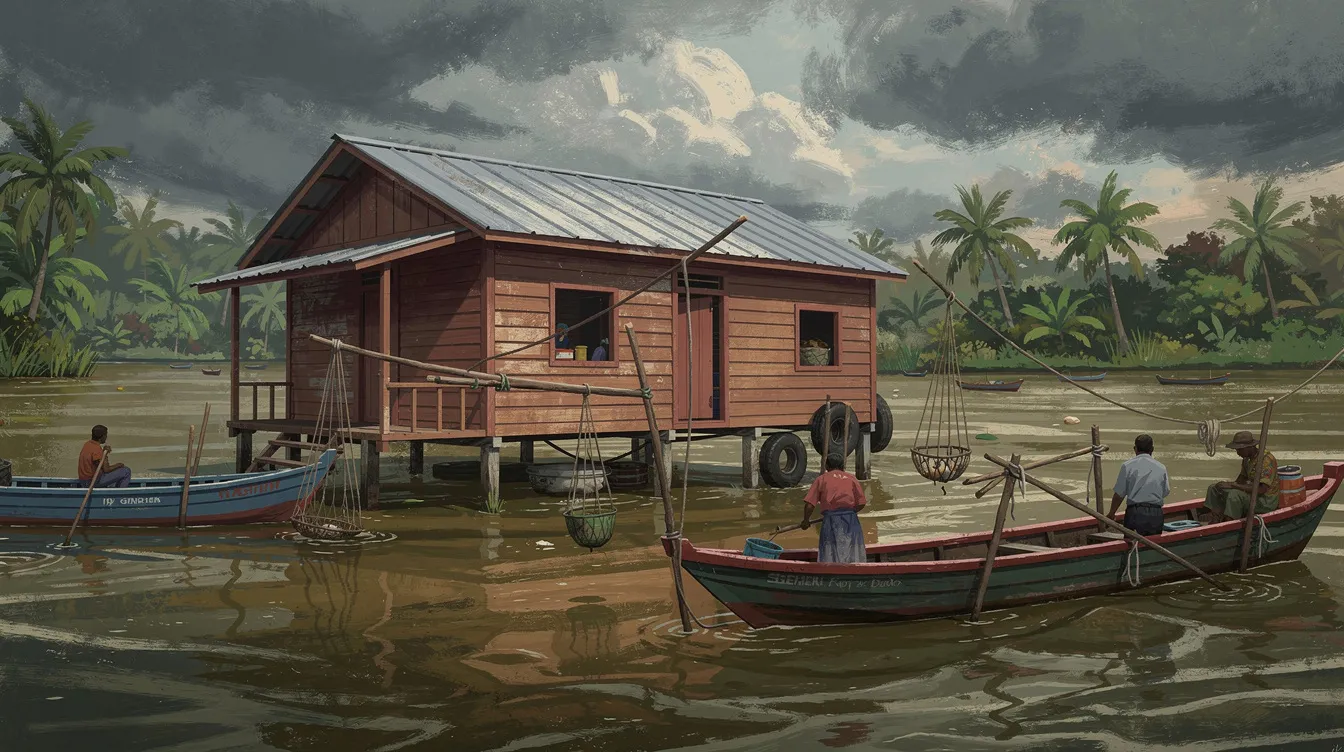
In Pou village, Siem Reap province, Sok Rina, 63, watches her grandchildren play on dry ground beneath her high-stilted house. Normally, by mid-July, the area would be flooded due to the rising waters of the Tonle Sap lake, a vital resource for local fishing communities. However, this year, the lake remains low, reflecting a troubling trend attributed to climate change and the construction of hydropower dams.
Historically, the monsoon season would begin in June, flooding the riverbanks and enriching the surrounding ecosystems. Cheim Oeurn, a local fisherman, laments the drastic change, stating that in the past, he could catch 50 to 60 kilograms of fish daily, earning between 50,000 to 100,000 riel. Now, he struggles to catch even one kilogram. Such declines in fish populations are echoed by other residents, who report similar hardships.
“In the past, I could catch 50 to 60 kilograms of fish daily, earning between 50,000 to 100,000 riel. Now, I struggle to catch even one kilogram.”Cheim Oeurn, local fisherman
According to the Stimson Center, the Tonle Sap's water levels have been consistently below historical averages, with the reversal of its flow starting six weeks late this year. The center's Southeast Asia program director, Brian Eyler, noted that the traditional monsoon pattern that builds at the beginning of the wet season is weakening in strength, exacerbating the challenges faced by local fishermen.
Families in the region are increasingly burdened by debt as fishing yields dwindle. Preap Nakrei, a resident of Me Chrey village, shared her struggles with loans for fishing equipment. She emphasized the lack of options for relocation.
“We just earn enough to survive on the water.”Preap Nakrei, resident of Me Chrey village
Research from the Cambodia Development Resource Institute indicates a staggering drop in fish production from 2018 to 2020, largely due to reduced water volumes and shorter flood durations. The study highlights that many families are now shifting from fishing to farming, clearing flooded forest areas to cultivate crops. However, this transition is fraught with difficulties, as the changing climate continues to threaten agricultural yields.
As families adapt to these challenges, many young people are leaving their villages for better opportunities in urban areas. Sok Rina noted that her children migrated to Sihanoukville and Phnom Penh for work in factories, leaving behind the traditional fishing lifestyle. She mentioned that her children dropped out of school due to their impoverished living conditions.
“They dropped out of school because they witnessed our impoverished living conditions.”Sok Rina, Pou village resident
The Cambodian government has recognized the impacts of climate change on its communities and has set ambitious goals to combat these challenges. The National Committee for Disaster Management has reported that flooding and droughts are among the most pressing threats to the population, often leading to significant economic losses.
As the situation evolves, local communities are left to navigate the dual pressures of climate change and economic hardship. The Tonle Sap, once a source of life and prosperity, is becoming a symbol of the vulnerabilities facing Cambodia's rural populations.