Cambodia
Cambodia's Migrant Workers Return: Economic Opportunities Amid Challenges
A report highlights the dual impact of returning migrant workers on Cambodia's economy and household finances.
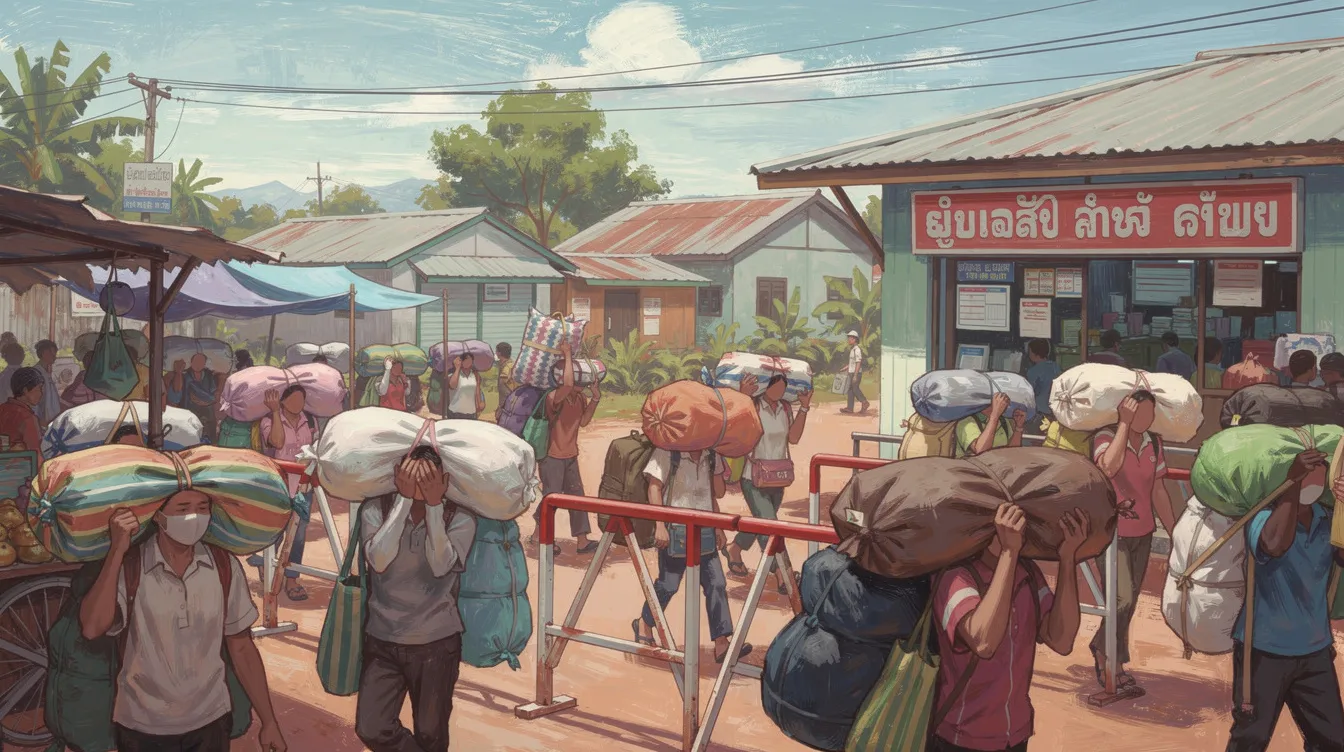
The recent influx of Cambodian migrant workers returning from Thailand is projected to have significant implications for the country's economy. According to a report from the Ministry of Labour and Vocational Training, more than 130,000 workers have received job opportunities, creating new job opportunities domestically. However, the same report warns that while this could bolster the economy, it may also leave many households financially worse off.
Officials from the ministry indicated that the government has implemented strategies to facilitate employment for these returning workers. The focus is on large export-oriented factories, which are expected to offer better working conditions and wages comparable to those in Thailand. Minister Heng Sour stated that the ministry is concentrating on large factories that provide decent working conditions, as these are likely to retain workers who might otherwise return to Thailand. This approach aims to stabilize the workforce and encourage economic growth.
“The ministry is concentrating on large factories that provide decent working conditions, as these are likely to retain workers who might otherwise return to Thailand.”Heng Sour, Minister of Labour and Vocational Training
However, the situation is complex. A UN report highlighted that the recent border conflict between Thailand and Cambodia has resulted in a “double shock” for the Cambodian economy, displacing over 900,000 migrant workers and causing significant economic disruption. The report noted a 34% decline in average earnings for internally displaced families and a projected drop in remittances by $942 million through 2026. The conflict has also led to a structural break in trade and tourism, with total exports to Thailand contracting by 13.5%.
The Ministry of Labour's initiatives to support returning workers include collaboration with the private sector to create job opportunities. As of September, the ministry has facilitated job placements for approximately 22,000 returnees. However, the challenge remains to ensure that these jobs provide sustainable income and do not lead to a cycle of debt, especially as many families have relied on remittances from abroad.
“This conflict did not just move people across a map; it dismantled the economic scaffolding of the border provinces.”Lead UN official involved in the assessment
Analysts emphasize the need for a comprehensive recovery plan that addresses both immediate employment needs and long-term economic stability. The UN has called for innovative solutions such as cash-for-work programs to rehabilitate infrastructure damaged during the conflict, which could also provide employment for displaced workers.
As Cambodia navigates this transitional phase, the government's response will play a significant role in shaping the future economic landscape.