ASEAN
Philippines and UNEP Expand Regional Marine Monitoring as El Niño Risks Grow
At a Manila meeting of the East Asian Seas forum, officials called for shared reef data, mangrove restoration and stronger efforts to curb plastic pollution at its source.
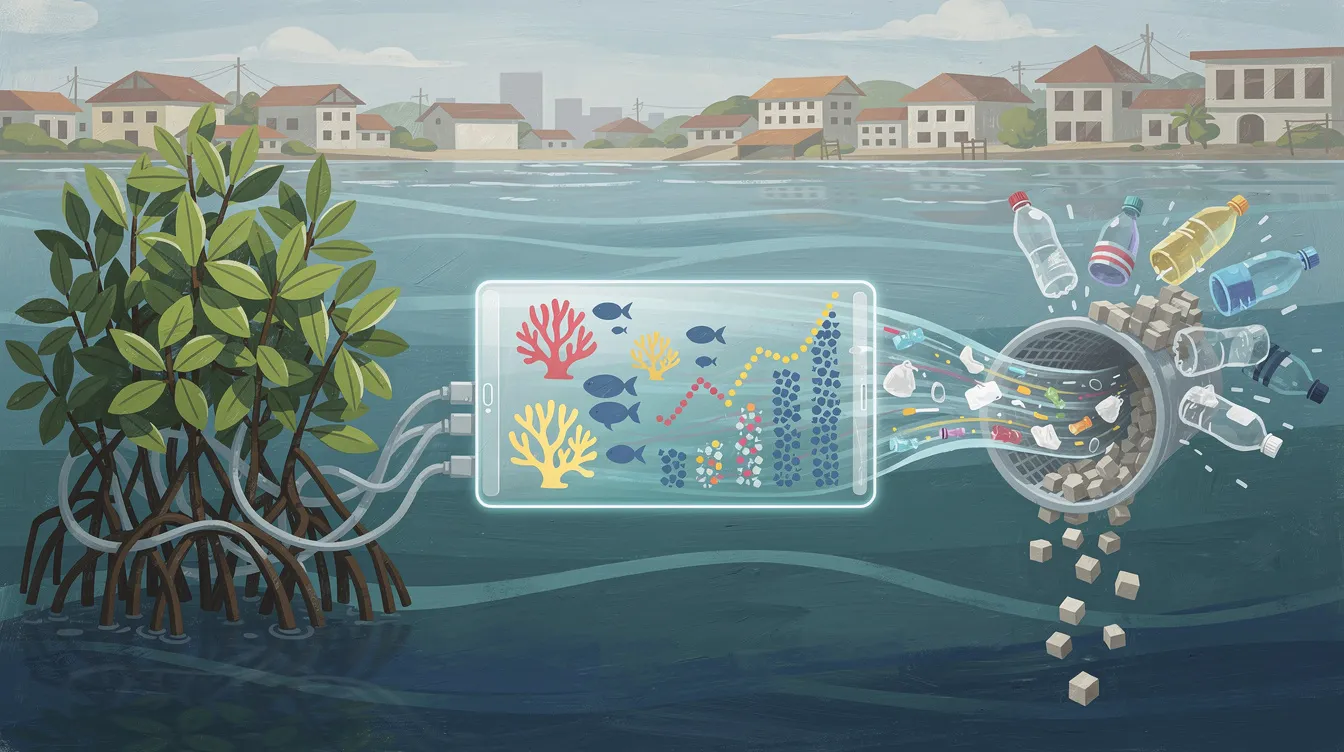
As El Niño risks and marine pollution feature on the agenda of a regional meeting in Manila, the Philippines and the United Nations Environment Programme (UNEP) are calling for more coordinated monitoring of reefs and coastal ecosystems, alongside measures to reduce plastic waste before it reaches the sea.
Speaking on the sidelines of the 27th Intergovernmental Meeting of the Coordinating Body on the Seas of East Asia (COBSEA) on Wednesday, UNEP Ecosystems Division Director Susan Gardner said mangrove rehabilitation and shared coral-reef monitoring could help countries prepare for climate shocks. She said El Niño events are becoming more frequent and severe as the climate changes.
Environment Secretary Juan Miguel Cuna said the Philippine ocean economy was valued at 882.2 billion pesos (about US$15.4 billion) in 2025, equal to 3.8% of gross domestic product and supporting about 2.46 million jobs. The figures, which he presented at the meeting’s opening, underline the economic interests tied to coastal ecosystems, according to the secretary.
COBSEA, established in 1981, is an intergovernmental forum for nine East Asian countries: Cambodia, China, Indonesia, Malaysia, the Philippines, South Korea, Singapore, Thailand and Vietnam. The Manila meeting is also marking the forum’s 45th anniversary.
“Cobsea has been helping countries to not only monitor on the national level, but then share that information across the region so that other countries can benefit from the information and be able to coordinate in terms of their response,”Susan Gardner, UNEP Ecosystems Division Director
Shared data for reefs and coasts
Gardner said monitoring coral bleaching associated with El Niño, and sharing the resulting information among member states, would help coordinate responses. COBSEA supports both national monitoring and regional exchange of data, she said.
“Cobsea has been helping countries to not only monitor on the national level, but then share that information across the region so that other countries can benefit from the information and be able to coordinate in terms of their response,” Gardner told The Manila Times.
She also said mangrove restoration can help reduce flooding and storm impacts. Cuna said the Philippines had exceeded its national conservation targets for mangroves, coral reefs, seagrass and wetlands under a Global Environment Facility-funded project. He said the country was prepared to share experience in marine spatial planning, area-based conservation and blue carbon.
InsideASEAN has reported that Philippine environmental officials are using weather stations, satellite data and risk maps in preparation for prolonged dry conditions, including risks to coral reefs. The current meeting’s focus on regional data-sharing extends that concern beyond national monitoring, as Gardner described it.
Plastic policy moves upstream
Plastic pollution was another central issue at the meeting. Cuna said the Philippines was prioritizing the problem through its National Plan of Action on Marine Litter and the country’s Extended Producer Responsibility (EPR) Act, passed in 2022. The law requires covered companies to take responsibility for recovering and managing plastic packaging waste.
“We’re looking at the land-based sources of marine litter and starting to understand how we turn off the tap while we address the marine litter that’s already in the ocean,”Susan Gardner, UNEP Ecosystems Division Director
Under the proposed 2027–2028 Regional Action Plan on Marine Litter workplan, Cuna said, the Philippines is seeking stronger monitoring, reporting and harmonized data systems among COBSEA members. The meeting is expected to finalize the workplan, according to the event agenda described by The Manila Times.
Gardner urged governments to address waste on land as well as litter already in the ocean, describing the approach as “source-to-sea.” She praised the Philippine EPR law as an innovative measure supporting a circular-economy approach, while saying transitions away from a produce-use-dispose model should also protect informal waste pickers’ livelihoods and involve the private sector.
“We’re looking at the land-based sources of marine litter and starting to understand how we turn off the tap while we address the marine litter that’s already in the ocean,” Gardner said.
The meeting’s other agenda items include updating COBSEA’s Marine and Coastal Ecosystems Framework to align with the international Biodiversity Beyond National Jurisdiction treaty, integrating the South China Sea Strategic Action Program and considering recommendations to strengthen the forum’s operations, The Manila Times reported.