Vietnam
U.S. Chicken Seeks a Place on Vietnamese Tables: Local Flavor Encouraged
As U.S. chicken imports rise, Vietnam's culinary preferences influence market dynamics.
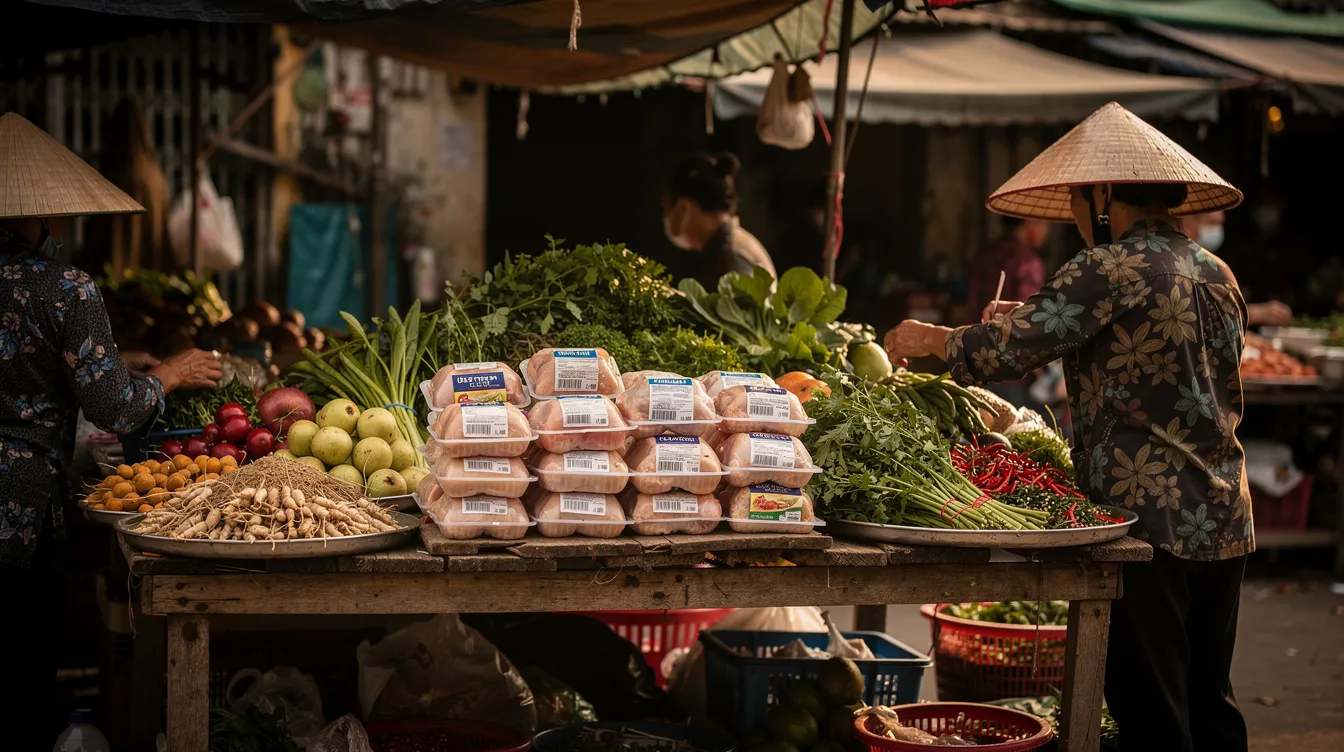
Vietnam's appetite for imported chicken, particularly from the United States, is growing. In the first half of 2026, the country is expected to import between 185,000 and 195,000 tons of various chicken products, generating an estimated revenue of $190 to $205 million, according to the Vietnam Poultry Association.
The U.S. remains the largest supplier, providing approximately 115,000 to 120,000 tons, which constitutes nearly 61.8% of the market share. This is primarily composed of affordable chicken leg quarters. Following the U.S. are the European Union (EU) and Brazil, contributing 28,000 to 30,000 tons and 24,000 to 26,000 tons respectively, with the EU's Poland being a significant exporter to Vietnam.
Vietnam's imports of chicken and poultry products have surged by 26% to 37.6% compared to the previous year, driven by tariff reductions under various free trade agreements (FTAs). Frozen chicken legs dominate the import structure, making up about 71.5% of total chicken imports, while chicken wings account for around 12% and other by-products about 8.7%. The remainder, including whole frozen chickens, is significantly lower, at approximately 2% of total imports.
Local culinary preferences are influencing how U.S. chicken is marketed in Vietnam.
“Imported chicken products are often 40-50% cheaper than domestic chicken, creating significant pressure on local producers.”My, local chicken vendor
Despite the influx of imported chicken, domestic production is also on the rise. Vietnam's poultry sector has seen substantial growth, with production increasing by 5.6% annually from 2015 to 2018. However, the influx of cheaper imported chicken products is putting pressure on local producers, particularly in the context of oversupply in certain segments, which has led to falling prices for domestic chicken.
In the first half of 2026, Vietnam is projected to export between 4,800 and 5,200 tons of poultry, with a value of $45 to $48 million. Processed chicken products account for over 85% of this export value, indicating a shift towards more value-added products.
Imported chicken products are often 40-50% cheaper than domestic chicken, creating significant pressure on local producers, according to a local chicken vendor in Ho Chi Minh City.