Thailand
Thailand's Semiconductor Strategy: Aiming for Front-End Production
Industry leaders call for investment in semiconductor manufacturing to boost competitiveness.
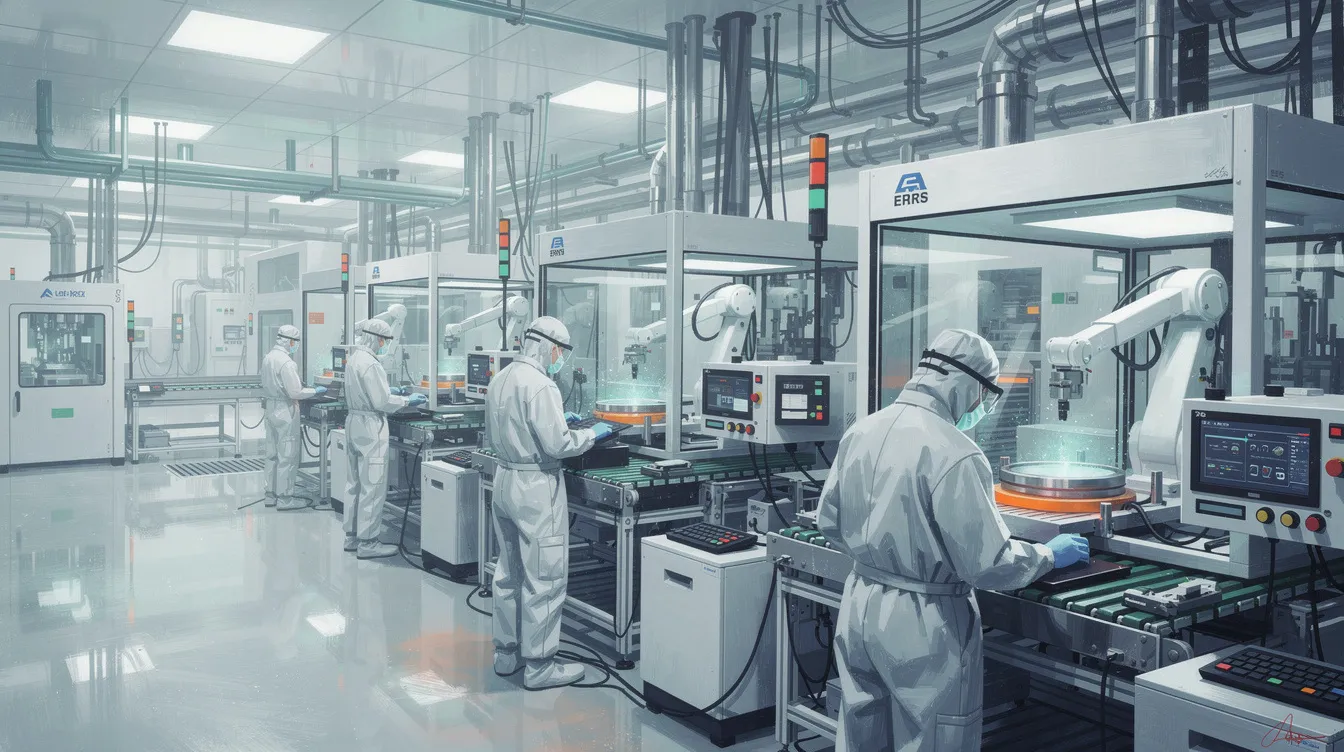
BANGKOK — Thailand is positioning itself to enhance its semiconductor industry by urging investments in front-end production. This initiative comes as the country seeks to establish a more robust supply chain and catch up with regional competitors in the high-value sector.
Wirat Sri-amonkitkul, head of the Thai Semiconductor Industry Trade Association, emphasized the need for the government to offer more incentives to attract foreign firms. He stated that without significant investment in front-end production, Thailand risks falling behind in a rapidly evolving market where countries like Vietnam and Malaysia are making significant strides.
In line with this vision, the Board of Investment (BOI) has recently approved a joint venture project between Hana Microelectronics and PTT Group to establish Thailand's first silicon carbide (SiC) chip manufacturing facility. This project is expected to begin production in the future, focusing on power electronics essential for electric vehicles and data centers.
Narit Therdsteerasukdi, Secretary-General of the BOI, noted that the facility will utilize advanced technology from leading South Korean chip manufacturers. The establishment of this factory is part of efforts to bolster Thailand's semiconductor capabilities, particularly in the upstream segment of the industry.
The Thai government is also working on a comprehensive “National Semiconductor Roadmap 2050,” which aims to transform the country from a contract assembler into a technology owner under the “Made-in-Thailand Chips” initiative. This 25-year strategy, developed with the assistance of global consulting firm Roland Berger, focuses on five key product groups: Power, Sensor, Photonics, Analog, and Discrete chips. These products are vital for various sectors, including automotive, telecommunications, and medical services.
The roadmap targets over 2.5 trillion THB in investments and aims to train more than 230,000 skilled workers in the semiconductor field. The government believes that by leveraging existing strengths in areas such as Outsourced Semiconductor Assembly and Testing (OSAT) and integrated circuit design, Thailand can become a competitive player in the global semiconductor market.
As the semiconductor landscape becomes increasingly competitive, industry experts argue that Thailand must act decisively to enhance its manufacturing capabilities. The focus on front-end production could provide the necessary foundation for a thriving semiconductor ecosystem, positioning Thailand as a key player in the region.