Thailand
Thailand Partners with World Bank to Develop Carbon Market
Krungthai Bank and government officials unveil plans to establish a robust carbon credit trading platform aimed at positioning Thailand as a green investment hub in ASEAN.
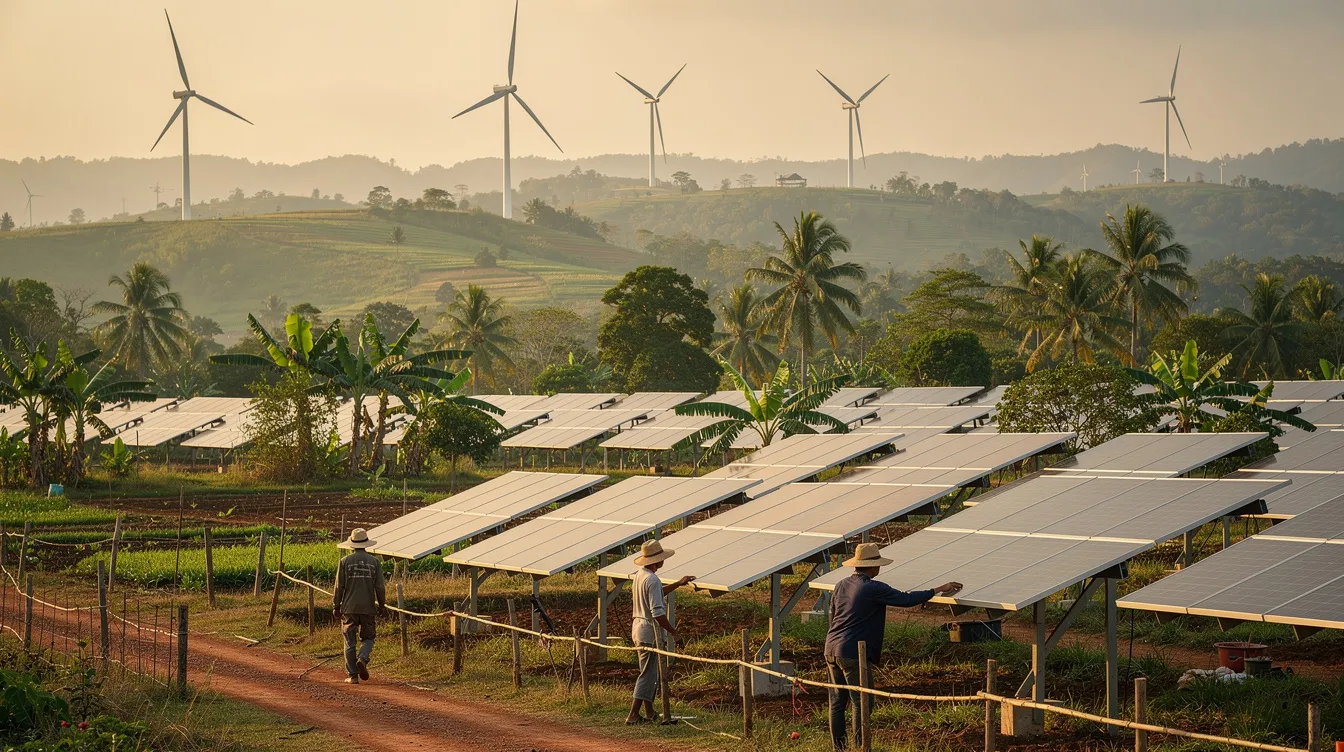
Thailand is taking significant steps to develop a low-carbon economy by collaborating with the World Bank and various government agencies. Krungthai Bank (KTB) has announced plans to create a national digital platform for managing carbon credits, promoting transparency and compliance with international standards. This initiative aims to attract investment and enhance the country’s competitiveness in the green economy sector.
During the "Low Carbon Cities and Energy Security Building System at Scale" conference, KTB's President, Phayong Srivanich, outlined three key strategies for Thailand's transition to a low-carbon economy: equitable transition, development of low-carbon cities, and scaling up carbon reduction projects in large industries. These strategies are expected to create new economic value and job opportunities while reducing energy costs.
According to Finance Minister Ekniti Nitithanprapas, the government is keen to reduce reliance on public subsidies and accelerate investments in energy, technology, and advanced industries. The initiative aligns with Thailand's commitment to achieving carbon neutrality by 2050 and net-zero greenhouse gas emissions by 2065, as outlined in its Nationally Determined Contributions (NDC) under the Paris Agreement.
“The collaboration between the government, private sector, and global organizations will drive a tangible and sustainable low-carbon economy.”Phayong Srivanich, President, Krungthai Bank
The World Bank has approved a $200 million project aimed at supporting Thailand's efforts to establish a scalable carbon market and improve energy efficiency. This project will enable public agencies to upgrade infrastructure without bearing the full upfront costs, with Energy Service Companies (ESCOs) financing the improvements. It is projected to create at least 1,800 job-years in clean energy installation and maintenance.
Ajay Banga, President of the World Bank Group, emphasized the importance of public-private partnerships in developing low-carbon cities and reducing energy consumption. He noted that a credible carbon credit market is crucial for attracting investments, which will help lower energy costs for businesses and households while generating local employment.
“A credible carbon credit market is essential for attracting investments and reducing energy costs for businesses and households.”Ajay Banga, President, World Bank Group
The Stock Exchange of Thailand (SET) will serve as a reliable platform for the continuous auction of carbon credits, connecting producers from solar energy projects with buyers looking to offset their greenhouse gas emissions. This collaboration is expected to facilitate the growth of the carbon credit market in Thailand, making it a leader in the ASEAN region.
With private sector interest from companies like Thai Airways and Grab in high-quality carbon credits, the initiative is poised to create a new market and enhance economic value. The government aims to position Thailand as a leading carbon investment hub in ASEAN, reducing energy costs and increasing industrial competitiveness.
The integration of carbon credit mechanisms is seen as a vital step in Thailand's strategy to address climate change challenges and promote sustainable development. The government’s commitment to this initiative reflects its broader goals of fostering economic resilience and sustainability.