Singapore
Temasek Affirms Long-Term Support for Singapore Airlines' Air India Investment
As scrutiny grows over Singapore Airlines' stake in Air India, Temasek expresses its backing amidst operational challenges faced by the Indian carrier.
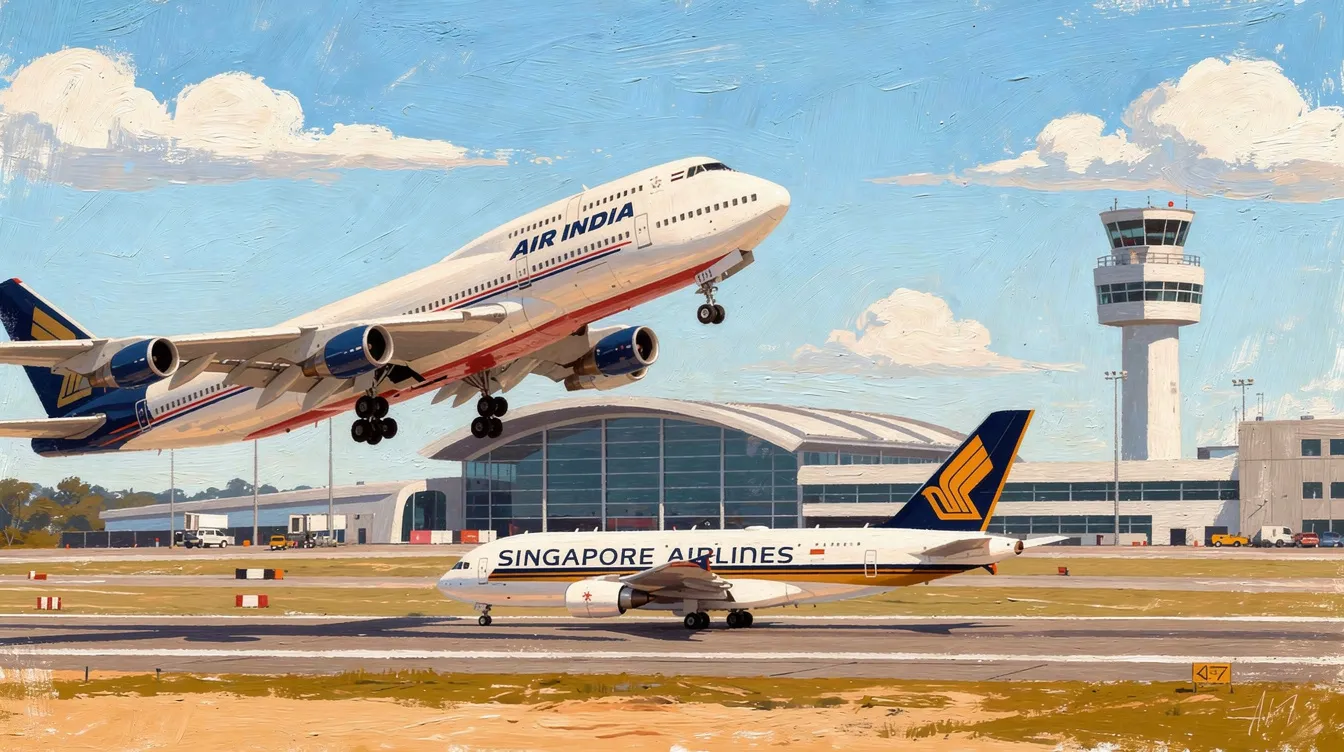
Temasek Holdings, the majority shareholder of Singapore Airlines (SIA), has reaffirmed its commitment to the airline's investment in Air India amid increasing scrutiny over the financial viability of the Indian carrier. This support comes as Air India has requested approximately US$1.5 billion (S$1.9 billion) in fresh equity from its owners, including Tata Sons and SIA, to navigate its ongoing operational challenges.
SIA holds a 25.1% stake in Air India, with the remainder owned by Tata Sons. The request for additional capital has raised concerns, particularly from Singapore's opposition Workers' Party lawmaker Kenneth Tiong, who urged that Temasek's funds should not be utilized to prop up the struggling airline. In response, a commentary in Singapore's Business Times questioned the strategic benefits of SIA's investment, suggesting that the airline might be trapped in a situation where exiting the stake is not feasible, given that Tata is the only potential buyer.
In a letter to the Business Times, Juliet Teo, joint head of portfolio development at Temasek, emphasized that the investment in Air India should be viewed through a long-term lens. She noted that the transformation of Air India is a complex process involving multi-year operational and integration challenges. "Efforts of this scale take time and are not expected to be linear," Teo stated, highlighting the impact of various external factors such as geopolitical developments and fuel price volatility on the airline's performance.
“Efforts of this scale take time and are not expected to be linear.”Juliet Teo, Joint Head of Portfolio Development, Temasek
Despite the challenges, Temasek's backing suggests a belief in the strategic importance of the Indian aviation market, which is the world's third-largest after the US and China. SIA's investment in Air India is seen as part of a broader strategy to establish a second hub beyond Singapore, allowing the airline to deepen its participation in India's aviation growth.
Air India's revamp has been ongoing since Tata took control of the former state-owned carrier in 2022. However, the airline has faced significant setbacks, including a ban on Indian carriers from using Pakistan's airspace, disruptions related to geopolitical conflicts, and the aftermath of a tragic crash last year that resulted in 260 fatalities. In the fiscal year ending in March, Air India and its budget unit, Air India Express, reported combined losses of US$2.33 billion, which have adversely affected SIA's profitability.
As SIA navigates these challenges, it has indicated that its board will carefully evaluate any requests for additional capital from Air India, considering the airline's business strategy and the group's other capital requirements.