Philippines
Severe Flooding and Landslides Claim Lives in the Philippines
Tropical cyclones and the southwest monsoon have led to significant casualties and displacement across the nation.
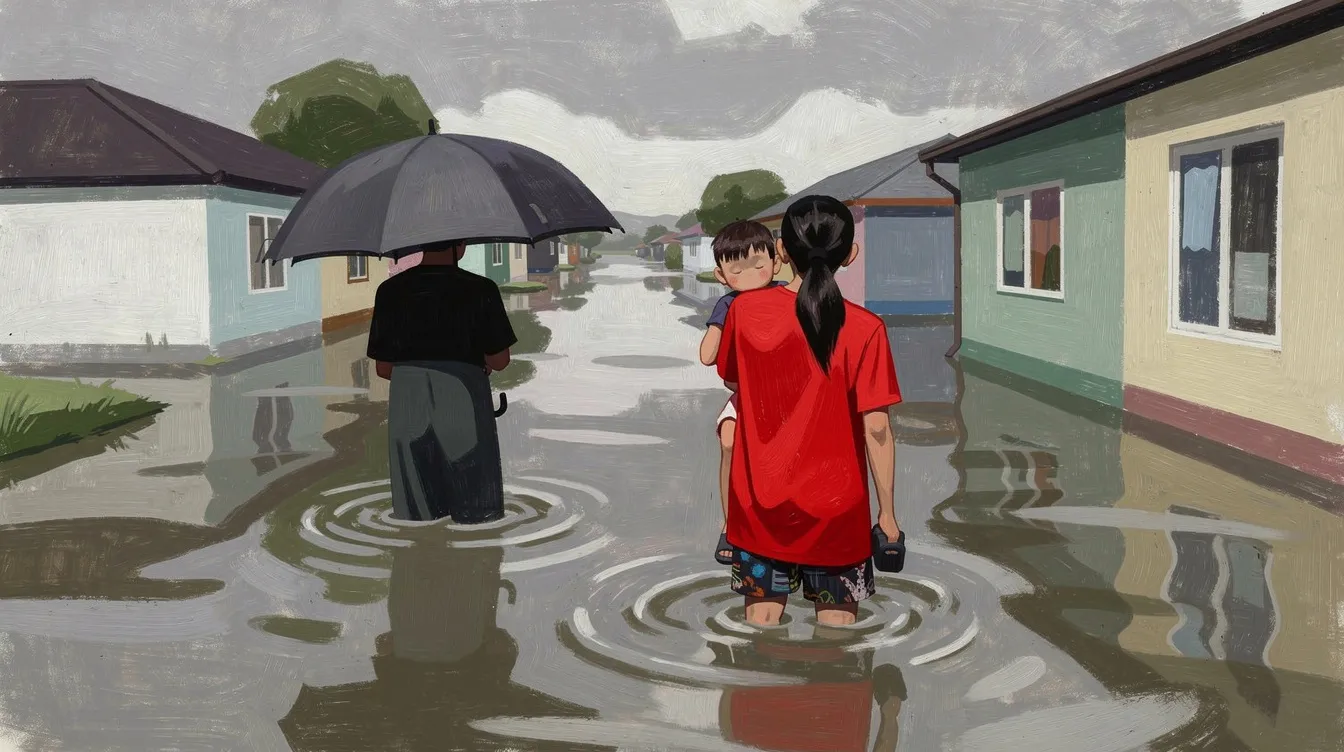
Severe weather conditions in the Philippines, attributed to tropical cyclones Kujira and Luis, alongside the southwest monsoon, have resulted in at least 19 fatalities and four individuals reported missing, according to the National Disaster Risk Reduction and Management Council (NDRRMC) and Anadolu Agency. The causes of death include landslides, rockslides, electrocution, and drowning.
As of Tuesday, more than 2.27 million individuals across various regions have been affected by the adverse weather. The NDRRMC reported that over 94,990 people are currently sheltering in 919 evacuation centers across the affected areas. Additionally, at least 684 houses were reported damaged, including 45 that were completely destroyed, leading to a total infrastructure damage estimated at 1.45 billion pesos (approximately $23 million) and agricultural damage around 135.33 million pesos.
Assistant Secretary Laurence Mina of the Office of Civil Defense (OCD) emphasized the urgent need for assistance in the affected areas, stating that the situation remains critical as they continue to monitor the weather and provide necessary support to those in need. Emergency services have been mobilized to conduct search and rescue operations for the missing individuals, while local governments are assessing the damage and coordinating relief efforts.
“The situation remains critical as we continue to monitor the weather and provide necessary support to those in need.”Laurence Mina, Assistant Secretary, Office of Civil Defense
Indonesian coverage of the same weather events has also reported significant impacts, but with a focus on the broader regional implications of such disasters. While the Philippines' outlets stressed the immediate human toll and infrastructure damage, Indonesian reports highlighted the potential for these weather patterns to influence regional climate discussions and disaster preparedness strategies. This divergence in framing suggests that while the Philippines is grappling with the immediate fallout, Indonesia is considering the longer-term implications of climate resilience in the region.
In Myanmar, the situation has also been dire, with reports indicating at least 25 fatalities and over 440,000 individuals affected across 17 townships due to severe flooding. According to the civilian National Unity Government (NUG), the flooding has been exacerbated by emergency water releases from major reservoirs, affecting regions such as Sagaing, Magway, Mandalay, and Ayeyarwady. While the NUG has reported the death toll, local aid workers have criticized the military regime's response, claiming that it has failed to provide adequate emergency relief and assistance to the victims. Residents in affected areas have expressed frustration over the lack of support, contrasting sharply with the Philippine government’s mobilization of resources and immediate assistance efforts.
This contrast in responses highlights differing national priorities: while the Philippines is focused on immediate disaster response and humanitarian aid, Myanmar's coverage reflects a broader concern over governance and the effectiveness of the military regime's disaster management capabilities. Aid workers have reported that many communities in Myanmar have not received the necessary support, despite official claims of aid distribution, indicating a significant gap between government reports and on-the-ground realities.
The Philippines is no stranger to severe weather events, particularly during the monsoon season, which typically spans from June to November. The country experiences an average of 20 tropical cyclones annually, often leading to significant humanitarian challenges. In recent years, the government has been working to enhance disaster preparedness and response capabilities, although the scale of this disaster underscores the ongoing vulnerabilities faced by many communities.
In light of these events, analysts at the National Economic and Development Authority (NEDA) have highlighted the importance of investing in climate resilience and infrastructure improvements to mitigate the impacts of future natural disasters.