Philippines
Philippines Seeks to Secure Cheaper Loans Amid Upper-Middle-Income Transition
The Philippines aims to lock in development financing before losing access to concessional loans following its upgrade to upper-middle-income status.
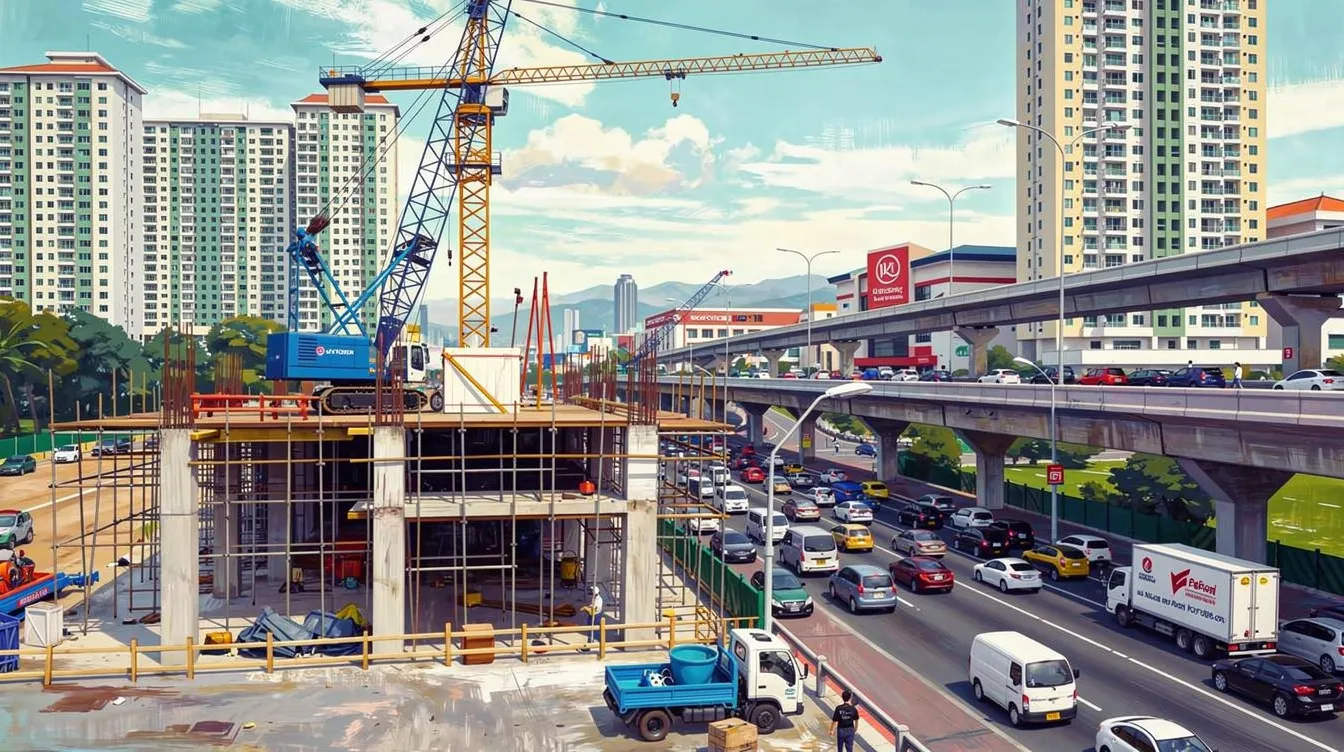
MANILA, Philippines – Following its recent classification as an upper-middle-income country by the World Bank, the Philippine government is working to secure cheaper development financing before access to concessional loans diminishes. The country's gross national income (GNI) per capita reached $4,850 in 2025, surpassing the $4,636 threshold for this category.
Department of Economy, Planning, and Development (DEPDev) Secretary Arsenio Balisacan highlighted that this upgrade signals improvements in governance, investment climate, and public infrastructure. He noted, “Those improvements will get reflected in the financial market,” suggesting that private firms will also benefit from the enhanced economic status.
“Those improvements will get reflected in the financial market.”Arsenio Balisacan, Secretary of Economy, Planning, and Development
However, this transition comes with challenges. While the Philippines will maintain access to concessional loans for the next three years, officials acknowledge that the country will gradually lose this access thereafter. Balisacan stated, “In the next three years, we still maintain those concessional loans, but gradually, we will lose eventually those ones.”
DEPDev Undersecretary Joseph Capuno expressed confidence in maximizing the three-year window to approve priority projects, stating, “We have a number of infrastructure projects and social sector investment projects in the pipeline.” He emphasized the urgency of advancing these projects, particularly in light of the recent economic slowdown, which saw growth fall short of expectations and inflation remain a persistent issue.
“You want to prioritize new projects in the social sector, slow down a bit on the infrastructure sector.”Joseph Capuno, Undersecretary, DEPDev
Despite the challenges, Capuno reassured that ongoing infrastructure projects will continue to receive support, stating, “It’s not a slowdown on all infrastructure projects, only on new. But expedite, ongoing.” As the government navigates this transition, it aims to bolster confidence and growth while addressing inflation and external economic pressures.
In contrast, coverage from Philippine media outlets has emphasized the urgency of this financial strategy. According to Rappler, the government is under pressure to finalize agreements with development partners like the World Bank and the Asian Development Bank before losing its concessional loan privileges. This urgency is echoed in the Manila Times, which frames the transition as a critical juncture for the Philippines to secure funding for its development projects.
Furthermore, while Indonesian coverage has focused on the broader implications of the Philippines' economic upgrade, highlighting the potential benefits for foreign investors, Philippine outlets have framed it more in terms of immediate fiscal responsibility and the need to act swiftly to safeguard the country's financial future. This divergence reflects differing national priorities: Indonesian reports stress the upgrade as a signal of regional economic strength and stability, while Philippine media emphasize the pressing need for strategic planning to mitigate risks associated with losing concessional financing.
As the Philippines seeks to navigate this pivotal moment, the focus remains on securing necessary funding and ensuring that the transition to upper-middle-income status translates into tangible benefits for its citizens.