Philippines
Philippines Achieves Upper-Middle Income Status Amid Economic Challenges
The World Bank's reclassification highlights both progress and ongoing issues in the Philippine economy.
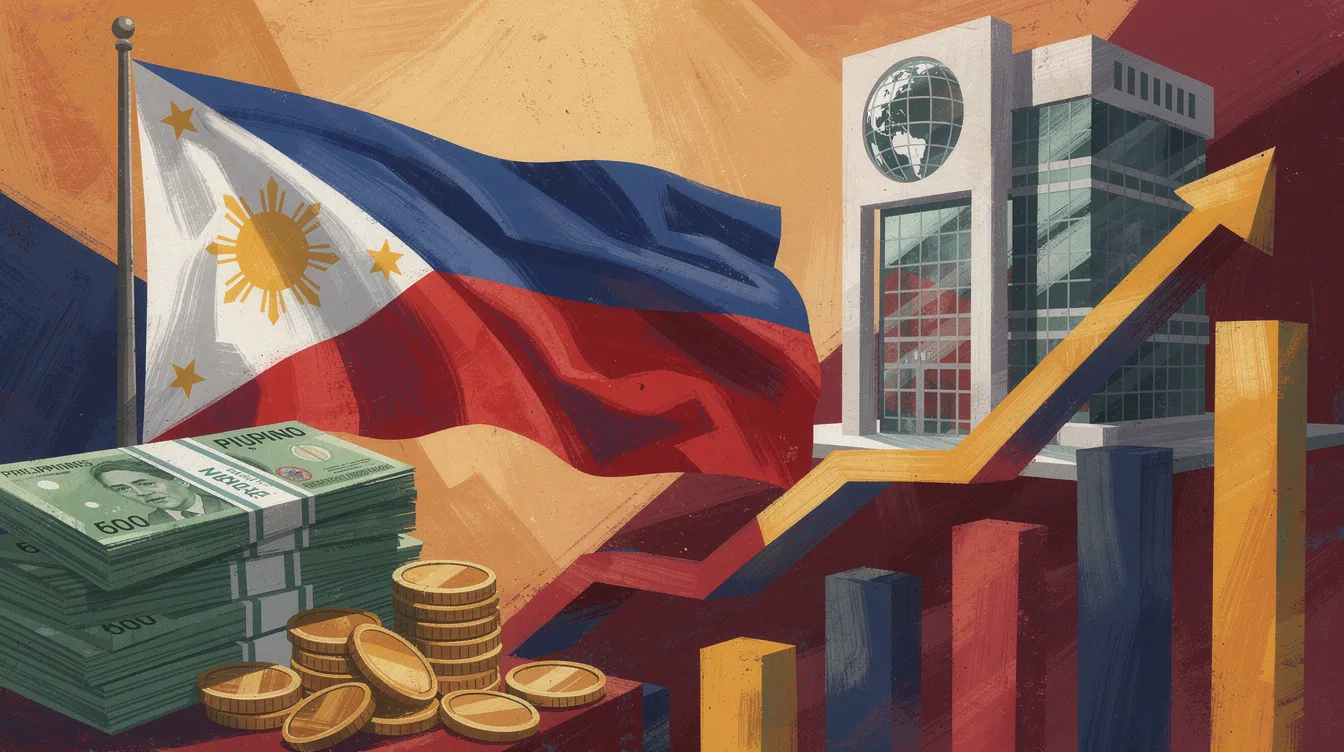
The Philippines has officially attained upper-middle income status, as announced by the World Bank on July 1, 2026. This milestone follows a significant increase in the country's gross national income (GNI) per capita, which reached $4,850, surpassing the upper-middle income threshold of $4,636. The reclassification marks a notable shift for a nation that had been categorized as lower-middle income since 1987.
Socioeconomic Planning Secretary Arsenio Balisacan emphasized that this upgrade reflects the resilience of the Philippine economy, stating, "Despite global and domestic shocks, we have relentlessly pursued inclusive growth, strengthened fundamentals, and remained on track with our development agenda." This sentiment was echoed by the Department of Economy, Planning, and Development (DEPDev), which described the achievement as a "historic economic milestone" driven by broad-based economic expansion.
“We acknowledge that income disparities persist, and many continue to face economic difficulties. Our priority is to ensure that growth becomes more inclusive, and that its benefits reach all Filipinos.”Arsenio Balisacan, Socioeconomic Planning Secretary
Implications of the New Classification
While the elevation to upper-middle income status is celebrated, it comes with significant implications. Notably, the Philippines may gradually lose access to concessional loans and official development assistance (ODA) from international partners such as the World Bank and the Asian Development Bank. Balisacan acknowledged that while some ODA may decline, the overall benefits of improved market access and stronger economic fundamentals are expected to outweigh these losses.
Chinabank Research noted that access to concessional financing would not be immediate, as eligibility for these facilities typically phases out when GNI per capita exceeds $7,000. The firm anticipates that the upgrade will reshape the financing landscape, encouraging greater reliance on market-based funding.
Challenges Ahead
Despite the positive news, many Filipinos continue to face economic hardships, with inflation rates remaining elevated. As of May 2026, headline inflation was reported at 6.8%, significantly above the Bangko Sentral ng Pilipinas' target range of 2% to 4%. The rising cost of living has led to public skepticism regarding the benefits of the new income classification.
Jonathan Ravelas, a senior adviser at Reyes Tacandong & Co., cautioned that the upgrade marks the "beginning of a more demanding journey." He urged the government to leverage this opportunity to accelerate infrastructure development, attract investments, and enhance education and skills training to ensure that economic growth translates into improved living standards for ordinary Filipinos.
Economic Growth and Future Prospects
The World Bank's classification reflects a broader economic trend, with the Philippine economy experiencing an average growth rate of 5.8% from 2021 to 2025. This growth has been attributed to gains across multiple sectors rather than a singular economic boom. However, analysts warn that GNI per capita is a crude average that does not account for income distribution disparities, which remain a pressing issue.
As the country navigates its new status, experts stress the importance of sustainable growth that benefits all Filipinos. Ruben Carlo Asuncion, chief economist at Union Bank of the Philippines, highlighted the need for policies that foster private investment and create quality jobs, which are essential for maintaining the country's upper-middle-income standing in the long term.