Philippines
Philippines Ranks Third in ASEAN for Consumer Trust in Technology
A recent study reveals the Philippines' strong consumer trust in digital payments, despite a notable gap between familiarity and actual usage.
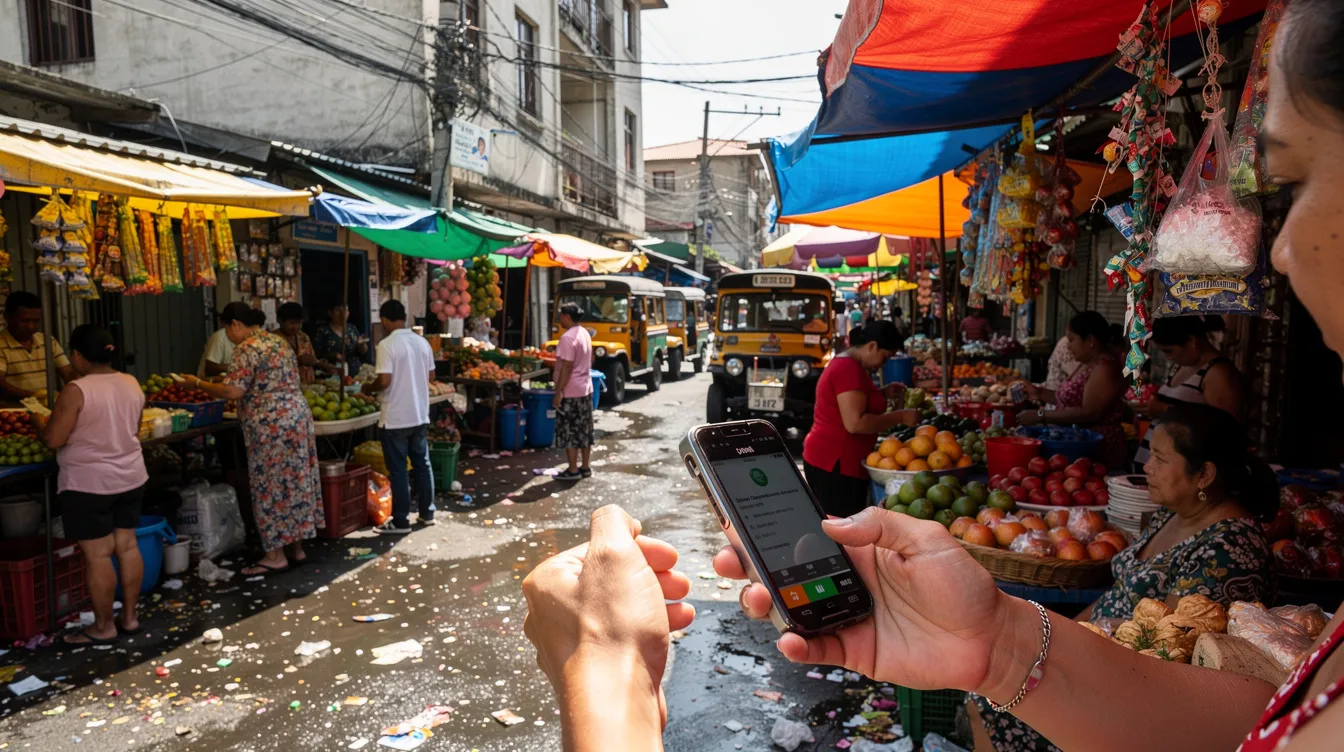
The Philippines has secured the third position among six Southeast Asian nations in terms of consumer trust in technology, according to the Southeast Asia Consumer Tech Trust Score 2026 report released by Vero and Kadence International. The study, which surveyed over 3,000 consumers across Indonesia, Malaysia, the Philippines, Singapore, Thailand, and Vietnam, assigned the Philippines an average Tech Trust Score of 75.3, trailing behind Indonesia's 76.4 and Vietnam's 75.7, and ahead of Malaysia's 74.8, Singapore's 69.9, and Thailand's 69.3.
Digital payments emerged as the most trusted technology category in the Philippines, boasting a Tech Trust Score of 81.8. This was followed closely by online banking at 81.4 and messaging apps at 79.6. Other categories such as ride-hailing and delivery services scored 75.0, while telecommunications, e-commerce, cybersecurity, and cloud storage received scores ranging from 71.7 to 76.9. In contrast, generative AI was noted as the weakest category, with a score of only 67.3.
Despite the high trust in digital payments, the report highlighted a significant gap between familiarity and actual usage. While 78% of Philippine respondents expressed familiarity with digital payments, only 30% reported using them daily, which is the lowest daily-use rate among the surveyed markets. This discrepancy illustrates a familiarity-to-usage gap that is nearly double the regional average.
Interestingly, even as messaging apps and social media are used extensively in the Philippines—92% and 88% of respondents reported daily usage, respectively—trust in these platforms remains comparatively low. Social media, for example, garnered a Tech Trust Score of 69.4, significantly lower than that of online banking and digital payments.
The study also revealed that a considerable portion of Philippine consumers, 23%, view government oversight as a critical factor in determining the trustworthiness of technology companies. This figure is higher than in Malaysia and Singapore, where 28% and 36% respectively cited government approval as a key trust signal. In contrast, Indonesian respondents prioritized a proven track record of reliability, with 43% selecting this as their primary trust indicator.
“Usage is an important signal, but it is not a complete measure of trust.”Ashutosh Awasthi, Director at Kadence International
Concerns regarding data misuse and online scams were prevalent among Philippine consumers, with 49.2% identifying personal data misuse as their top concern. Following a serious data breach, 56% of respondents indicated they would cease using the affected service immediately, the highest percentage among the six markets surveyed. This reflects a low tolerance for technology failures involving personal data.
Despite these concerns, the willingness of Filipinos to adopt new technology remains strong. The study found that 59% of respondents would be encouraged to try a new technology if it offered clear benefits to their daily lives. This is a higher percentage than the regional average.
Ashutosh Awasthi, director at Kadence International, stated that usage is an important signal, but it is not a complete measure of trust, adding that the trust-usage gap reveals a more complex relationship between consumers and technology. This complexity underscores the need for technology companies to enhance transparency and accountability in their operations.
As the Philippines continues to navigate the evolving landscape of digital technology, the findings of this study suggest that while consumers are engaged and willing to adopt new technologies, they remain vigilant and expect high standards of trust and accountability from technology providers.