Philippines
Philippines' Balance of Payments Records $1.47 Billion Deficit in July
The Bangko Sentral ng Pilipinas reports a notable shift in the country's balance of payments, marking a $1.47 billion deficit in July, attributed to various economic factors.
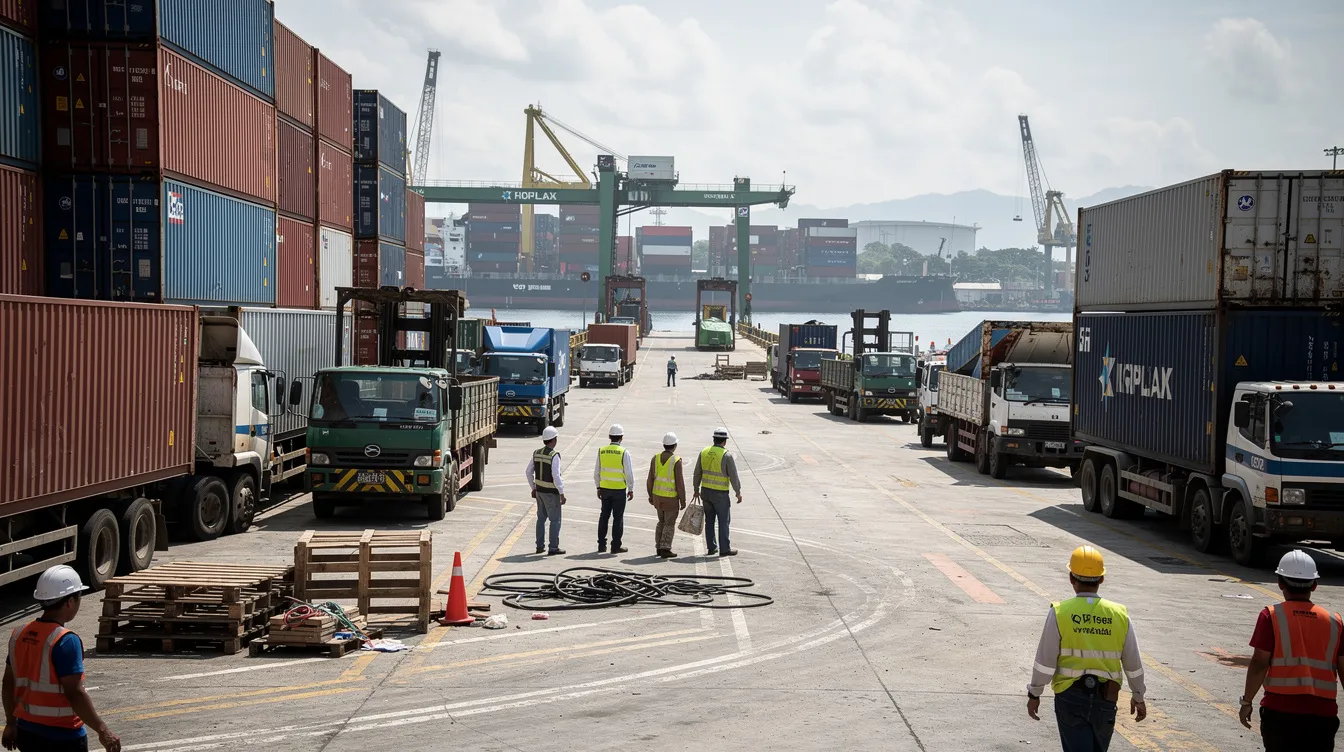
The Philippines’ balance of payments (BoP) position registered a deficit of $1.47 billion in July 2026, according to data from the Bangko Sentral ng Pilipinas (BSP). This marks a significant reversal from a surplus of $3.403 billion in June and a deficit of $167 million in July of the previous year. This is the first monthly deficit since April, highlighting ongoing economic challenges.
The BSP indicated that the July deficit was largely due to a persistent trade gap, outflows from portfolio investments, and external debt-related payments. Union Bank of the Philippines Chief Economist Ruben Carlo O. Asuncion explained that the country experienced higher foreign exchange outflows, particularly for external debt payments and increased dollar demand for imports. He noted that the July BoP deficit reflected the country’s persistent trade gap, portfolio investment outflows, and external debt-related payments.
“The July BoP deficit reflected the country’s persistent trade gap, portfolio investment outflows, and external debt-related payments.”Ruben Carlo O. Asuncion, Chief Economist, Union Bank of the Philippines
Year-to-date, the cumulative BoP deficit stood at $5.347 billion, which is narrower than the $5.756 billion deficit recorded in the same period last year. The BSP attributed this year-to-date position to the ongoing trade-in-goods deficit and net outflows from foreign portfolio investments, though these were somewhat offset by sustained inflows from personal remittances, foreign direct investments, and trade in services.
The Philippines’ trade-in-goods balance widened to a $30.81 billion gap as of June, up from $24.48 billion a year earlier. Despite the deterioration in the monthly BoP figures, Jonathan L. Ravelas from Reyes Tacandong & Co. cautioned against viewing these numbers in isolation, noting that monthly figures can be influenced by the timing of significant transactions.
“The Philippines continues to benefit from strong structural dollar inflows, but maintaining a healthy balance between foreign exchange earnings and import requirements will be crucial.”Jonathan L. Ravelas, Senior Adviser, Reyes Tacandong & Co.
In conjunction with the BoP deficit, the country’s gross international reserves (GIR) fell to $103.317 billion at the end of July, a decrease of nearly 2% from $105.418 billion a year earlier. This decline represents the lowest level of reserves in 18 months. The BSP attributed the decrease to net foreign exchange operations and government withdrawals from foreign currency accounts for external debt payments. Despite the drop, the GIR remains sufficient to cover 6.7 months of imports and can service about 3.7 times the country’s short-term external debt based on residual maturity.
Looking ahead, the BSP projects the BoP deficit to widen to $10.7 billion by year-end, equivalent to -2.1% of gross domestic product (GDP), compared to -1.2% of GDP in 2025. Ravelas noted that the country has to keep a healthy balance between its foreign exchange earnings and import needs to shield its external position against persistent global risks.
Indonesia's Current Account Deficit Expands
In contrast, Indonesia's balance of payments also faced challenges, with the current account deficit (CAD) widening significantly to $12.5 billion, or 3.3% of GDP, in the second quarter of 2026. This marks a substantial increase from the $3.6 billion deficit recorded in the first quarter. According to Detik Finance, the CAD expansion was driven by a larger trade deficit in oil and gas and a decrease in the non-oil and gas trade surplus.
Bank Indonesia's Executive Director Ramdan Denny Prakoso noted that the current account deficit was influenced by rising oil imports due to high global prices and robust domestic demand. He emphasized that while the situation is concerning, it reflects temporary factors and that the overall performance of the balance of payments remains stable.
“The current account deficit is influenced by several temporary factors, including the increase in oil imports and a narrowing non-oil and gas surplus,”Ramdan Denny Prakoso, Bank Indonesia
While the Philippines' coverage focused on the implications of its own BoP deficit for economic stability and foreign exchange management, Indonesian outlets framed the CAD as a risk to the stability of the rupiah against the US dollar, with CNBC Indonesia reporting that the CAD could exert pressure on the currency, potentially leading to a depreciation if external conditions worsen.
Economists in Indonesia expressed concern over the CAD's implications for the nation's economic outlook, with projections suggesting that the deficit could widen further due to government policies aimed at stimulating growth, which could increase imports. Faisal Rachman from Permata Bank warned that ongoing geopolitical tensions and weak global demand, particularly from China, could further strain exports.
“The CAD is expected to widen further, driven by higher imports under growth-oriented government policies and weakening global demand,”Faisal Rachman, Permata Bank
In summary, while both countries are grappling with balance of payments deficits, the Philippines is focusing on managing its trade gap and foreign exchange needs, while Indonesia's narrative emphasizes the risks posed to its currency and the broader economic implications of its current account deficit.