Philippines
Philippine Banking Sector Assets Reach Record High of P30.442 Trillion
As of May 2026, the Philippine banking industry's assets have surged to an unprecedented P30.442 trillion, driven by stable deposits and loan growth.
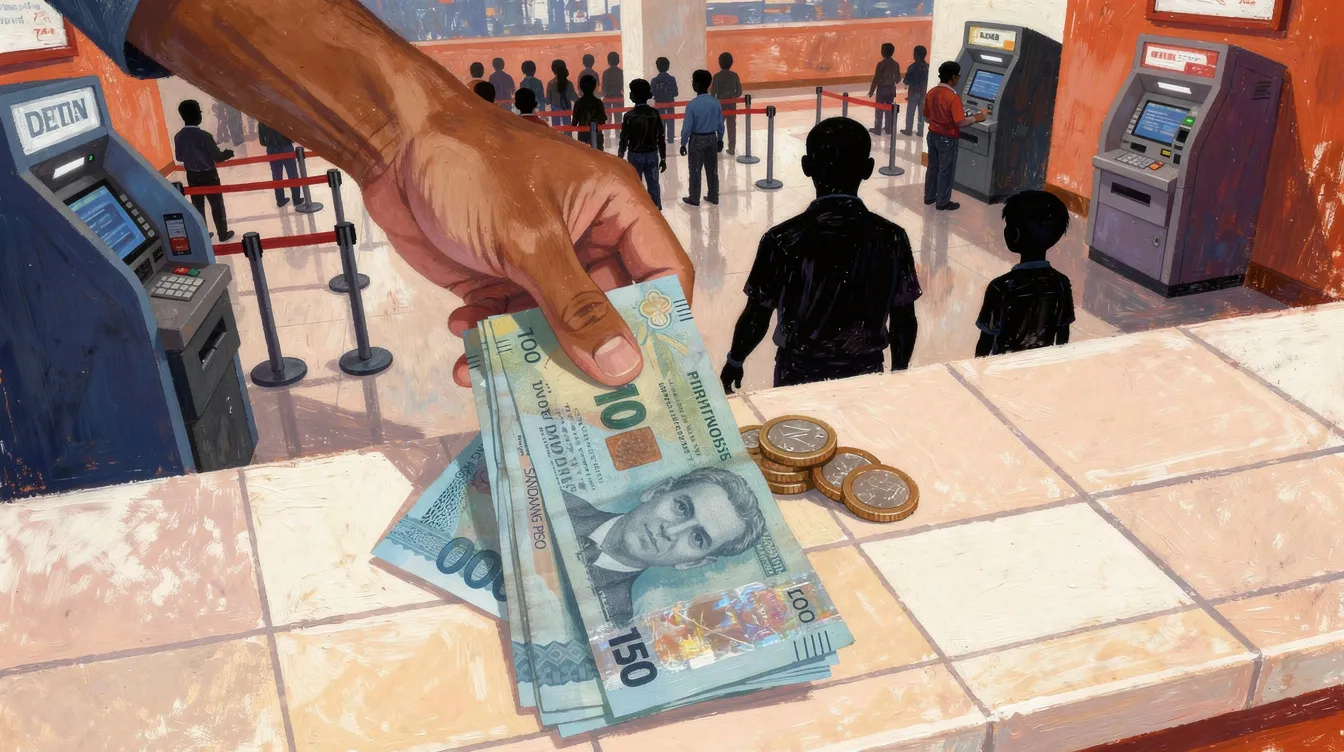
The Philippine banking sector has achieved a milestone, with total assets soaring to an all-time high of P30.442 trillion (approximately $537 billion) as of the end of May 2026. This represents an 11.69% increase from P27.257 trillion ($486 billion) in the same period last year, according to data from the Bangko Sentral ng Pilipinas (BSP).
Notably, this figure surpasses the previous record of P30.336 trillion ($532 billion) recorded at the end of March 2026. Month-on-month, the sector's assets rose by 1.07% from P30.12 trillion ($532 billion) at the end of April. Analysts attribute this growth to a combination of stable deposit inflows, increased financing for households and businesses, and a rise in investment holdings.
Ruben Carlo O. Asuncion, Chief Economist at Union Bank of the Philippines, stated that the record-high level of bank assets as of end-May reflects the continued expansion of economic activity and financial intermediation in the country. He emphasized that sustained loan growth and resilient domestic demand have underpinned this expansion.
“The record-high level of bank assets as of end-May reflects the continued expansion of economic activity and financial intermediation in the country.”Ruben Carlo O. Asuncion, Chief Economist, Union Bank of the Philippines
As of the end of May, the banking sector's total net loan portfolio, which includes interbank loans receivable (IBL) and reverse repurchase (RRP) agreements, increased by 12.07% year-on-year to P16.946 trillion ($304 billion) from P15.121 trillion ($271 billion) the previous year. Furthermore, net investments, which encompass financial assets and equity investments in subsidiaries, rose to P8.641 trillion ($154 billion), an 8.61% increase from P7.956 trillion ($143 billion) recorded a year prior.
The sector's total liabilities also saw a substantial rise, reaching P26.854 trillion ($487 billion) at the end of May, marking a 12.89% increase from P23.787 trillion ($426 billion) in the same month last year. Approximately 83% of these liabilities were deposits, which climbed by 11.19% year-on-year to P22.306 trillion ($396 billion) from P20.061 trillion ($360 billion) previously.
“A prolonged escalation could exert pressure on global oil prices, potentially fueling inflation, affecting consumer spending and business activity.”Ruben Carlo O. Asuncion, Chief Economist, Union Bank of the Philippines
Despite the positive outlook, Asuncion cautioned that renewed financial market volatility, particularly due to escalating tensions in the Middle East, could impact the banking sector's asset growth. He noted that a prolonged escalation could exert pressure on global oil prices, potentially fueling inflation, affecting consumer spending and business activity, and introducing greater uncertainty into financial markets.
While the BSP has indicated that geopolitical shocks from the ongoing conflicts have minimal direct impact on the local banking system, it has also flagged potential risks to asset quality in certain sectors due to weaker domestic and external financial conditions.
In summary, the Philippine banking sector remains robust, supported by strong economic fundamentals, though it faces challenges from external geopolitical developments that could influence future growth.