Myanmar
Myanmar's Palm Oil Prices Surge Amid Import Cuts and Supply Constraints
The Myanmar regime's decision to cut palm oil imports by over 30% has led to significant price increases in Yangon, raising concerns about household inflation.
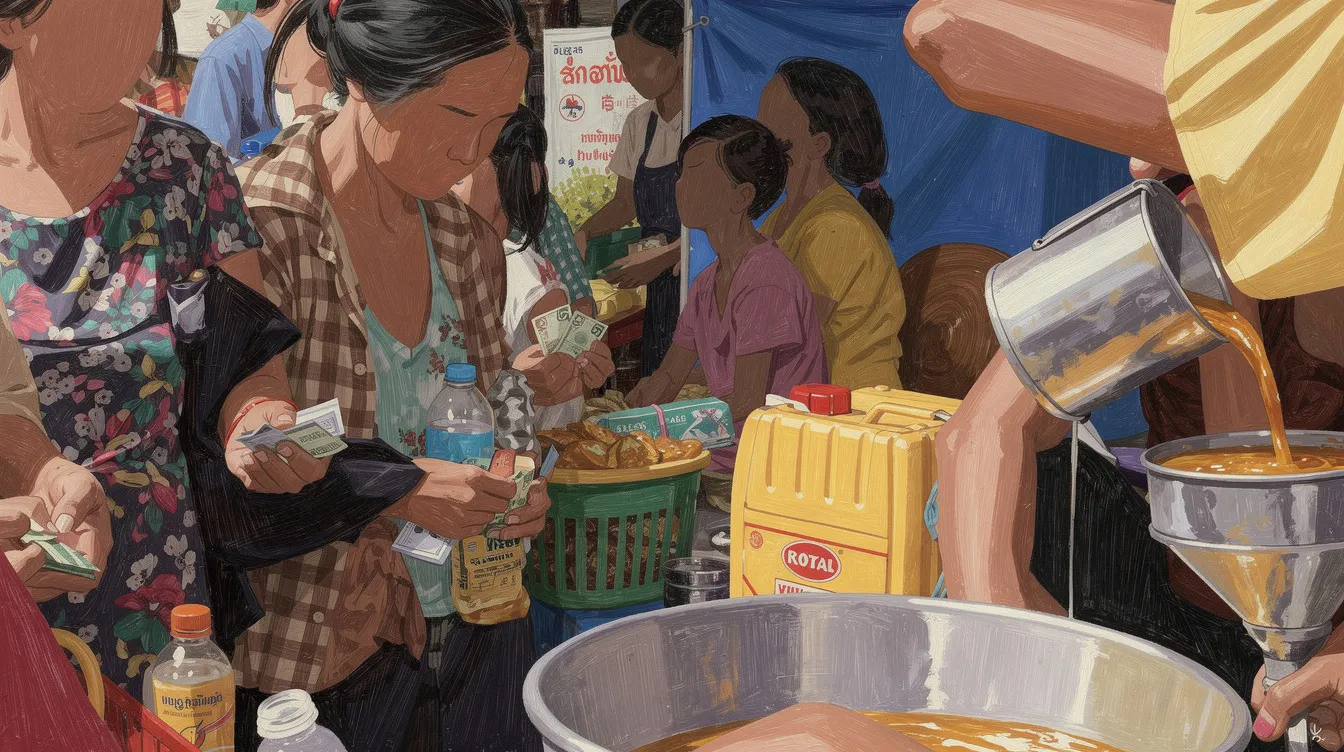
The retail price of edible palm oil in Yangon has experienced a notable increase, driven by recent government restrictions on foreign imports and significant cuts to regional distribution quotas. Prices jumped from a range of 16,000–25,000 MMK ($3.45–5.39 USD) per viss (1.6 kg) in mid-October to open market rates between 15,000 and 25,000 MMK depending on quality. Residents in Yangon’s South Dagon Township noted that market prices stood at 12,000 MMK per viss just last month, marking multiple price increases in October alone.
According to the Myanmar Edible Oil Dealers’ Association (MEODA), subsidized palm oil is still being distributed at a government-set price of 8,000 MMK ($1.70 USD) per viss, limited to one viss weekly per household through Household Registration Forms. However, the severe supply constraints have forced many consumers into the open market, where prices are significantly higher.
“Dr. Khaing Khaing Soe said the government is prioritizing efforts to ensure a stable supply of edible oil and addressed concerns over the current palm oil market.”Dr. Khaing Khaing Soe, spokesperson for the President's Office
Market analysts attribute the price surge directly to the regime's decision to cut national palm oil imports by over 30%, which has led regime authorities to reduce Yangon Region’s palm oil quota by 50%. This reduction comes amid ongoing foreign exchange volatility and import licensing challenges, leading to a drop in total nationwide imports—historically averaging 800,000 to 1,000,000 tonnes annually—to around 600,000 tonnes in 2026.
Dr. Khaing Khaing Soe, spokesperson for the President's Office, explained that the government is prioritizing efforts to ensure a stable supply of edible oil and addressed concerns over the current palm oil market and import conditions. She said more than 50,000 tons of palm oil have been imported each month to meet domestic demand, at a cost of over 58 million US dollars. These imports are primarily allocated to Yangon, home to a significant portion of the country's population.
“Dr. Khaing Khaing Soe said palm oil imports depend on the availability of foreign currency, which has resulted in a reduction in the distribution quota.”Dr. Khaing Khaing Soe, spokesperson for the President's Office
Despite Myanmar producing about 280,000 tons of edible oil annually, the country has imported more than 640,000 tons of palm oil to meet local demand, bringing total edible oil supply to more than 921,000 tons. Dr. Khaing Khaing Soe said palm oil imports depend on the availability of foreign currency, which has resulted in a reduction in the distribution quota. As a long-term strategy, the government aims to expand oil crop cultivation and increase domestic production to reduce reliance on imports.
Authorities are closely monitoring the market and taking action against the sale of palm oil at excessively high prices to protect consumers. The situation has raised concerns about household inflation, as palm oil accounts for 40-50% of total edible oil consumption among Myanmar's 54 million residents, primarily used for cooking and food manufacturing.