Myanmar
Myanmar Rejects ASEAN Chair's Request for Aung San Suu Kyi Meeting
The military-led government denies access to the detained leader, complicating ASEAN's engagement efforts.
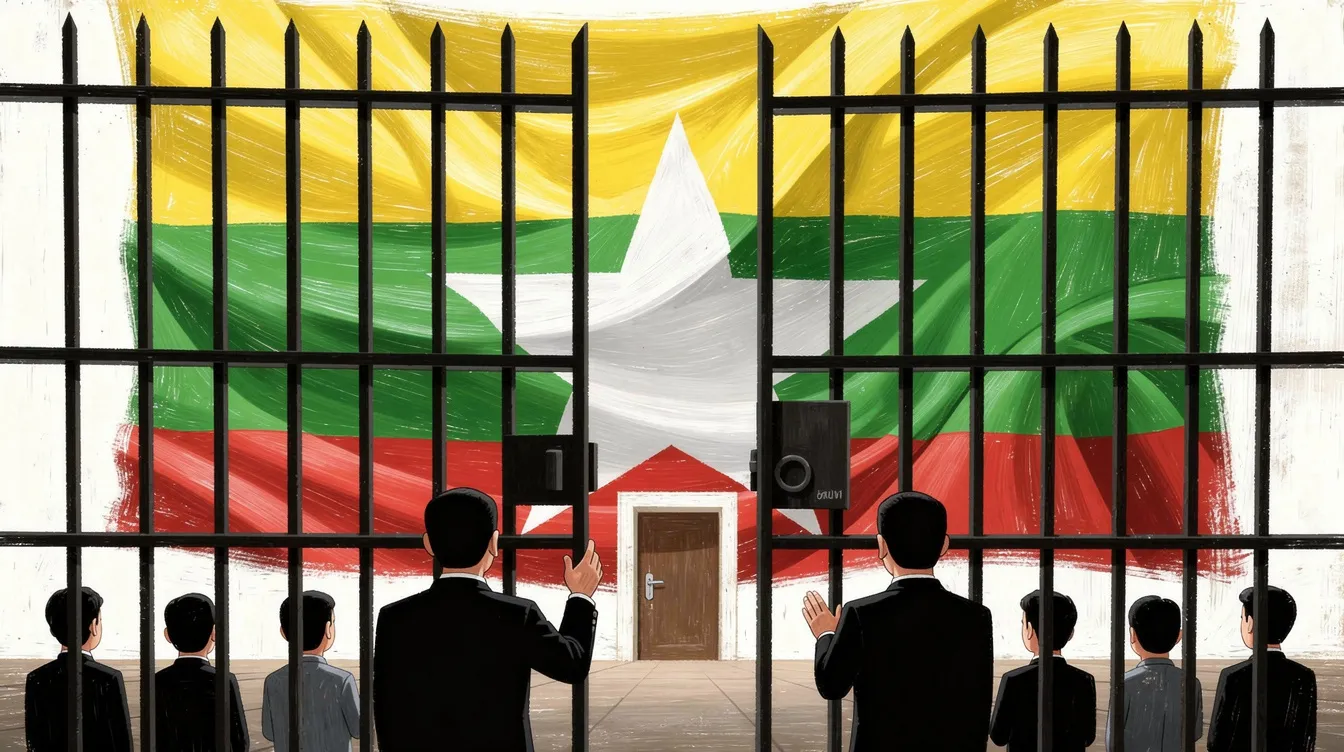
Myanmar's military-backed government has officially denied a request from the Association of Southeast Asian Nations (ASEAN) for its special envoy to meet with Aung San Suu Kyi, the country's former civilian leader who has been in detention since the military coup on February 1, 2021. The 81-year-old Nobel laureate was originally sentenced to a total of 33 years in prison on various charges, including incitement and corruption, but her sentence was reduced by one-sixth, leaving her with 18 years and nine months to serve.
In a recent development, the authorities announced that Suu Kyi had been transferred from prison to a designated residence, where she will serve the remainder of her sentence. This move was perceived by some as an attempt to improve Myanmar's international image. However, a spokesperson for the military government, Khaing Khaing Soe, stated that Aung San Suu Kyi has been prosecuted under the law and is serving sentences, thus denying her the opportunity to meet with international representatives.
“Aung San Suu Kyi has been prosecuted under the law and is serving sentences.”Khaing Khaing Soe, spokesperson for the military government
The Philippines, currently holding the ASEAN chair, expressed cautious optimism regarding Suu Kyi's transfer to house arrest. Philippine Foreign Affairs Secretary Ma. Theresa Lazaro emphasized the need for brief access to Suu Kyi to facilitate dialogue among all stakeholders in Myanmar. However, the military's refusal to allow such meetings poses a significant obstacle to ASEAN's efforts to engage with Myanmar and promote a peaceful resolution to the ongoing conflict.
ASEAN has not permitted Myanmar's military representatives to participate in its meetings since late 2021 due to the government's failure to adhere to the Five-Point Consensus, a framework established to address the crisis in Myanmar. This consensus calls for an immediate cessation of violence and the initiation of inclusive dialogue involving all parties. The military's recent actions, including the appointment of Min Aung Hlaing as president following a controversial election, have been interpreted by many as a strategy to normalize relations with ASEAN and the international community.
“Such actions are essential to advancing meaningful political dialogue as envisioned in the Five-Point Consensus.”Philippine Department of Foreign Affairs spokesperson
Despite the military's claims of progress, the situation remains fraught with challenges. The Philippine Department of Foreign Affairs reiterated the importance of releasing all political prisoners, particularly vulnerable individuals like Suu Kyi, to foster meaningful political dialogue. The spokesperson noted that such actions are essential to advancing meaningful political dialogue as envisioned in the Five-Point Consensus.
As ASEAN navigates this complex landscape, the denial of access to Aung San Suu Kyi could become a critical point of contention in the bloc's efforts to re-engage with Myanmar. The divergent views among ASEAN member states regarding how to approach Myanmar's military government further complicate the situation, with some countries advocating for engagement while others remain resistant to normalization.