Philippines
China's Foreign Minister to Attend ASEAN Summit in Manila
Wang Yi's visit underscores China's commitment to regional cooperation amid evolving geopolitical dynamics.
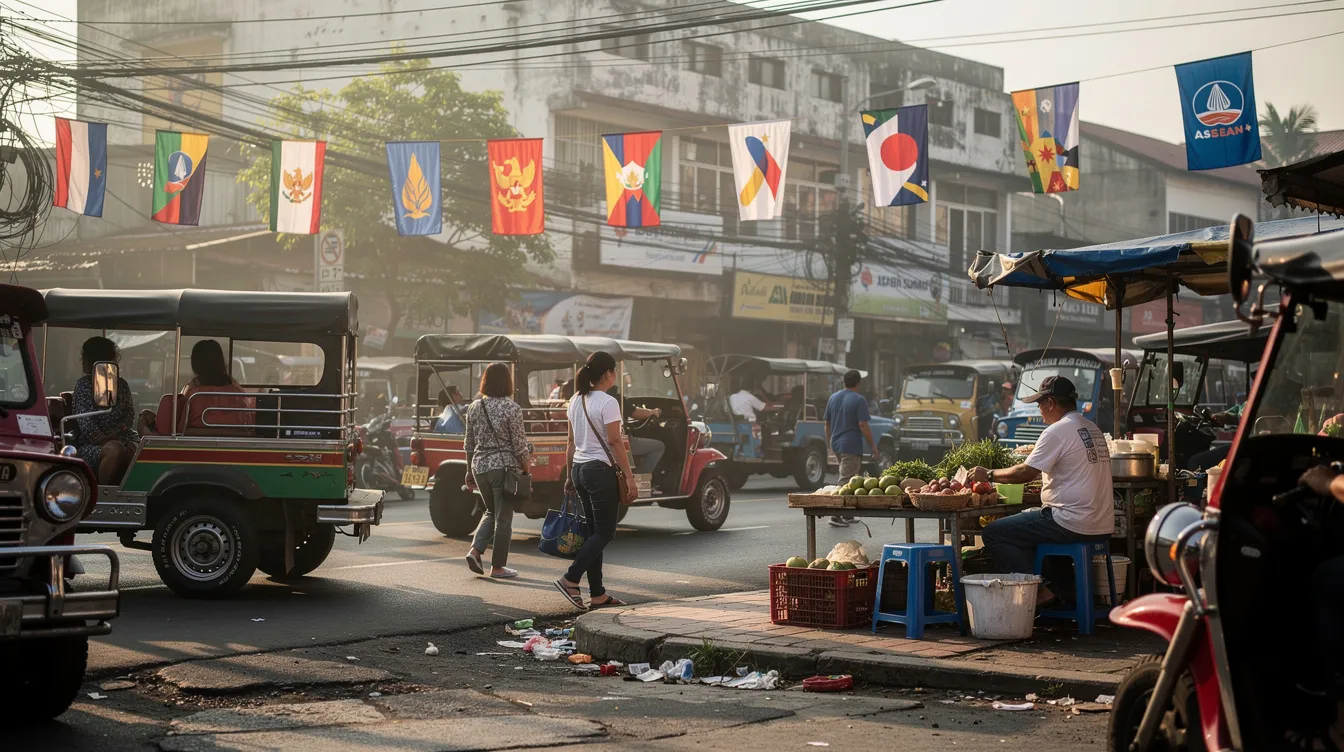
Chinese Foreign Minister Wang Yi will visit the Philippines to attend the China-ASEAN Foreign Ministers’ Meeting, taking place in Manila from July 20 to 24. This gathering is significant as it brings together foreign ministers from the 11-member ASEAN bloc, alongside counterparts from major global powers, including U.S. Secretary of State Marco Rubio and Russian Foreign Minister Sergey Lavrov.
According to a statement from China's Foreign Ministry, Wang's participation reflects China's view of ASEAN as a friendly, close neighbor and an important cooperation partner. The ministry's spokesman, Lin Jian, emphasized that ASEAN is a priority in China's neighborhood diplomacy, aiming to foster stability and prosperity in the region.
“ASEAN is a friendly, close neighbor and an important cooperation partner.”Lin Jian, Chinese Foreign Ministry spokesman
Lin noted that China hopes to expand consensus on development and cooperation during the meeting, striving to create a closer China-ASEAN community with a shared future. This aligns with previous statements made by Chinese officials regarding the importance of ASEAN's central role in regional cooperation architecture.
While the agenda for the meeting includes discussions on various regional issues, it remains uncertain whether Wang will engage in bilateral talks with his counterparts on the sidelines. Analysts suggest that such interactions could be pivotal in addressing ongoing tensions in the South China Sea and enhancing economic partnerships. The Philippines, in particular, is keen on navigating these tensions, with President Ferdinand Marcos Jr. emphasizing the need for a balanced approach in its foreign policy.
Recent tensions between the Philippines and China have escalated, particularly surrounding a clash at the disputed Second Thomas Shoal, known as Ren'ai Jiao in China and Ayungin Shoal in the Philippines. Reports indicate that a Philippine Navy marine sustained a head injury during a confrontation with the Chinese Coast Guard, which the Armed Forces of the Philippines (AFP) described as an aggressive encounter. The AFP stated that the Chinese personnel acted violently, striking a Filipino sailor with a baton, while the Chinese government accused the Philippines of instigating the incident.
This incident highlights a stark divergence in how both nations frame their maritime disputes. While Chinese coverage portrayed the Philippine actions as provocations against the Chinese Coast Guard, Philippine media emphasized the need to protect national sovereignty and condemned the assault on their personnel. President Marcos condemned the incident, stating, “We condemn in the strongest terms the assault against our personnel who were carrying out their lawful duties.” This framing underscores the Philippines' commitment to defending its national interests in the South China Sea.
Moreover, the Chinese government has challenged the Philippine narrative, insisting that their Coast Guard acted with restraint and accusing Manila of spreading false propaganda. The Chinese Embassy in Manila claimed that the Philippine vessels ignored warnings and acted aggressively, further complicating the narrative surrounding the incident. According to the National Task Force for the West Philippine Sea (NTF-WPS), the confrontation occurred when a Chinese vessel approached the BRP Sierra Madre at close range, leading to a clash that resulted in injuries to a Filipino serviceman.
In contrast, the Chinese Coast Guard stated that their personnel acted with "maximum restraint" and accused the Philippine forces of initiating the confrontation by attempting to ram their patrol vessel. This differing portrayal illustrates the growing tensions and the complexities surrounding the South China Sea disputes.
Furthermore, the presence of Russian Foreign Minister Sergey Lavrov at the ASEAN meetings adds another layer of complexity to the discussions. His participation highlights the multifaceted geopolitical dynamics at play, as regional discussions are expected to focus on the conflict in Myanmar, tensions in the South China Sea, and disruptions to global trade and energy supplies caused by instability in the Middle East.
While the Philippines seeks to balance its relations with major powers, Myanmar's crisis remains a contentious issue within ASEAN. According to Nikkei Asia, foreign ministers have struggled to reach a consensus on how to engage with Myanmar's military regime, reflecting deep divisions within the bloc. This lack of progress contrasts with the Philippines' more unified stance on regional cooperation, as Philippine Foreign Affairs Secretary Ma. Theresa P. Lazaro opened the ASEAN meeting with a call for unity and collective action, emphasizing the need for “active, deliberate problem solving” in a world marked by uncertainty.
Myanmar's media coverage, particularly from DVB, highlights the ongoing instability in the country following the military coup on February 1, 2021. The ASEAN meeting is set against the backdrop of this crisis, with informal consultations expected to address the situation in Myanmar. The Five Point Consensus, a peace plan agreed upon by Myanmar's military leader Min Aung Hlaing, has seen little implementation, leading to frustration among ASEAN members. Unlike the Philippines' emphasis on unity, Myanmar's coverage stresses the urgency of addressing the military's actions and the need for international support for the democratic resistance.
Additionally, Myanmar’s diaspora has launched a campaign to retain Ambassador Kyaw Moe Tun's position at the United Nations, emphasizing the importance of his role in representing the democratic aspirations of the Myanmar people. This campaign underscores a broader concern within Myanmar about the legitimacy of the military regime and the need for ASEAN to reconsider its engagement with Naypyidaw. As Khin Thiri Nandar Soe, a pro-democracy activist, noted, the campaign aims to prevent ASEAN from normalizing relations with the military regime, contrasting sharply with the more diplomatic approach favored by Chinese officials.
Lazaro highlighted the urgency of the ministers' work, stating, “If we do not move forward as one, we risk being pulled apart.” This framing contrasts with the Chinese narrative, which emphasizes bilateral cooperation over collective regional action. Moreover, Lazaro invoked the principles of the Treaty of Amity and Cooperation as foundational for regional stability, which she described as ASEAN’s “most reliable anchor.” This focus on mutual respect and peaceful dispute resolution reflects a Philippine perspective that prioritizes sovereignty and regional solidarity, diverging from China's more assertive approach in the South China Sea.