Indonesia
Indonesia's Solar Ambitions: A Closer Look at the 100 GW Plan
As Indonesia pushes towards an ambitious target of 100 GW of solar capacity by 2029, experts debate the feasibility of this initiative amidst existing energy dynamics.
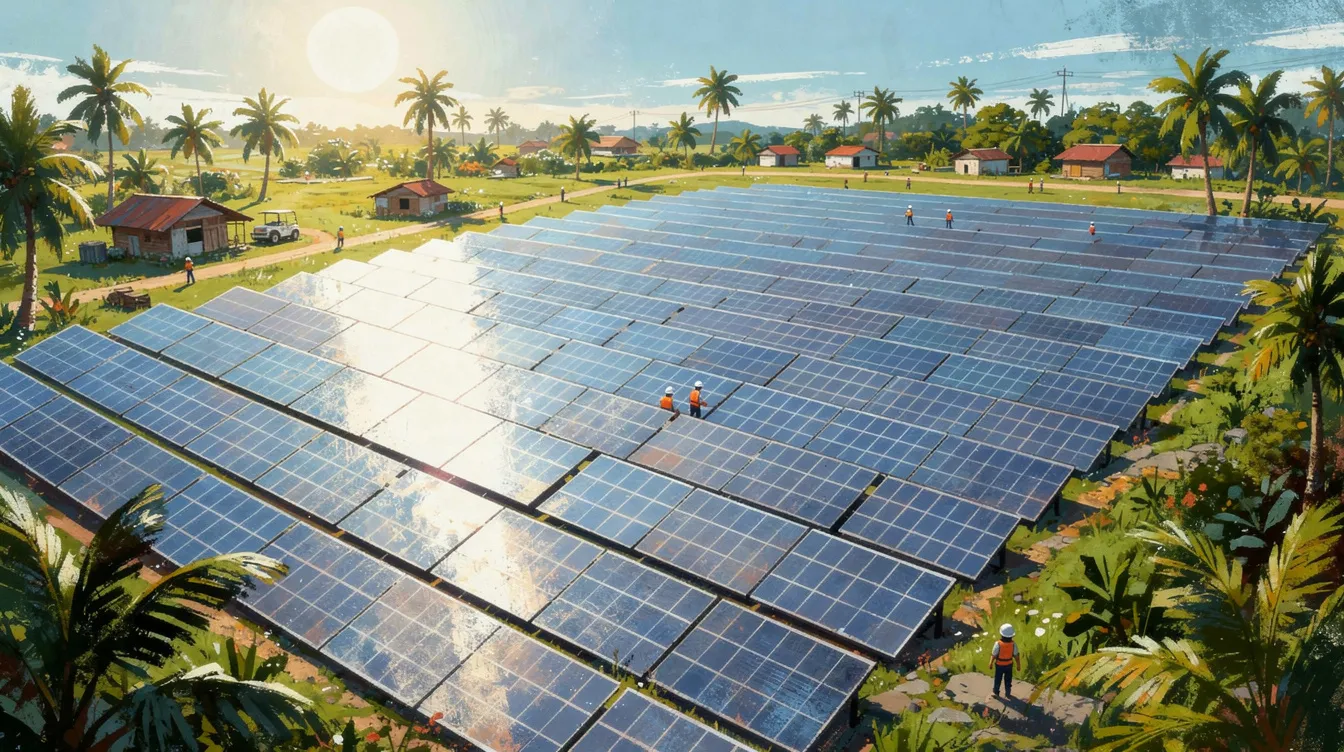
The Indonesian government has set an ambitious target to develop 100 gigawatts (GW) of solar power capacity by 2029. However, experts are skeptical about the feasibility of this goal, considering Indonesia's historical reliance on fossil fuels, particularly coal. While the government has shown a commitment to cleaner energy, the actual implementation remains a significant challenge.
According to The Diplomat, the key question is not whether Indonesia can achieve the 100 GW target in the short term, but rather if the country can develop a viable approach to scaling renewable energy projects. Recently, the government announced the first stage of the solar plan, which includes 5.3 GW of projects either under development or soon to be opened for bidding. Despite this progress, only eight of these projects are in advanced stages, with most still lacking financing and confirmed developers.
“The key question is whether we are getting closer to an approach that can actually be implemented and scaled, given the peculiarities of Indonesia’s political economy.”The Diplomat, energy analyst
Among the announced projects, two are small off-grid solar facilities aimed at replacing diesel generators in remote areas. These are being developed by state-owned companies Pertamina and PLN (Perusahaan Listrik Negara). The remaining six projects are larger utility-scale solar and battery storage facilities, primarily utilizing floating arrays on reservoirs. Once completed, these projects could add nearly 670 megawatts (MW) of solar capacity to the grid.
The involvement of PLN as an equity partner in these projects is noteworthy. Traditionally, PLN has been hesitant to support private renewable energy developers, preferring to maintain control over its coal-fired power plants. By participating as an equity partner, PLN has a vested interest in the success of these solar initiatives, which could foster a more supportive environment for future projects. This model mirrors the successful Cirata floating solar project, which went operational in 2023.
“Involving PLN as an equity partner provides the utility with an incentive to actually support these solar initiatives.”The Diplomat, energy analyst
Experts suggest that while the state-directed model may not be the most efficient, it could be a necessary approach to scale solar energy in Indonesia. As the country seeks to expand its renewable energy capacity, the challenge will be balancing state involvement with the need for private investment. The recent developments signal a cautious optimism, indicating that Indonesia's clean energy sector may finally be gaining traction.
In the context of Indonesia's broader energy landscape, the government aims to reduce reliance on fossil fuels and enhance energy independence. As reported by InsideASEAN, this initiative is part of a larger commitment to transition from diesel to solar energy, which could lead to substantial cost savings and reduced carbon emissions.