Indonesia
Indonesia Targets 100 GW Solar Power Capacity by 2029
President Prabowo Subianto outlines ambitious plans to transition from diesel to solar energy, aiming for substantial cost savings and energy independence.
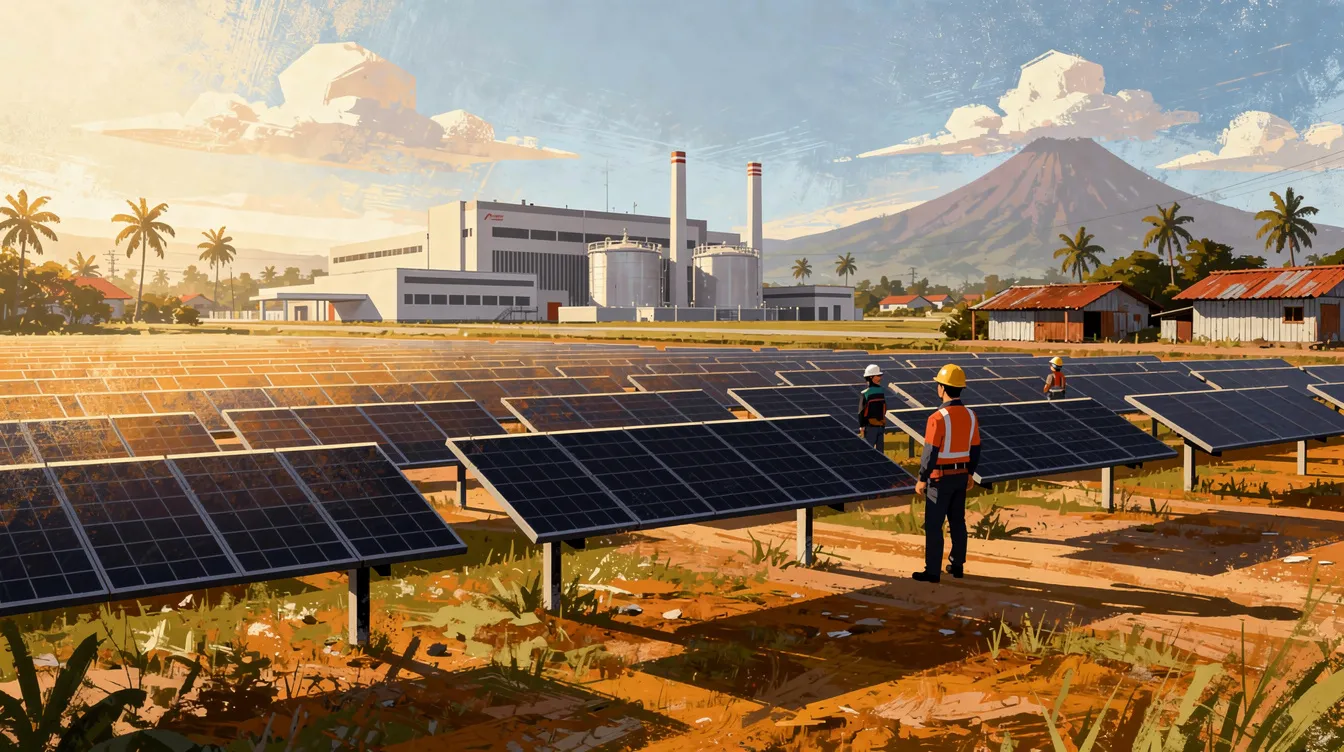
Indonesian President Prabowo Subianto has set an ambitious target to develop 100 gigawatts (GW) of solar power capacity by 2029, a move aimed at reducing the country's reliance on diesel power plants. Prabowo emphasized the need to harness Indonesia's abundant sunlight, which is available nearly year-round.
Prabowo stated that the government has already started the initiative to build 100,000 megawatts, or 100 gigawatts of solar energy, highlighting the government's plan to accelerate the closure of diesel power plants (PLTD) and replace them with solar power plants (PLTS). This year alone, the government aims to establish 30 GW of solar capacity while retiring 13 GW of diesel capacity.
“Prabowo stated that the government has already started the initiative to build 100,000 megawatts, or 100 gigawatts of solar energy.”Prabowo Subianto, President of Indonesia
According to the Minister of Economic Affairs, Airlangga Hartarto, the transition to solar energy could save the Indonesian government approximately IDR 73.9 trillion (around USD 4.8 billion) annually due to lower production costs for electricity. Prabowo noted that this financial relief could be significant for the country's budget.
“He remarked that solar power could help build energy independence at the village level.”Prabowo Subianto, President of Indonesia
Prabowo also emphasized the importance of energy independence at the village level, suggesting that ideally, each village should have a solar power plant with a capacity of 1 megawatt (MW). He remarked that solar power could help build energy independence at the village level, stressing the potential for local communities to benefit from renewable energy sources.
The initiative aligns with Indonesia's broader goals to enhance energy sovereignty and reduce carbon emissions. As reported by InsideASEAN, the government has been actively seeking investments, particularly from Chinese companies, to support this massive solar power project.
Indonesian coverage of this initiative has highlighted the potential for job creation and technological advancement within the renewable energy sector. According to ANTARA, the government views this transition as not just an environmental necessity but also a pathway to economic growth, with expectations that the solar power sector could create thousands of jobs in manufacturing and installation.
In contrast, some local outlets have framed the initiative as a response to international pressure to reduce carbon emissions, emphasizing Indonesia's commitment to global climate agreements. This perspective suggests that the solar power target is partly driven by a desire to improve Indonesia's international standing in climate negotiations. Indonesian coverage stressed the importance of this transition not only for domestic benefits but also to enhance the country's reputation on the global stage.
Furthermore, while Prabowo's remarks reflect a growing consensus among Indonesian leaders on the need to shift towards renewable energy sources, they also highlight the economic implications of such a transition. Local media outlets have pointed out that the solar power initiative is part of a broader strategy to achieve economic independence and sustainability. This is particularly relevant as Indonesia has historically been criticized for its reliance on fossil fuels.
As the country aims to meet its solar power targets, the government is also focusing on creating a conducive environment for investments in the renewable energy sector. Indonesian media, such as CNBC Indonesia, has reported on the government's plans to enhance regulatory frameworks to attract both domestic and foreign investments, ensuring that the transition to solar energy is not only environmentally sustainable but also economically viable.
In summary, while both Indonesian and international coverage agree on the ambitious nature of the solar power initiative, the framing of the project varies. Indonesian outlets emphasize the dual focus on economic growth and environmental responsibility, while also addressing the international context of climate commitments. This comprehensive approach reflects Indonesia's strategic vision for a sustainable energy future.