Indonesia
Indonesia Aims for 100 GW Solar Energy Capacity in Two Years
President Prabowo Subianto urges key ministers to accelerate solar power development as part of Indonesia's commitment to reducing carbon emissions.
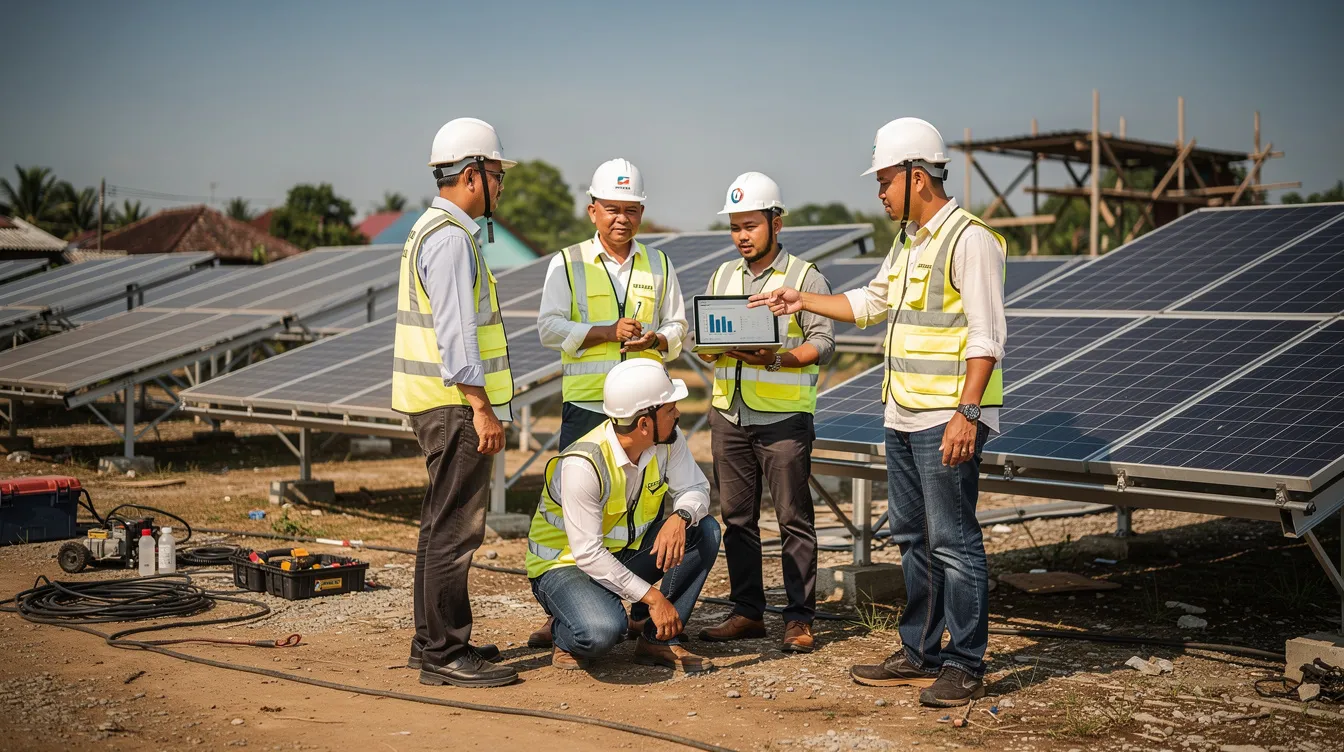
President Prabowo Subianto has called on three of his ministers to expedite the development of a 100 gigawatt (GW) solar power capacity within two years. This initiative aligns with Indonesia's broader goals of reducing carbon emissions and enhancing its renewable energy portfolio, particularly following the recent launch of the B50 biodiesel blend, which aims to cut down carbon emissions significantly.
During a recent event in Karawang, Prabowo emphasized the importance of this ambitious solar project, stating that Indonesia is being discussed globally for its efforts to reduce carbon emissions and that the B50 program can save 44 million tons of CO2 equivalent emissions. He mentioned that this year, PLN (Perusahaan Listrik Negara) will start with 17 GW of solar power capacity. He challenged Minister of Economic Coordination Airlangga Hartarto, Minister of Energy and Mineral Resources Bahlil Lahadalia, and Minister of Investment Rosan Perkasa Roeslani to ensure the swift implementation of this plan.
“Indonesia is being discussed globally for its efforts to reduce carbon emissions.”Prabowo Subianto, President of Indonesia
Prabowo acknowledged that skepticism from experts regarding the feasibility of achieving 100 GW in such a short timeframe is likely. He remarked that the government will face criticism and that experts will question the possibility of this goal, but he insisted that they must push forward. The government’s commitment to renewable energy development comes at a time when Indonesia is seeking to position itself as a leader in sustainable energy practices amid global discussions on climate change.
The push for solar energy is part of Indonesia's broader strategy to diversify its energy sources and reduce reliance on fossil fuels. PLN has been tasked with initiating the solar energy projects, which are expected to play a critical role in meeting the country's growing electricity demand while also addressing environmental concerns.
“The government will face criticism and experts will question the possibility of this goal, but we must push forward.”Prabowo Subianto, President of Indonesia
In addition to solar energy, Indonesia is also enhancing its biodiesel program, which is set to officially implement the B50 blend starting in 2026. This blend contains 50% biodiesel and is expected to further support the country’s emissions reduction targets.
As Indonesia moves forward with these initiatives, the government's ability to meet its ambitious renewable energy goals will be closely monitored by both domestic and international observers. The success of the solar energy program could potentially set a precedent for other emerging economies in their transition towards sustainable energy solutions.