Indonesia
Indonesia's B50 Biodiesel Program Aims to Save $11.5 Billion and Enhance Energy Sovereignty
The Indonesian government anticipates significant economic and environmental benefits from its B50 biodiesel initiative, which aims to reduce reliance on imported fossil fuels.
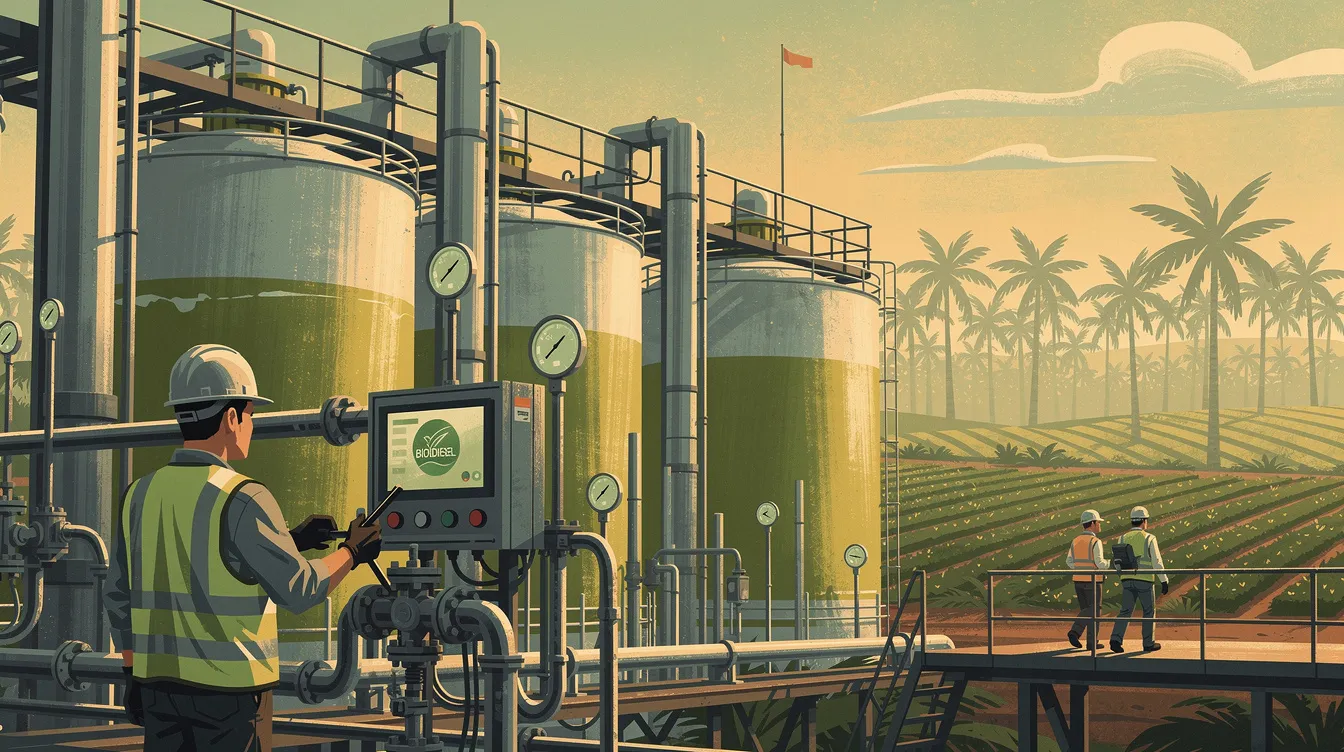
Indonesia's government has launched a new biodiesel program, known as B50, which blends 50% biodiesel with fossil fuels. This initiative is expected to save the country approximately Rp177 trillion (about $11.5 billion) by reducing its dependency on imported diesel, according to Coordinating Minister for Economic Affairs Airlangga Hartarto. The program comes amid global economic uncertainties, including ongoing geopolitical conflicts and technological disruptions.
Airlangga emphasized the importance of strengthening Indonesia's energy sovereignty during a press conference. He noted that the B50 program aligns with the government's broader strategy to enhance economic resilience and reduce reliance on foreign energy sources. Airlangga stated that with B50, Indonesia would no longer need to import diesel, which would allow for significant savings in foreign exchange.
“Airlangga stated that with B50, Indonesia would no longer need to import diesel, which would allow for significant savings in foreign exchange.”Airlangga Hartarto, Coordinating Minister for Economic Affairs
In addition to economic benefits, the B50 program is also positioned as a critical step toward achieving Indonesia's environmental targets. Airlangga mentioned that the initiative could contribute to reducing carbon emissions by approximately 44 million tons of CO2 equivalent, supporting Indonesia's commitment to transition to renewable energy sources and achieve net-zero emissions in the coming decades.
“Airlangga mentioned that the initiative could contribute to reducing carbon emissions by approximately 44 million tons of CO2 equivalent.”Airlangga Hartarto, Coordinating Minister for Economic Affairs
The B50 program is part of a larger energy strategy that includes plans for a solar power generation capacity of 100 gigawatts by 2029. Airlangga mentioned that this initiative not only supports the automotive sector but also aims to establish a robust battery storage ecosystem, which is crucial for the country's energy transition.
As Indonesia moves forward with the B50 biodiesel initiative, it reflects a growing trend in Southeast Asia toward renewable energy solutions. The program is seen as a vital component in addressing both economic and environmental challenges, fostering a sense of gotong royong (communal cooperation) among stakeholders in the energy sector.