Indonesia
Indonesia Launches Ambitious 100 GW Solar Power Initiative with Bali as First Site
The Indonesian government is set to initiate a massive solar power project, aiming for 100 gigawatts of capacity, with the first phase launching in Bali.
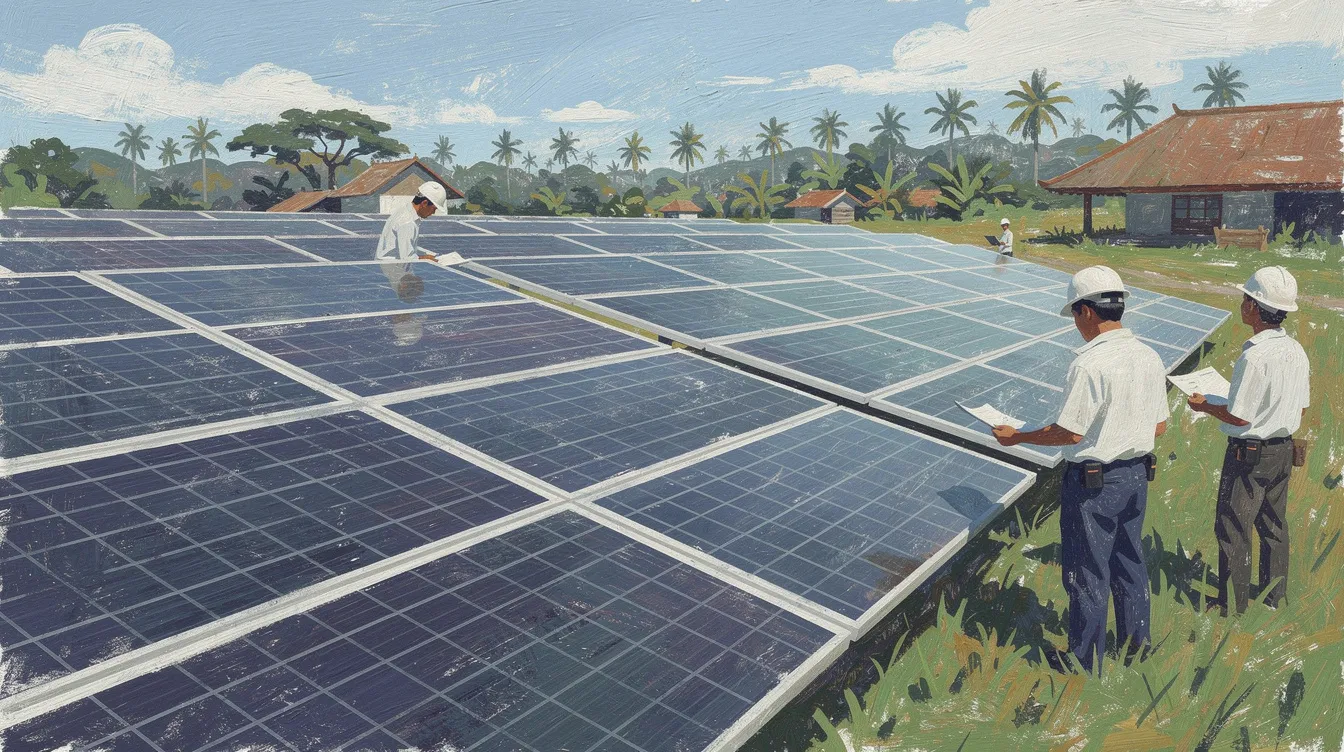
The Indonesian government is moving forward with an ambitious plan to develop a solar power capacity of 100 gigawatts (GW), with the first phase set to begin in Bali. Minister of Energy and Mineral Resources, Bahlil Lahadalia, confirmed that the inauguration of this project awaits scheduling by President Prabowo Subianto, who is also the Minister of Defense.
During a recent statement, Bahlil emphasized that the solar power initiative has already been incorporated into the revised Electricity Supply Business Plan (RUPTL) for 2025-2034. He indicated that a master plan is being created with careful planning.
“We are creating a master plan with careful planning.”Bahlil Lahadalia, Minister of Energy and Mineral Resources
The project will commence with an initial capacity of 17 GW, supported by a battery energy storage system (BESS) of approximately 33 GW. The government has identified around 24,000 hectares of land in Java as suitable for this development, according to Deputy Minister Yuliot Tanjung.
Yuliot highlighted the importance of regulatory preparations and land acquisition as critical factors for the project's success. He noted that efforts are being made to strengthen the national electricity system and to accelerate the execution of the President's directive for the 100 GW solar power initiative. This effort is part of Indonesia's broader strategy to transition to renewable energy and reduce dependence on diesel power plants.
“We are working to strengthen the national electricity system and will accelerate the execution of the President's directive.”Yuliot Tanjung, Deputy Minister of Energy and Mineral Resources
The solar power initiative is expected to significantly impact Indonesia's energy landscape, as it aims to reduce energy import costs and contribute to the country's gross domestic product (GDP).
In addition to the initial phase in Bali, the project aims to expand solar energy access to rural areas through the establishment of Red and White Village Cooperatives (KMP). These cooperatives will manage solar installations across approximately 80,000 villages, providing reliable electricity and fostering local economic activities.
“If implemented effectively, this project will become the largest rural electrification initiative in Southeast Asia.”Fabby Tumiwa, CEO of IESR
However, analysts have raised concerns regarding the feasibility of the ambitious timeline and the technical expertise required for such a large-scale initiative. The Institute for Essential Services Reform (IESR) noted that effective implementation is crucial for the project to succeed, emphasizing the need for careful site selection and workforce development.
As Indonesia embarks on this significant renewable energy project, the collaboration between government bodies and local communities will be essential in achieving the country's energy goals.