Indonesia
Indonesia's Giant Sea Wall Project: A New Era in Coastal Protection
The ambitious Giant Sea Wall project aims to shield Java's northern coastline from flooding, integrating nature-based solutions.
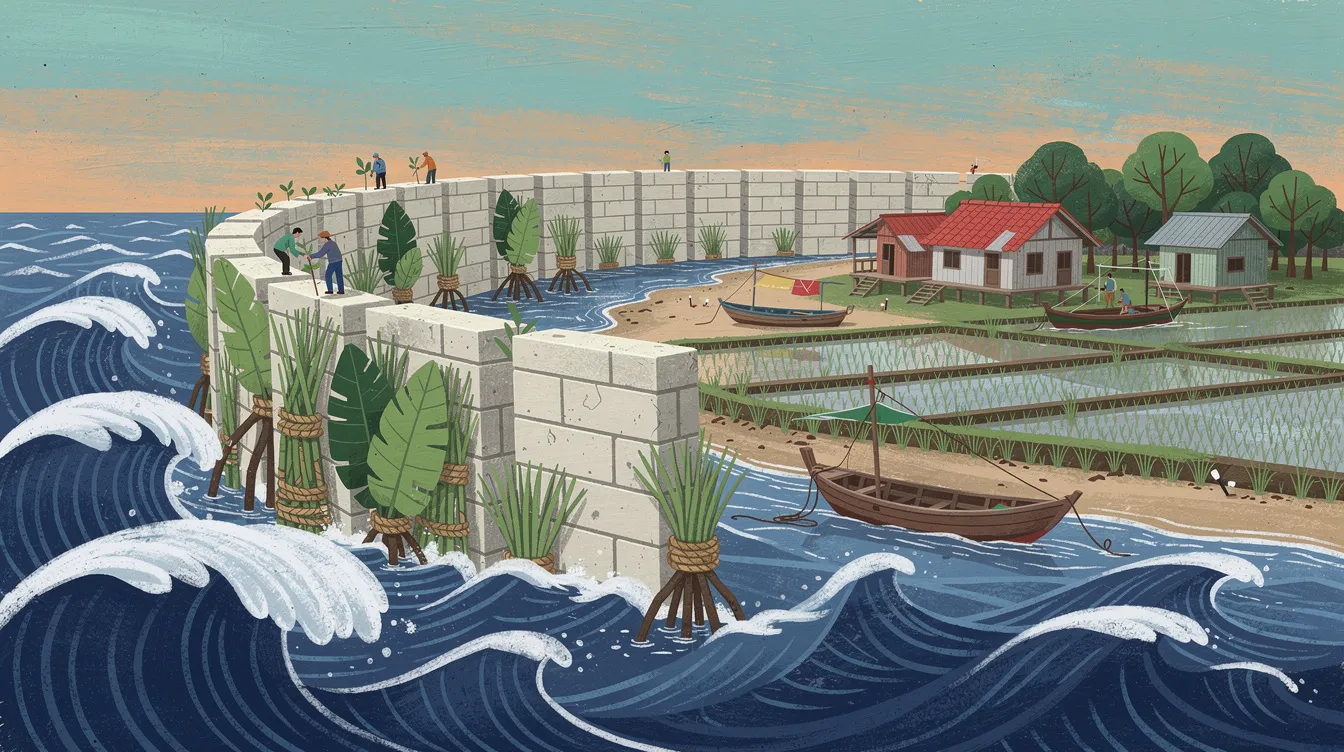
Indonesia is set to embark on the construction of the Giant Sea Wall, a monumental coastal defense project aimed at protecting the northern coastline of Java from rising sea levels and flooding. The project is currently in the planning stage, with groundbreaking scheduled for 2027. It is touted as the largest of its kind globally, stretching approximately 575 kilometers from Serang in Banten to Gresik in East Java.
Didit Herdiawan Ashaf, Vice Minister of Marine Affairs and Fisheries and Head of the North Coast of Java Management Authority (BOPPJ), emphasized that this initiative is not solely about concrete construction. The project will incorporate a variety of elements, including coastal embankments, breakwaters, and mangrove restoration, reflecting a shift towards nature-based solutions in environmental management. Didit stated during a recent parliamentary hearing that this is the first of its kind in the world and the largest of its kind.
The Giant Sea Wall will be developed in 15 segments, with the initial groundbreaking planned for two key areas: Teluk Jakarta and Teluk Kendal-Semarang-Demak, which are among the most vulnerable to flooding due to land subsidence. Didit noted that without intervention, significant portions of the coastline could face submersion in the near future.
“Didit said this is the first of its kind in the world and the largest of its kind.”Didit Herdiawan Ashaf, Vice Minister of Marine Affairs and Fisheries and Head of BOPPJ
The project is designed not only to provide flood protection but also to support additional functions such as water retention, transportation routes, and energy infrastructure. In the Jakarta Bay area, for instance, the wall will be integrated with toll roads, rail lines, gas pipelines, and communication networks. It is estimated that the Teluk Jakarta segment will create a retention basin of around 7,000 hectares to help meet Jakarta's water supply needs.
For the 2027 budget, the Indonesian government has allocated approximately IDR 481.1 billion for the BOPPJ, with a significant portion directed towards the Giant Sea Wall project. Didit indicated that 70-80% of this budget will be utilized for the initial groundbreaking activities.
“Didit said that without intervention, significant portions of the coastline could face submersion in the near future.”Didit Herdiawan Ashaf, Vice Minister of Marine Affairs and Fisheries and Head of BOPPJ
As part of the comprehensive planning, the government is collaborating with academic institutions to leverage research and innovation in the project’s execution. The Minister of Higher Education, Science, and Technology highlighted the importance of integrating academic expertise into the development process to ensure that the project is both technically feasible and environmentally sustainable.
In addition to the immediate benefits of flood protection, the project is anticipated to bolster Jakarta's urban development and economic resilience. The integration of mangrove ecosystems is expected to enhance biodiversity and provide additional coastal protection, aligning with Indonesia's broader environmental goals.
As the country prepares for this extensive infrastructure project, stakeholders have noted its potential to mitigate the impacts of climate change on Indonesia's coastal communities.