Indonesia
Indonesia Faces Heightened Risk of Forest Fires Amid Strong El Niño
The Indonesian Meteorology Agency warns of prolonged dry seasons and increased forest fire risks due to the ongoing El Niño phenomenon, raising concerns over environmental and economic impacts.
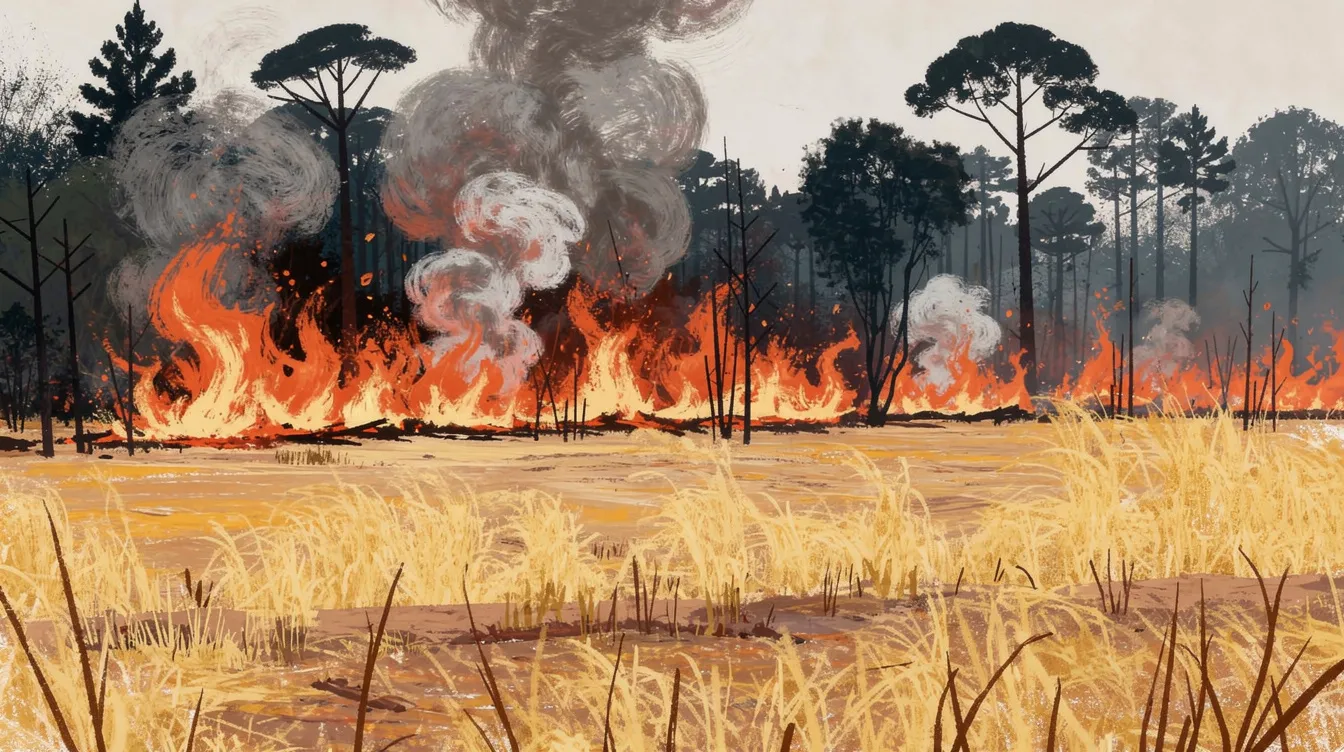
Indonesia is entering a critical phase of heightened risk for forest fires and drought as the Meteorology, Climatology, and Geophysics Agency (BMKG) projects a prolonged dry season exacerbated by a strong El Niño phenomenon, referred to as "Godzilla El Niño." This climatic event is expected to persist until early 2027, with intensity levels surpassing those seen in previous years.
According to BMKG, the current dry season has already seen over 107,000 hectares of land burned until early August 2026, with the situation anticipated to worsen as the peak of the dry season approaches. The Deputy for Climatology at BMKG, Ardhasena Sopaheluwakan, noted that the combination of a strong El Niño and an extended dry season could lead to conditions reminiscent of the catastrophic forest fires of 2015, which devastated over 2.6 million hectares of land.
“We must act swiftly, systematically, and uncompromisingly because this concerns public safety, the environment, and the future of the nation.”Hanif Faisol Nurofiq, Minister of Environment and Forestry
In response to the escalating threat, the Ministry of Environment and Forestry has established a task force dedicated to fire control, emphasizing a structured and integrated approach to prevent and manage forest fires. Minister Hanif Faisol Nurofiq highlighted the urgency of these measures, stating that there is a need to act swiftly, systematically, and uncompromisingly because this concerns public safety, the environment, and the future of the nation. The task force aims to enhance early fire response mechanisms and strengthen coordination between local and central authorities.
“The combination of a strong El Niño and an extended dry season could lead to conditions reminiscent of the catastrophic forest fires of 2015.”Ardhasena Sopaheluwakan, Deputy for Climatology, BMKG
On the ground, the situation remains dire, with reports of ongoing fires across various regions, including Sumatra and Papua. For instance, in North Sulawesi, fires have consumed approximately 1,094 hectares of land, threatening local livelihoods dependent on coconut and aren (sugar palm) cultivation. Local residents have expressed their distress, noting that the fires have destroyed their crops, severely impacting their economic stability.
The Ministry of Forestry has also reported a significant increase in fire incidents, with 3,609 hot spots detected by early August 2026, marking a threefold increase from the previous year. The provinces of West Kalimantan and Riau are among the hardest hit, where the risk of fires is particularly acute due to the dry conditions.
“The fires have destroyed our crops, severely impacting our economic stability.”Local farmer in North Sulawesi
As the government and local communities mobilize resources to combat these fires, the long-term implications of this year's El Niño could extend beyond environmental damage, potentially affecting food security and air quality across the region. The recurring nature of these disasters raises questions about the effectiveness of current policies and the need for more sustainable land management practices.