Indonesia
Indonesia Targets Companies Over Forest Fires Amid El Niño Risks
The Indonesian government is investigating multiple companies for their role in forest fires, as environmental concerns rise with the ongoing El Niño phenomenon.
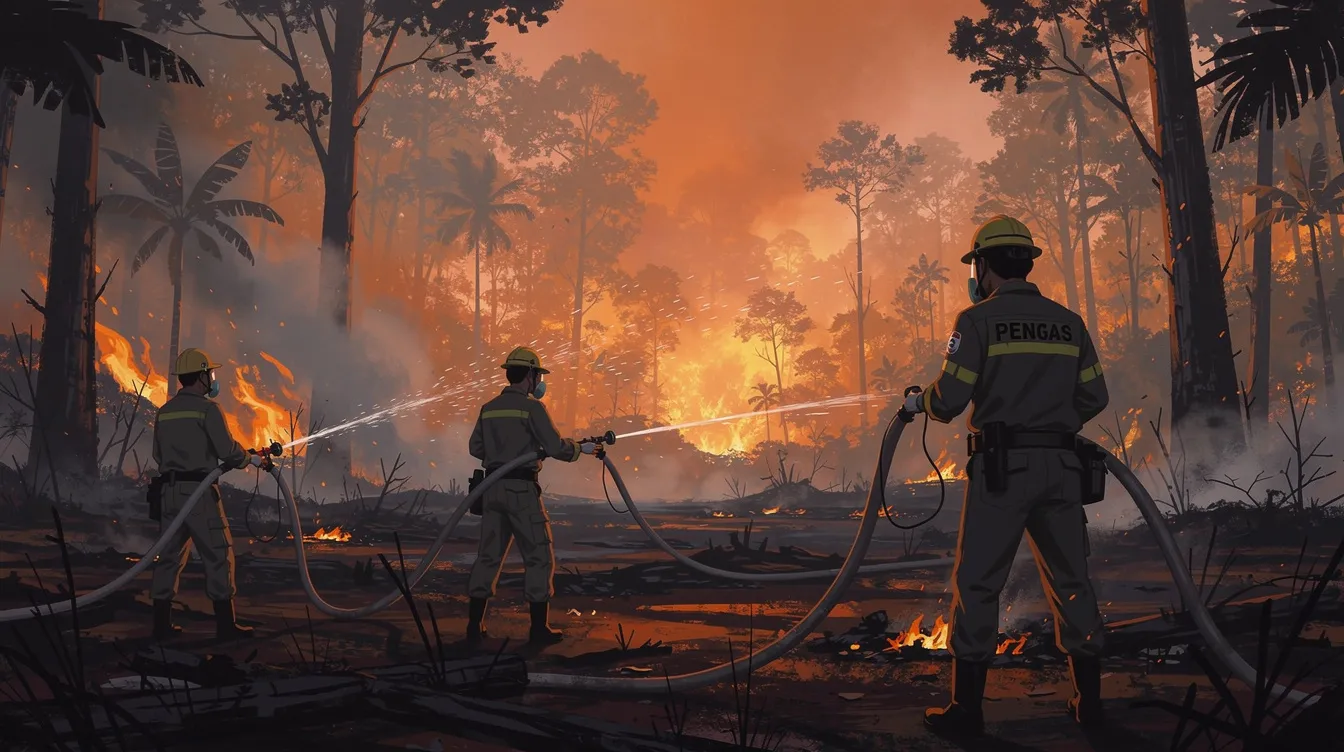
As Indonesia grapples with the heightened risk of forest fires exacerbated by the ongoing El Niño phenomenon, the government has initiated investigations into 11 companies suspected of contributing to these environmental crises. This move comes as the Indonesian Meteorology Agency has warned of prolonged dry seasons, which are expected to increase the frequency and severity of forest fires across the archipelago.
According to a report by ANTARA, the government is seeking to impose fines on these companies as part of its broader strategy to enhance environmental governance. The Ministry of Environment and Forestry has already launched probes into 11 specific companies linked to fires in South Kalimantan, indicating a focused approach to accountability.
Officials have emphasized the importance of corporate responsibility in preventing forest fires, which not only threaten biodiversity but also pose significant health risks to local communities. The ministry's actions are part of a wider effort to enforce regulations that protect Indonesia's rich ecosystems, which have been under increasing threat from agricultural expansion and industrial activities.
In addition to the investigations, the government is also looking to optimize the export of strategic commodities, which include those linked to the forest sector. The newly established Daya Anagata Nusantara Investment Management Agency (BPI Danantara) aims to enhance transparency and governance in the export of natural resources, potentially impacting the way companies operate within the sector. Rosan Roeslani, CEO of BPI Danantara, stated that the agency is not intended to create additional bureaucratic layers but rather to complement existing regulatory frameworks.
The ultimate goal of the agency is to ensure that the economic value of Indonesia's strategic natural resources can be recorded and optimized for the benefit of the national economy and the Indonesian people, as reported by CNBC Indonesia.
While Indonesian coverage has focused on the government's proactive measures against companies linked to forest fires, emphasizing corporate accountability and environmental governance, local media have also highlighted the socio-economic implications of these actions. For instance, Detik Finance reported on the significant number of workers affected by layoffs in various sectors, including those linked to agriculture and forestry. The report noted that 43,805 workers were laid off from January to July 2026, with the highest numbers in West Java, a region heavily impacted by both industrial activities and environmental policies.
This context suggests that while the government is taking steps to mitigate environmental damage, there are also pressing economic concerns related to employment and industry stability. Indonesian coverage stressed the need for a balanced approach that addresses both environmental protection and the economic realities faced by workers, while some outlets framed the government’s actions as necessary but potentially disruptive to local economies.
The government’s dual approach of investigating corporate practices while enhancing export governance reflects a commitment to sustainable development amid growing environmental challenges. As the situation evolves, the effectiveness of these measures will be closely monitored by both local communities and international observers.