Indonesia
Indonesia Deploys Nearly 1,900 Health Workers Amid Respiratory Illness Surge from Forest Fires
The Health Ministry mobilizes 1,898 medical personnel to combat rising acute respiratory infections linked to ongoing forest fires across seven provinces.
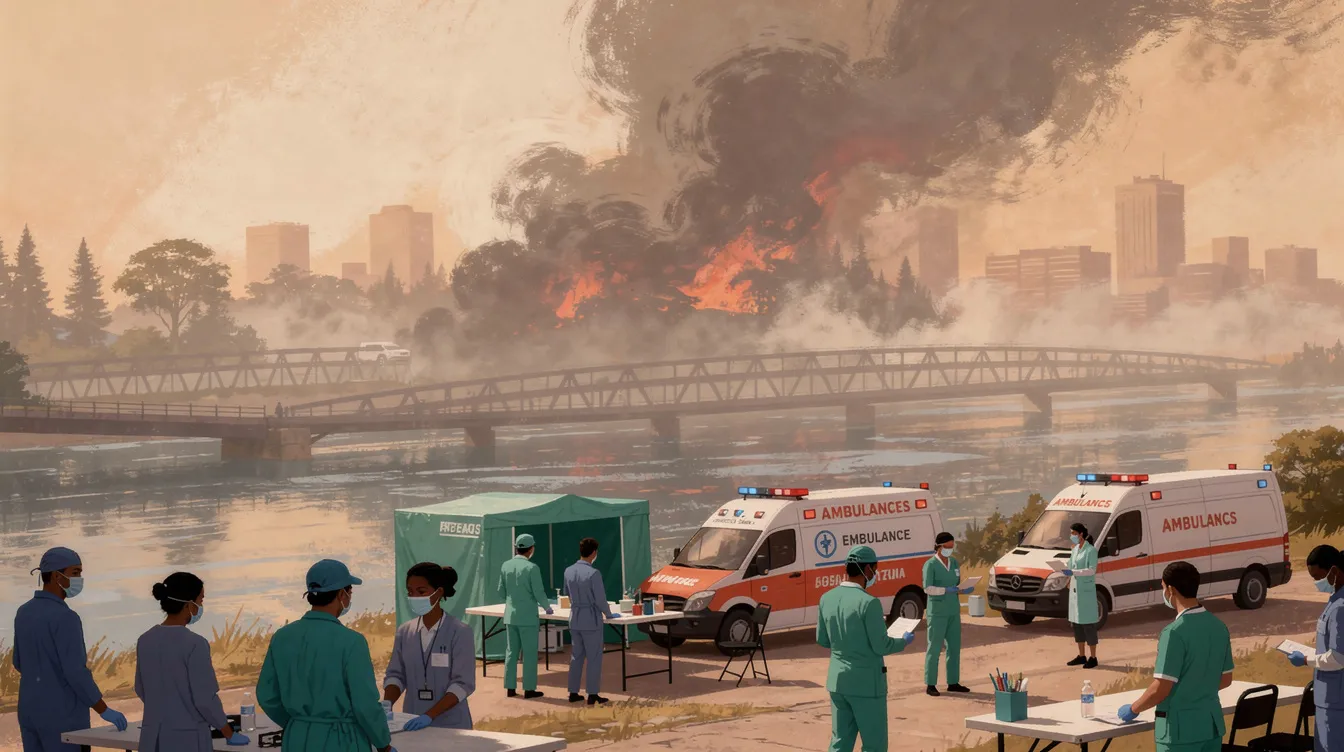
In response to a significant increase in acute respiratory infections (ISPA) linked to ongoing forest fires, the Indonesian Ministry of Health (Kemenkes) has deployed 1,898 health workers across affected regions. As of mid-September 2026, over 151,000 cases of ISPA have been reported across seven provinces, including Jambi, Riau, and Kalimantan.
The deployment aims to mitigate health risks posed by the smoke and haze resulting from the fires, which have affected over 3 million residents in 37 districts. According to Kemenkes, the situation has prompted a rapid response, with health officials mobilizing resources to combat the crisis.
Agus Jamaludin, Head of the Health Crisis Center, stated that the ministry has mobilized 314 medical personnel, including doctors, nurses, and epidemiologists, focusing on Central and South Kalimantan, where the impact is most severe. In addition to personnel, the ministry has distributed hundreds of thousands of medical supplies, including masks, oxygen concentrators, and essential medications.
Recent data indicates a sharp rise in ISPA cases, particularly in Central Kalimantan, where reported cases surged from 402 to 716 within a week. West Kalimantan has also seen alarming trends, with over 151,000 cases reported since January 2026, primarily in urban areas like Pontianak and Kubu Raya.
“We have mobilized 314 medical personnel, including doctors, nurses, and epidemiologists, focusing on Central and South Kalimantan, where the impact is most severe.”Agus Jamaludin, Head of the Health Crisis Center
The government has established health posts and oxygen stations in critical areas such as Barito Utara and Palangkaraya to support affected communities. Additionally, the "Oase Udara" program has been initiated in West Kalimantan to ensure oxygen availability for those experiencing respiratory distress.
This health crisis follows a series of environmental challenges exacerbated by the ongoing El Niño phenomenon, which has intensified the dry season and increased the likelihood of forest fires. In recent months, the Indonesian National Police have identified 113 suspects linked to these fires, and investigations into corporate responsibility are ongoing.
While the Indonesian government is actively addressing the health impacts of the fires, local media coverage has highlighted additional concerns. For instance, Katadata reported that rain has begun to fall in parts of Kalimantan, which is expected to aid in extinguishing the fires and alleviating the water crisis in the region. This perspective emphasizes hope for a natural resolution to the environmental issues, contrasting with the immediate health crisis focus of Kemenkes.
Moreover, the scale of the fires has been alarming, with the National Disaster Mitigation Agency (BNPB) noting that nearly 90,000 hectares of land and forest have burned across four provinces in Kalimantan. West Kalimantan has been particularly hard hit, with approximately 48,536 hectares affected. This broader environmental context is critical, as it underscores the long-term implications of the fires beyond immediate health concerns.
In addition, coverage from Detik Finance and ANTARA highlighted the government's recent decision to revoke the licenses of five companies involved in the forest fires, totaling 92,464 hectares of land. This action reflects a commitment to enforcing regulations against corporate negligence linked to environmental degradation. Minister of Forestry Raja Juli Antoni emphasized that these measures are intended to serve as a deterrent against future violations, contrasting the health-focused narrative from Kemenkes with a broader regulatory perspective on environmental responsibility.
Furthermore, Katadata pointed out the severe water shortages caused by the fires, with residents in Banjarmasin unable to consume water supplied by local companies due to quality issues exacerbated by the drought. This aspect of the crisis, which affects daily living conditions, has not been as prominently featured in the Ministry's health-focused narrative.
The peak of the dry season is expected to continue, raising concerns about further health impacts and environmental degradation. The government’s proactive measures reflect a commitment to addressing both immediate health needs and long-term environmental challenges.