Indonesia
Indonesia's Forest Fires: Government Response and International Aid
As forest fires rage in Sumatra and Kalimantan, the Indonesian government resists declaring a national disaster, while international support is being offered.
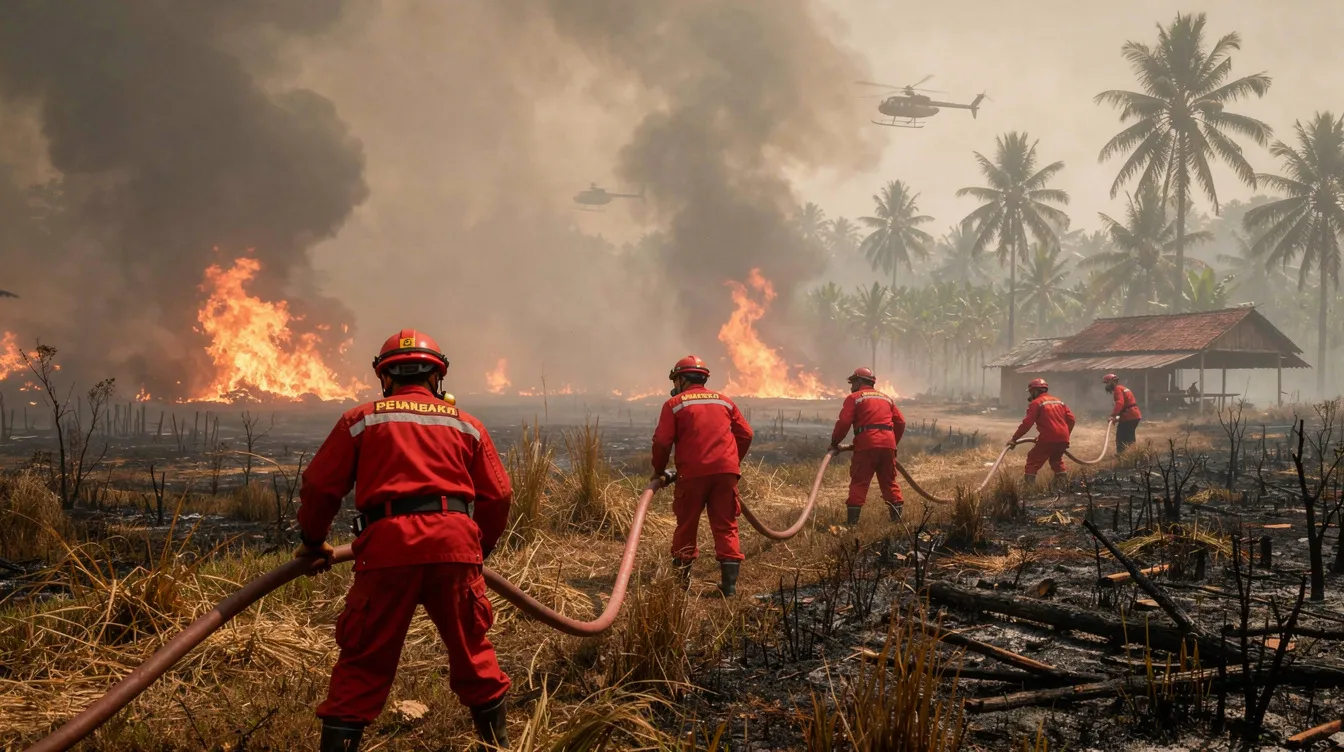
As Indonesia grapples with severe forest fires affecting regions in Sumatra and Kalimantan, the government has refrained from declaring the situation a national disaster. Minister Dudung Abdurachman stated that the government is still able to handle the crisis, emphasizing that they are capable of managing the situation after a meeting with the President.
Despite the ongoing crisis, the government has not discussed receiving international aid during recent meetings. Dudung stressed that the focus remains on domestic efforts to combat the fires, which have persisted for months. The National Disaster Mitigation Agency (BNPB) has reported that six provinces are currently prioritized for firefighting efforts, including Central Kalimantan and South Sumatra.
Malaysia has offered assistance, including a firefighting team comprising one aircraft, three helicopters, and 52 personnel. The President expressed gratitude for this support, highlighting that the issue of forest fires transcends national borders and affects neighboring countries. Prabowo Subianto said the problem is an environmental issue that affects many parties.
However, Indonesian coverage has revealed a more urgent tone regarding the government's response. Jumhur Hidayat, the Minister of Environment and Forestry, has set a target for extinguishing the forest fires within a month, citing coordination with BNPB that indicates a reduction in fire intensity. This contrasts with the more cautious approach of Minister Dudung, who has not committed to a specific timeline for resolution. Jumhur noted that the government is mobilizing tens of thousands of personnel to address the ongoing fires, indicating a significant escalation in operational capacity.
In addition to international offers, there are calls within Indonesia for a more robust response. Daniel Johan, a member of the Indonesian Parliament, urged the government to declare the forest fires a national disaster, arguing that the current situation has reached a critical point affecting public health and safety. He described the conditions as extremely dangerous for those affected by the smoke and haze.
Legal actions have also emerged from civil society. A class action lawsuit has been filed against the President and other officials by a group in West Kalimantan, citing negligence in managing the forest fires. The plaintiffs argue that the government should have anticipated the fires, especially given the predictions of prolonged dry conditions due to the ongoing El Niño phenomenon. Glorio Sanen, Coordinator of the Legal Team of Nafas Kalbar, stated that they feel it is strange that they were not prepared for this prolonged drought.
Health impacts from the fires have been significant, with the Ministry of Health reporting at least 175,000 cases of respiratory infections across seven provinces since August. The dense smoke has not only affected local communities but has also reached neighboring countries, including Malaysia and Singapore, prompting further international concern.
In response to the fires, the government has focused on ground operations for firefighting, as smoke has hindered aerial efforts. Dudung noted that the challenges faced include difficult terrain and the need for wildlife management. The government is also considering weather modification techniques to help extinguish hard-to-reach fire hotspots.
Moreover, Jumhur has indicated that the government is preparing preventive measures to avoid future fires, including plans to revise existing environmental laws that currently allow for small-scale land clearing through burning. This proactive approach contrasts with the more reactive stance observed in the government’s current handling of the crisis. Jumhur stated, "We want to eliminate the provision that allows burning up to two hectares for local practices, as this loophole has contributed to the fires."
As the situation evolves, the Indonesian government continues to face pressure from both domestic and international stakeholders to enhance its response to the forest fires, balancing national capacity with the need for external support.