Indonesia
Humanitarian Response to NTT Earthquake Faces Challenges: Government Declines Foreign Aid
As the number of evacuees from the recent earthquake in Nusa Tenggara Timur declines, frustrations grow over the government's refusal of foreign assistance.
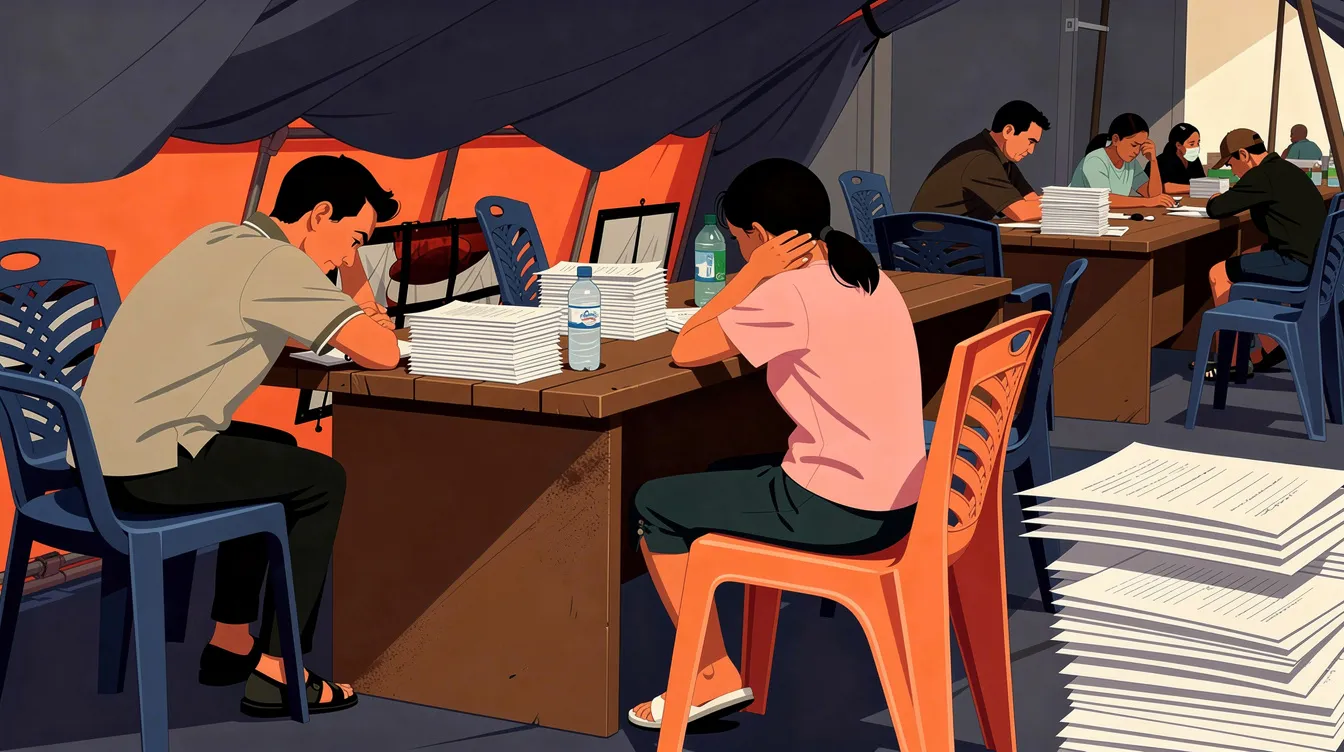
The humanitarian response to the devastating earthquake that struck Nusa Tenggara Timur (NTT) on August 15, 2026, is encountering significant challenges. According to the National Disaster Mitigation Agency (BNPB), the number of evacuees has decreased to 82,691, down from higher figures reported earlier. However, many affected individuals are still struggling to receive adequate assistance.
Prasetyo Hadi, Indonesia's Minister of State Secretary, stated that the government is capable of meeting the logistical needs of the evacuees and has declined offers of humanitarian aid from foreign nations, including China and Iran. He mentioned that the situation is being monitored daily and is manageable. Despite this assertion, reports from local communities indicate a different reality, with many evacuees claiming they have not received any government assistance.
“We are monitoring the situation daily, and everything is manageable.”Prasetyo Hadi, Minister of State Secretary
In Sikka Regency, for instance, evacuees have resorted to foraging for food, as supplies have run low. A local resident, Jawatia, explained that they have to cook for themselves because they haven’t received any aid, so they go back home to prepare meals and return to the market. This sentiment is echoed by various community members who have expressed their disappointment over the lack of support.
Frustrations escalated in the region when some evacuees burned emergency tents provided by BNPB due to perceived neglect from local officials. The incident occurred in Kampung Tengku Leda, where residents expressed their anger over not being able to meet local leaders who had promised to deliver aid. Vitalis Edmundus Buru Lana, the local sub-district head, confirmed the incident, attributing it to the disappointment of residents who felt ignored.
“Rejecting foreign assistance undermines the humanitarian spirit that everyone deserves support during disasters.”Avianto Amri, Head of Indonesian Disaster Response Society
Additionally, tensions arose between local officials and BNPB staff over discrepancies in reported aid supplies. Agustinus Supratman, the head of Lamba Leda Utara district, refused to sign off on aid deliveries, claiming the quantities reported did not match what was physically available at the distribution center. He highlighted the struggles faced by local authorities in managing the distribution of limited resources.
“The reality of the aid received is far less than what was claimed.”Agustinus Supratman, Head of Lamba Leda Utara District
As the government continues to assert its ability to handle the crisis independently, community leaders and disaster response advocates argue that accepting foreign aid is not a sign of weakness but rather a demonstration of solidarity and cooperation in times of need. Avianto Amri remarked that rejecting foreign assistance undermines the humanitarian spirit that everyone deserves support during disasters.
In a broader context, the Indonesian Meteorology, Climatology, and Geophysics Agency (BMKG) has reported that the region remains on alert due to ongoing seismic activity. Following the initial earthquake, there have been over 15,000 aftershocks, with some reaching magnitudes of up to 6.2. BMKG has urged residents to remain vigilant, emphasizing the need for preparedness in the face of potential further seismic events. This contrasts with the government's narrative, which suggests that the situation is under control and manageable.
Furthermore, while the government has declined foreign aid, BMKG's data highlights the extensive damage caused by the earthquake, with 142 confirmed fatalities and over 103,000 homes reported as damaged. The agency's rapid response in issuing tsunami warnings just minutes after the quake is noted as a critical factor in preventing further casualties.
The situation remains fluid as the government navigates the complexities of disaster response while local communities continue to bear the brunt of the earthquake's aftermath. Indonesian coverage has stressed the importance of community resilience and the need for external support, while government statements have framed the situation as one of self-sufficiency and control.