Vietnam
Vietnam's Trade Surges Past $825 Billion Amid Rising Trade Deficit
Vietnam's total trade volume has exceeded $825 billion, reflecting robust growth, yet concerns about increasing trade deficits persist.
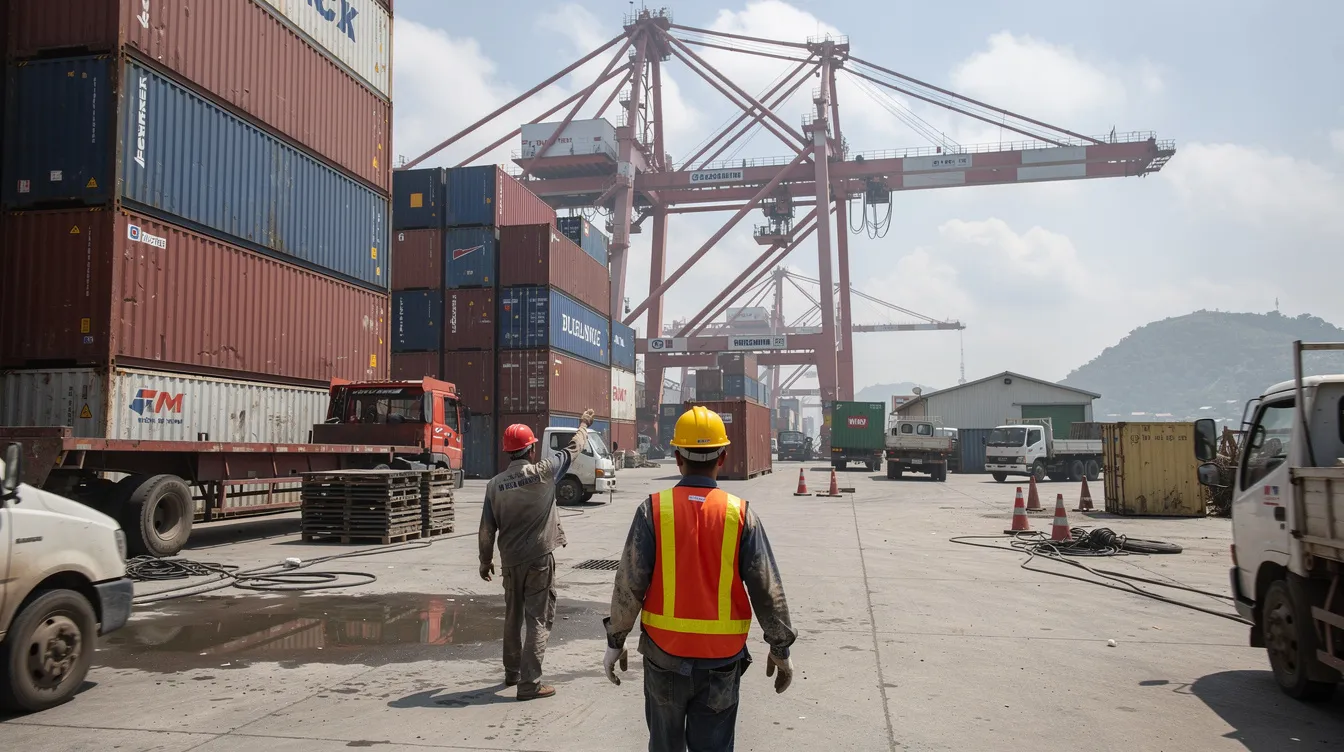
As of mid-September 2026, Vietnam's total trade volume has surpassed $825 billion, marking a significant increase compared to the same period last year, according to the General Department of Customs. The surge in trade activity is attributed to strong domestic demand and high production needs, particularly in the processing and manufacturing sectors.
In the first half of September alone, Vietnam's exports reached approximately $26 billion, while imports totaled about $28.84 billion, resulting in a trade deficit for that period. Cumulatively, the trade deficit for the year has risen, raising concerns among economists and policymakers.
The growth in exports is primarily driven by the processing and manufacturing industries, particularly electronics and machinery. For instance, in the first half of September, exports of computers, electronic products, and components amounted to $9.57 billion, accounting for nearly 37% of the total export value for that period. Cumulatively, these exports have reached $110 billion since the beginning of the year, as reported by the General Department of Customs.
However, despite the positive growth in trade volume, the increasing trade deficit is a cause for concern. In August, Vietnam recorded a trade deficit, and the cumulative trade deficit for the first eight months of 2026 was reported at around $20.46 billion, contrasting with a trade surplus during the same period last year.
“The high trade deficit will negatively impact GDP and the goal of achieving double-digit growth for Vietnam's economy this year.”Vo Xuan Vinh, Director of the Business Research Institute
Professor Vo Xuan Vinh, Director of the Business Research Institute at the University of Economics in Ho Chi Minh City, noted that the high trade deficit will negatively impact GDP and the goal of achieving double-digit growth for Vietnam's economy this year. He emphasized that while the import of machinery and materials is essential for production and export activities, the government must address the challenges faced by domestic enterprises in accessing capital and reducing costs.
Moreover, the seafood export sector, which typically sees a boost during the peak consumption season at the end of the year, is facing difficulties due to increased global supply and heightened quality demands from customers. The Vietnam Association of Seafood Exporters and Producers (VASEP) reported that seafood exports reached $1.1 billion in August, a 6.4% increase year-on-year, but the growth rate has significantly slowed compared to earlier months.
Analysts note that the trade landscape is shifting, with the electronics sector maintaining its dominance. The total export value of electronics, computers, and components has reached $110 billion, reflecting Vietnam's growing integration into global supply chains. However, the country's reliance on imports for production inputs remains a critical issue, as evidenced by the substantial import figures for machinery and electronic components.
In contrast, Vietnamese outlets have highlighted the implications of rising global oil prices on domestic inflation and trade. Reports from Thanh Nien indicate that the global oil market remains volatile due to geopolitical tensions, with Brent crude prices fluctuating significantly. This situation has led to increased domestic fuel prices, which have risen sharply, impacting transportation and logistics costs across various sectors. According to economic expert Đinh Trọng Thịnh, the surge in fuel prices has created a ripple effect, raising transportation costs and, consequently, the prices of goods. He noted that the logistics sector is particularly vulnerable, with transport costs increasing by 10-30% in several cities, adding pressure on supply chains.
This perspective contrasts with the more focused economic growth narrative from Indonesia, which emphasizes export growth without equally addressing the inflationary pressures stemming from rising import costs. Indonesian coverage stressed the importance of maintaining export momentum, while Vietnam's outlets framed the situation as a dual challenge of fostering growth while managing inflationary risks.
As Vietnam approaches the end of the year, the government is urged to implement measures to support domestic businesses in overcoming challenges related to capital access and market expansion. This is crucial for enhancing production capabilities and increasing the domestic value added in exports. The dual focus on managing trade deficits and controlling inflation will be critical for Vietnam's economic stability in the coming months.