Vietnam
Vietnam's Durian Exports Surge to New Heights Amid Record Harvests
As Vietnam's durian exports continue to grow, the country is on track to achieve unprecedented milestones in the fruit's international market.
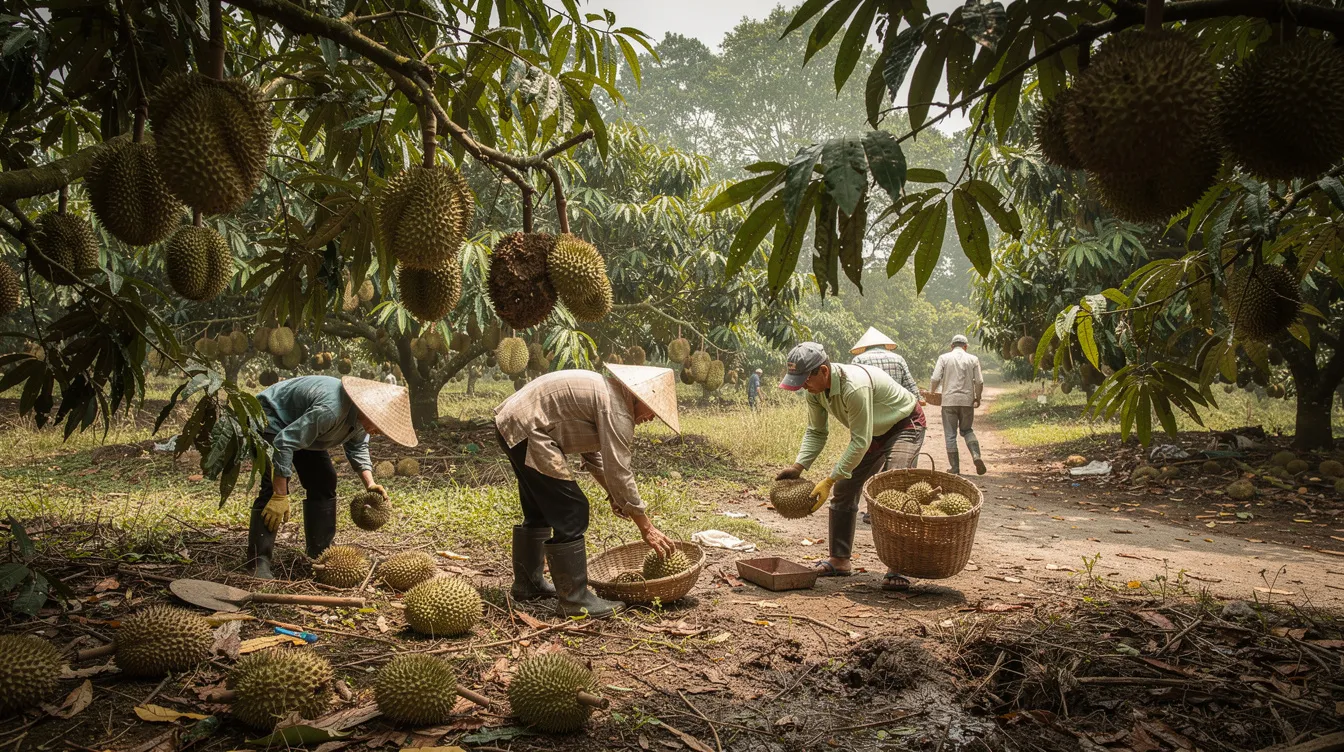
During the recent National Day holiday on September 2, celebrations in the Central Highlands of Vietnam revolved around the "durian harvest festival." Local farmers reported purchasing prices for high-quality Dona durians ranging from 70,000 to 72,000 VND (approximately $3 to $3.05) per kilogram. Although this price is slightly lower than the previous month, the abundant harvest has left farmers optimistic.
In Buon Ho, Dak Lak province, Do Thi Thu Hien shared that her family's 2-hectare durian farm is in full harvest mode. Last year, they harvested 11 tons; this year, they initially expected 20 tons but are now estimating around 15 to 16 tons due to recent heavy rains causing some fruit to drop. Nevertheless, the yield represents a 50-60% increase compared to last year, contributing to a robust overall supply of durians in Vietnam.
“The export value of durians has skyrocketed, contributing significantly to the overall growth of Vietnam's fruit exports.”Dang Phuc Nguyen, General Secretary of VINAFRUIT
According to the Ministry of Agriculture and Rural Development, Vietnam's durian production is projected to exceed 2 million tons by 2026. The surge in supply has led to a decline in prices, yet export activities remain strong. In July 2026, durian exports reached nearly $681 million, marking an 81% increase compared to the same period in 2025. Cumulatively, the first seven months of 2025 saw exports totaling approximately $1.8 billion, a 47% increase year-on-year, with durians accounting for 37% of the total fruit export value.
In August, the export value of all fruits reached $1.1 billion, fueled largely by durian sales. Analysts from the Ministry of Industry and Trade anticipate that the export value could reach between $1.5 billion and $2 billion in the final four months of 2025, as the peak harvesting season continues in the Central Highlands.
Vietnam's durian exports are primarily driven by demand from China, which remains the largest market for Vietnamese durians. Recent discussions highlighted that about 1 billion people in China have yet to try durian, indicating significant potential for growth. Experts believe that Vietnam's strategic geographic position and year-round harvesting capabilities provide a competitive advantage in meeting this demand.
“Vietnam has a unique strategic advantage in durian production, allowing for year-round harvesting and optimized transportation costs.”Dang Phuc Nguyen, General Secretary of VINAFRUIT
However, challenges remain. Nguyen Manh Hieu, head of the Post-Harvest Technology Institute, emphasized that the future of the durian industry depends not only on expanding production areas but also on improving quality and post-harvest technology. The competition from neighboring countries like Thailand and Malaysia is intensifying, particularly as they enhance their logistics and product offerings.
While Vietnamese media emphasized the optimistic outlook for durian exports, highlighting the record harvest and increased production, reports from Vietnam's state-run media also pointed out the need for quality improvement to maintain competitiveness. The average price of Vietnamese durians is lower than those from Thailand and Malaysia, averaging around $5 per kilogram compared to Thailand's $6.70 and Malaysia's $10.70. This price gap underscores the need for Vietnam to focus on quality and brand development to enhance its competitive position in the global market.
“To compete effectively, the durian industry must focus on quality improvement and technological advancements in post-harvest processing.”Nguyen Manh Hieu, Head of Post-Harvest Technology Institute
In a recent report by Thanh Nien, the optimism surrounding durian exports was echoed, but with a stronger emphasis on the need for diversification in export markets. The article noted that while China is the primary market, there is a growing interest from Japan and the United States, which could help mitigate risks associated with over-reliance on a single market. This perspective aligns with the Vietnamese government's push for broader market access as part of its export strategy.
As the industry evolves, there is a call for investment in post-harvest technology and processing facilities to increase the value of durian products. The Ministry of Industry and Trade has indicated that with the right investments, Vietnam could stabilize its durian export revenue at $4.5 to $5 billion annually and potentially become the world's leading supplier.
In summary, Vietnam's durian export sector is poised for significant growth, driven by both domestic production increases and robust international demand. The government and industry stakeholders must prioritize quality and innovation to capitalize on this momentum. Vietnamese coverage has focused on the potential for expanding markets, particularly in China, while also acknowledging the challenges posed by competition from established producers in the region. In contrast, some outlets have framed the narrative around the necessity of diversifying markets to ensure sustainable growth, highlighting a proactive approach to potential market volatility.