Vietnam
Vietnam Faces Rising Electricity Demand Amid Economic Growth
The surge in electricity demand driven by economic expansion and extreme weather poses significant challenges for Vietnam's energy sector.
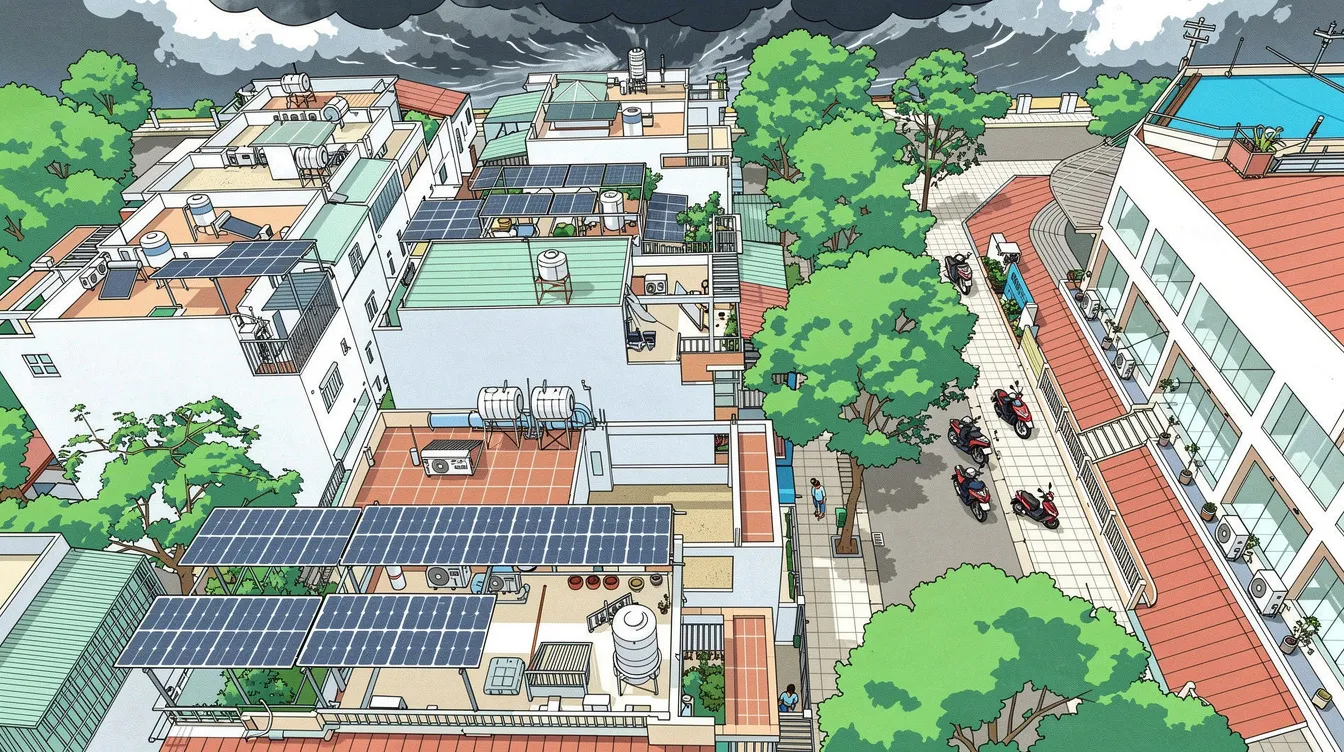
Vietnam is experiencing a significant increase in electricity demand, driven by both economic growth and extreme weather conditions. The Vietnam Electricity Group (EVN) reported that total electricity production and imports reached 171.54 billion kWh in the first half of 2023, marking a 9.85% increase compared to the same period last year. Notably, June alone saw production soar to 32.6 billion kWh, a 14.25% rise, with peak consumption hitting unprecedented levels during a heatwave from June 22 to 25, when daily usage reached 1,215.4 million kWh.
This surge in demand is attributed not only to the rising temperatures but also to the rapid growth of various sectors, including electronics, logistics, and data centers. Major industrial players such as Samsung, LG, and Foxconn are expanding their operations in regions like Ho Chi Minh City and Bac Ninh, further straining the electricity supply. Additionally, large infrastructure projects, including the Long Thanh International Airport and new industrial parks in Tay Ninh and Quang Ninh, are expected to contribute to rising electricity needs in the coming years.
To manage the increased load, the National System Operator (NSMO) has maximized the use of existing power sources, including oil-fired thermal plants and converting gas turbines to diesel. However, maintaining quality and reliability in electricity supply is becoming increasingly critical, especially for sensitive operations like data centers. Bui Trung Kien, Deputy General Director of the Ho Chi Minh City Electricity Corporation (EVNHCMC), emphasized that while the city can currently meet initial demands of around 200 MW for AI data centers, a significant increase beyond 1,000 MW will require substantial investments in infrastructure, including transmission lines and backup power sources.
“Electricity for traditional production is vastly different from that supplied to data centers. Just a few seconds of power loss or voltage fluctuations can cause significant damage.”Bui Trung Kien, Deputy General Director, EVNHCMC
Energy expert Dr. Nguyen Huy Hoach noted that the challenges facing Vietnam's electricity sector extend beyond merely increasing generation capacity. He pointed out that the industry needs to develop a more flexible and resilient power system, particularly in light of the anticipated impacts of El Niño, which could exacerbate both demand and reduce hydropower generation capabilities. As such, he advocates for a dual approach: enhancing existing power sources while also managing electricity demand as a virtual resource.
In the short term, experts recommend optimizing the current energy supply by ensuring adequate fuel for coal and gas-fired plants, effectively managing hydropower reservoirs, and accelerating key power generation and transmission projects. Dr. Hoach further suggests implementing demand-side management strategies, such as time-of-use pricing and encouraging businesses to shift production away from peak hours, which could alleviate pressure on the grid without necessitating immediate investments in new power plants.
“The challenge for the electricity sector is no longer just adding generation capacity but building a flexible and resilient power system.”Dr. Nguyen Huy Hoach, Energy Expert
Looking ahead, Vietnam must transition from a focus solely on capacity expansion to building a modern, resilient electricity system. This requires synchronized development of power sources, transmission networks, and energy storage systems. As the economy continues to electrify with the rise of electric vehicles and data centers, the demand for high-quality, stable electricity will only increase. Therefore, integrating renewable energy and storage solutions into the electricity market is essential for enhancing system flexibility and ensuring long-term energy security.
According to NSMO projections, total electricity production and imports for the second half of 2023 could reach 187.5 billion kWh, a 12.3% increase compared to the same period in 2022, with annual totals expected to exceed 358.6 billion kWh, up more than 11% year-on-year. In northern Vietnam, where demand growth is typically the highest, peak capacity could reach between 30,550 and 31,550 MW in July and August, reflecting a 16.8% increase from the previous year.
In contrast, the Philippines faces its own energy challenges, recently reporting the highest electricity rates in Southeast Asia for June 2023, averaging P12.43 per kWh. This situation has been attributed to a reliance on more expensive power sources due to insufficient supply, particularly in the Visayas region, where forced outages of several power plants have led to yellow alerts. Energy Undersecretary Rowena Guevara noted that the high demand during the summer months forced the country to operate costlier plants to avoid blackouts, highlighting a different aspect of the energy crisis compared to Vietnam's rising demand.
While Vietnam focuses on expanding its electricity generation capacity to meet surging demand, the Philippines is grappling with the implications of high electricity costs on consumers, as highlighted by Gerry C. Arances from the Power for People Coalition, who stated that the high rates reflect the country's dependence on imported fossil fuels. He emphasized the need for the Philippines to transition toward renewable energy sources to alleviate the burden on consumers.
Despite the challenges posed by early heatwaves and rising demand, EVN's General Director stated that the electricity sector remains committed to ensuring a stable and safe supply to support socio-economic development and critical national events. The company, alongside NSMO, has proactively developed operational scenarios and mobilized resources to meet record demand levels this dry season while expediting the completion of key power generation and transmission projects.