Thailand
Thailand's Economy Grows 1.9% in Q2 2026 Amid Global Challenges
The National Economic and Social Development Council reports a slowdown in Thailand's GDP growth, influenced by rising energy prices and geopolitical tensions.
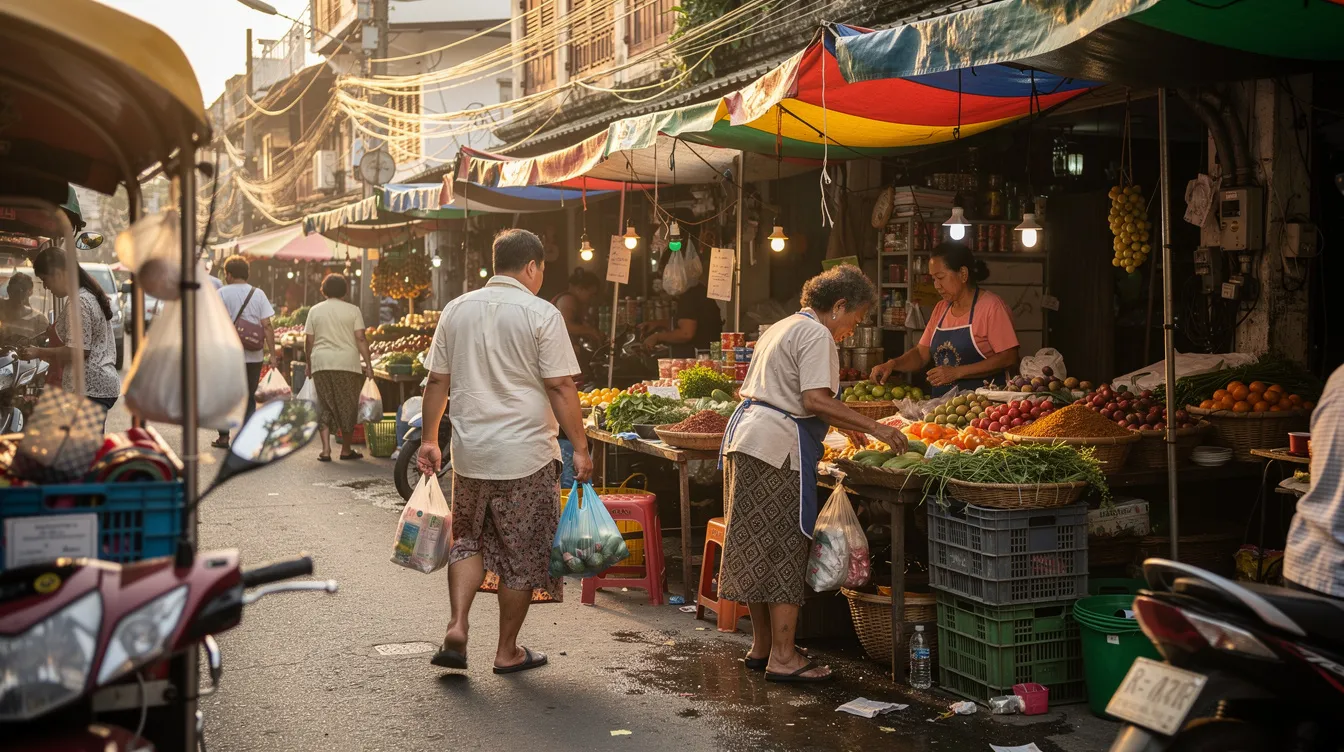
BANGKOK — Thailand's economy grew by 1.9% in the second quarter of 2026, according to data released by the National Economic and Social Development Council (NESDC) on August 17. This marks a slowdown from the 2.8% growth recorded in the first quarter, as higher energy prices and geopolitical tensions, particularly related to the ongoing conflict in the Middle East, impacted consumer spending and travel.
Private consumption, a key driver of the economy, expanded by only 1.9%, down from 3.3% in the previous quarter. This decline is attributed to a drop in consumer confidence, which has reached its lowest level in 14 quarters, as reported by the NESDC. In contrast, total investment surged by 9.1%, with private investment rising significantly by 13.4%, driven by spending on machinery, equipment and vehicles, marking the highest growth in 54 quarters.
“Private investment increased by 13.4%, driven by spending on machinery, equipment and vehicles.”Danucha Pichayanan, Secretary-General of NESDC
International trade played a crucial role in supporting economic activity, with goods exports increasing by 17.6% in value, particularly in electronics and electrical appliances. However, imports surged even more, rising by 42.3%, leading to a current-account deficit equivalent to 12% of GDP during the quarter. This marks the first trade deficit in 14 quarters, largely due to increased gold imports.
Tourism continues to be a vital sector, generating approximately 663 billion baht (around $19 billion) in revenue, a 6.3% increase from the previous quarter. Thailand welcomed 6.55 million international visitors during this period, although the overall number of tourists has decreased compared to previous years, reflecting the ongoing effects of global travel disruptions.
On the agricultural front, production grew by 1.5%, supported by higher outputs of key crops such as fruit, sugar cane, and rubber. However, the production of oil palm and paddy rice saw declines. Overall farm income increased by 6.6%, marking its first growth in five quarters.
“The current-account balance fell into a deficit equivalent to 12% of GDP during the quarter.”National Economic and Social Development Council
In terms of economic stability, the headline inflation rate stood at 2.7%, while the unemployment rate was recorded at 0.96%. Public debt reached 12.9 trillion baht (approximately $367 billion), which is 66.9% of GDP.
Looking ahead, the NESDC has revised its full-year GDP growth forecast for 2026 to between 2.0% and 2.5%, up from a previous estimate of 1.5% to 2.5%. This adjustment reflects expectations of continued strong private investment, household consumption, and government spending. The NESDC has outlined several policy priorities for the remainder of the year, including enhancing agricultural resilience against climate impacts and ensuring the stability of export growth in light of global trade dynamics.