Thailand
Thailand Explores Alternatives to Stalled Airport Rail Project
The Thai government considers new railway options as delays plague the high-speed rail linking Bangkok and the eastern industrial zone.
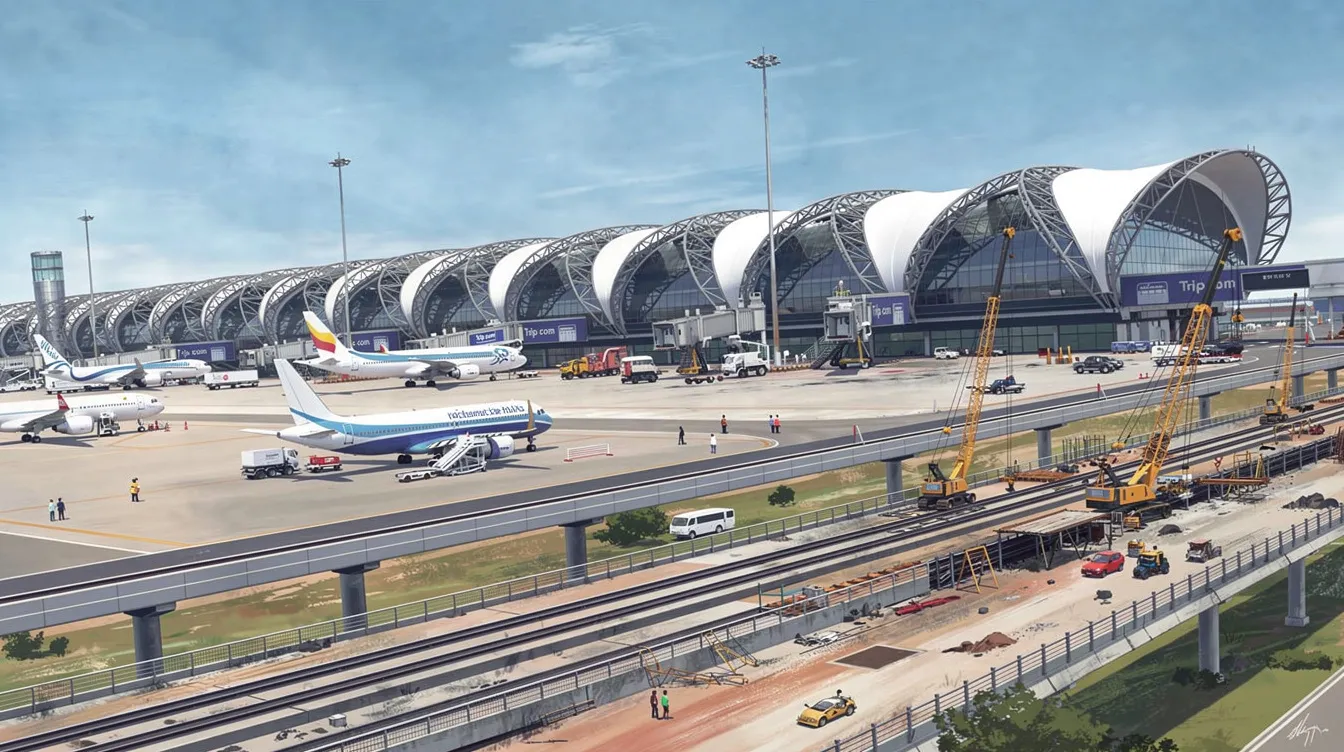
Thailand is reassessing its transportation infrastructure as the high-speed rail project linking Bangkok to the eastern industrial zone has been stalled for over six years due to funding issues. The project, originally budgeted at approximately 224 billion baht (around $6.3 billion), has faced significant delays after the Asia Era One Company, the consortium awarded the contract, requested changes to the agreement citing financial liquidity challenges exacerbated by the COVID-19 pandemic.
According to reports from Thansettakij, the Asia Era One Company has formally requested to terminate the contract due to the inability to issue a Notice to Proceed (NTP), which is crucial for project commencement. The company indicated that the lack of an investment promotion card from the Board of Investment (BOI) could hinder financing efforts, leading to its decision to seek contract termination. This has prompted the Thai government to consider alternative projects.
Officials from the Ministry of Transport revealed to The Standard that four potential replacement projects have been identified, with a total estimated cost of approximately 147.7 billion baht ($4.2 billion). These include enhancements to existing railway capacity and the construction of a dual-track railway stretching about 157.2 kilometers, which aims to improve connectivity between key areas such as Hua Mak, Chachoengsao, and Sriracha.
“We have wasted enough time on this project; it is crucial to establish a clear path forward rather than dwell on past issues.”Chula Sukmanop, Secretary-General of the EEC
Chula Sukmanop, Secretary-General of the Eastern Economic Corridor (EEC) Policy Committee, emphasized the urgency of moving forward with new plans to restore investor confidence. He stated, "We have wasted enough time on this project; it is crucial to establish a clear path forward rather than dwell on past issues." The EEC has been a focal point of Thailand's infrastructure development, aiming to attract significant investments and enhance the country’s economic landscape.
Currently, the government is in discussions to determine the most suitable approach for future railway projects. While there is no definitive timeline for new bidding processes, officials are keen to expedite the decision-making to avoid further delays. The focus remains on ensuring that the new projects align with the broader goals of the EEC and enhance the region's logistics capabilities.