Singapore
Singapore Tops Global Student Rankings in Reading, Maintains Strong Performance in Math and Science
In the latest OECD PISA assessment, Singapore's students excel in reading, while also ranking highly in mathematics and science, showcasing the country's educational prowess.
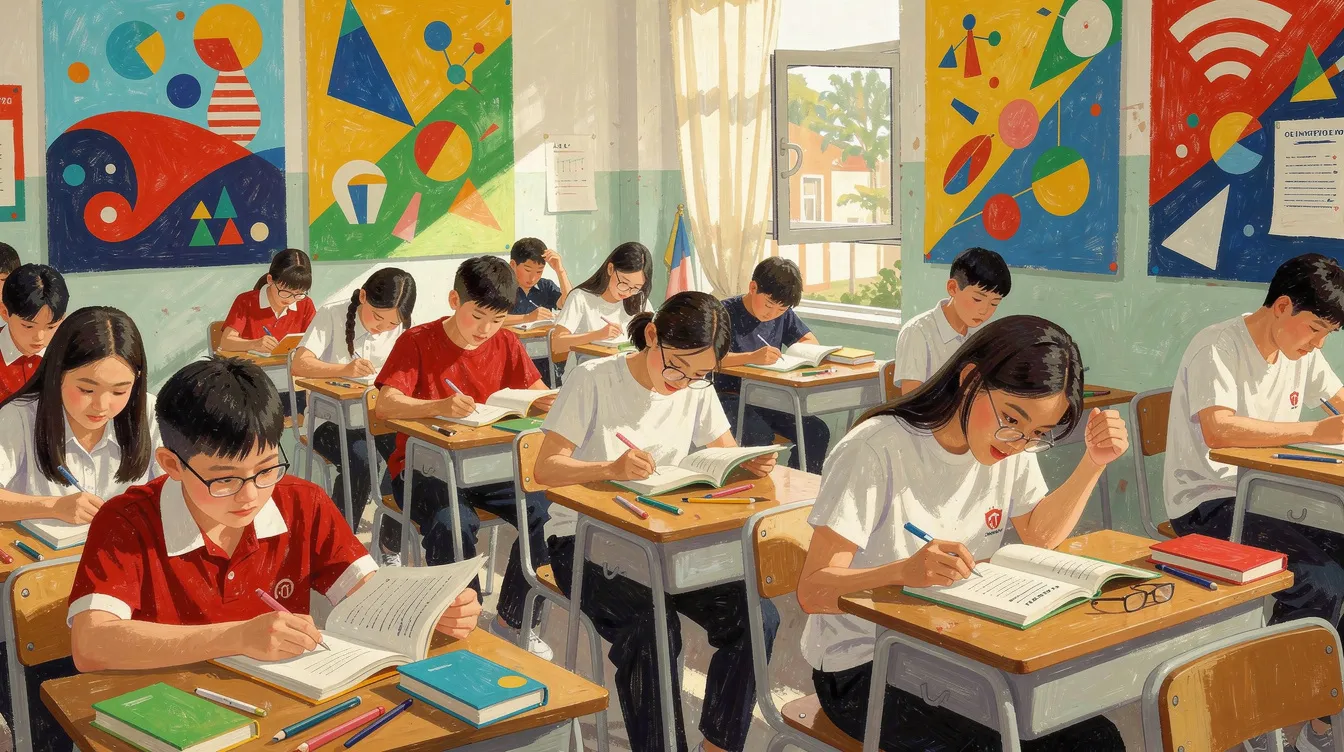
Singapore has emerged as a leader in global education, with its 15-year-olds achieving the top rank in reading and securing second place in both mathematics and science in the latest Programme for International Student Assessment (PISA) 2025 results, released by the Organisation for Economic Cooperation and Development (OECD) on September 8, 2025.
The assessment, which evaluates the academic performance of students across various countries, involved over 76,000 students from 91 countries and economies. In Singapore, approximately 6,600 students from 157 schools participated in the survey, which is conducted every three years to assess how well educational systems prepare students for future challenges.
In reading, Singaporean students achieved an impressive score of 535 points, while China and Taiwan followed with scores of 527 and 508 points, respectively. In the areas of mathematics and science, Singapore scored 563 points, placing it second to China, which topped the mathematics category with 612 points. In science, Singapore scored 560 points, maintaining a close position behind China and Macau, which ranked first and third, respectively.
A new segment introduced in this year's assessment, focusing on computational problem-solving, saw Singaporean students rank second with an average score of 563, surpassing the OECD average of 500. This section evaluated students' abilities to apply digital tools and programming knowledge to solve complex problems, reflecting a growing emphasis on digital literacy in education.
“We will continue to support students from all backgrounds to thrive and learn with confidence.”Chan Chun Sing, Education Minister
Despite the strong overall performance, the Ministry of Education noted a widening gap between the highest and lowest-performing students. The disparity in science scores between the top and bottom 10% of students increased by 18 points since the last assessment, highlighting the need for continued support for diverse learning needs. The Ministry emphasized that a significant proportion of Singaporean students scored highly across reading, mathematics, and science, significantly above the OECD average.
Education Minister Chan Chun Sing remarked that the findings provide valuable insights into the learning landscape of Singaporean students. He stated that the Ministry will continue to support students from all backgrounds to thrive and learn with confidence. This includes providing additional resources and personnel to schools with a higher proportion of disadvantaged students and enhancing community support programs.
As Singapore continues to excel in educational assessments, analysts suggest that the country's rigorous educational framework and commitment to equity in learning are key factors contributing to its success. The PISA results reinforce Singapore's position as a global education leader, attracting attention from other countries seeking to improve their own educational systems.