Singapore
Singapore Cements Its Place Among the World's Top Wealth Hubs
BCG's 2026 Global Wealth Report puts the city-state third worldwide for cross-border assets, as Asian capital keeps searching for a safe harbour.
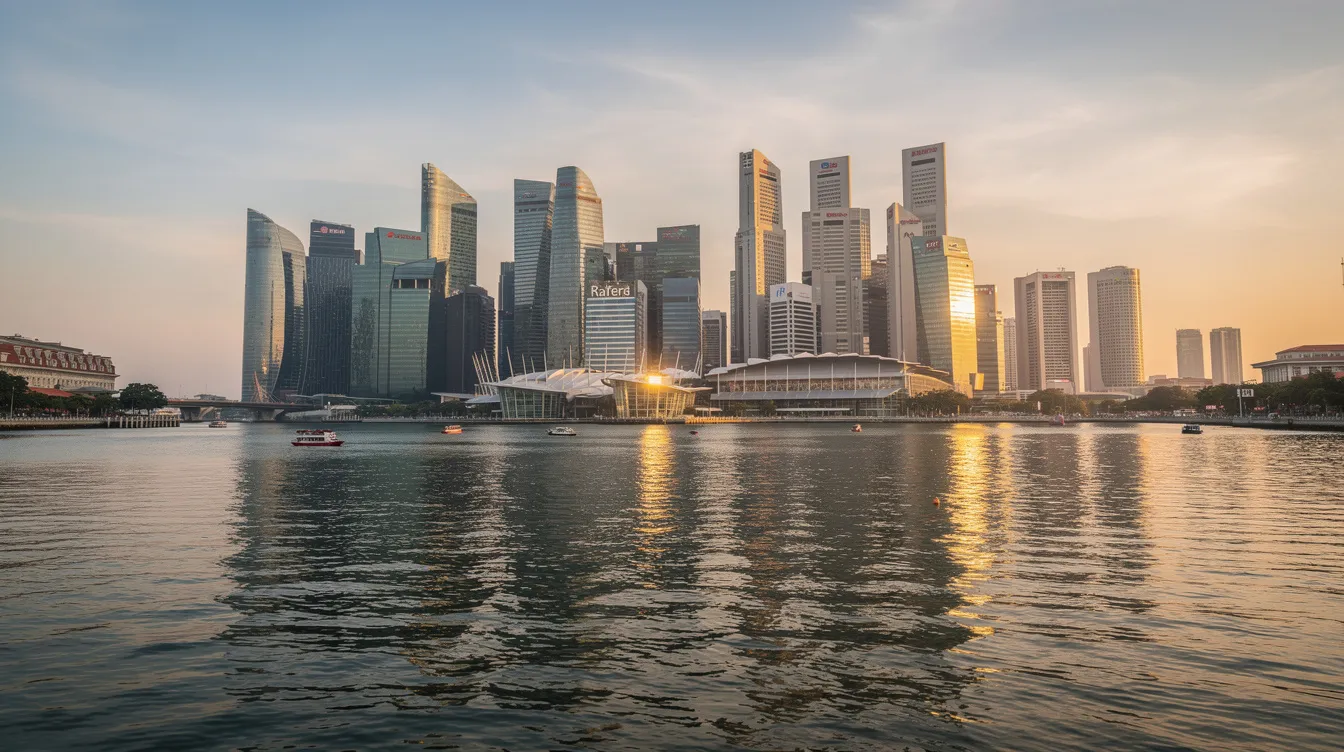
Singapore has cemented its standing as one of the world's premier destinations for private money. According to BCG's 2026 Global Wealth Report, released in late May, the city-state now holds roughly US$2.1 trillion in cross-border wealth — assets booked here by people who live somewhere else — making it the third-largest offshore wealth hub on the planet, behind only Hong Kong and Switzerland.
The report, BCG's 26th annual and pointedly subtitled “The Great Reordering,” captures a year in which the geography of global money shifted. Total financial wealth grew 10.7 per cent in 2025 to US$333 trillion, and the slice booked across borders rose 8.4 per cent to US$15.7 trillion. Nearly 90 per cent of those new offshore flows landed in just ten centres — and the pecking order at the top changed.
The world's wealth hubs, ranked
For the first time, Hong Kong overtook Switzerland to become the largest cross-border booking centre, its offshore assets climbing 10.7 per cent on the back of mainland Chinese inflows, buoyant IPOs and rising equity markets. Switzerland, the industry's traditional heart, grew a slower 7.6 per cent and slipped to second. Singapore held third, growing 10.3 per cent — faster than Switzerland, and just shy of Hong Kong.
| Rank | Booking centre | 2025 | 2030f | CAGR '25–30 | Growth '24–25 |
|---|---|---|---|---|---|
| 1 | Hong Kong† | 2.9 | 4.6 | 9% | +10.7% |
| 2 | Switzerland | 2.9 | 4.0 | 6% | +7.6% |
| 3 | Singapore† | 2.1 | 3.3 | 9% | +10.3% |
| 4 | United States | 1.6 | 2.1 | 6% | +7.7% |
| 5 | UK mainland | 1.0 | 1.3 | 5% | +7.0% |
| 6 | Channel Islands & Isle of Man | 0.8 | 1.0 | 5% | +6.5% |
| 7 | United Arab Emirates† | 0.7 | 1.0 | 6% | +11.1% |
| 8 | Luxembourg | 0.6 | 0.8 | 6% | +7.1% |
| 9 | Cayman Islands | 0.5 | 0.7 | 6% | +6.5% |
| 10 | Bahamas | 0.5 | 0.6 | 6% | +7.8% |
| — | All others | 2.0 | 2.5 | 5% | +6.9% |
Cross-border (“offshore”) wealth by booking centre, in US$ trillion at year-end exchange rates. “2030f” and the CAGR are BCG's projections; “Growth '24–25” is the actual year-on-year change. † BCG classes this centre as a growth market; the rest are mature. Source: BCG Expand Global Wealth Management Database 2026.
Two things stand out for a Southeast Asian reader. First, the shake-up at the top is recent: a year earlier Switzerland still edged ahead, and Hong Kong's faster growth — it added US$284 billion in 2025 against Switzerland's US$207 billion — is what carried it into first. Second, Singapore is one of only three centres in the top ten that BCG labels a “growth market,” alongside Hong Kong and the United Arab Emirates; the other seven, including Switzerland and the United States, are mature. On BCG's numbers Singapore's cross-border book is set to reach about US$3.3 trillion by 2030, a 9 per cent compound annual rate — among the fastest of any major hub.
“Wealth creation, cross-border capital flows, and investment ecosystems increasingly concentrate into a smaller number of globally connected hubs.”Michael Kahlich, Managing Director, BCG
A magnet for the region's money
Much of what Singapore books is Asian in origin. The city-state has become the default home for wealthy families across Southeast Asia and beyond who want their assets held in a stable, English-speaking jurisdiction with deep banking, legal and advisory networks. BCG calls it the “most diversified wealth hub in Asia,” a neutral conduit between Asian and Western capital that has drawn safe-haven flows as US–China tensions push investors to hedge their geography.
Nothing illustrates the pull better than the family-office boom. The number of single family offices awarded tax incentives by the Monetary Authority of Singapore has roughly quintupled in four years, from about 400 at the end of 2020 to some 2,000 by the end of 2024 — with around 600 set up in 2024 alone, double the previous year's intake.
| Year-end | Single family offices* | Added that year |
|---|---|---|
| 2020 | ≈ 400 | — |
| 2023 | ≈ 1,400 | ≈ 300 |
| 2024 | ≈ 2,000 | ≈ 600 |
*Single family offices awarded tax incentives by the Monetary Authority of Singapore; the count understates total wealth activity but tracks its direction. Sources: MAS; Asia Asset Management.
The marquee names bear the trend out. Among the global fortunes reported to have planted family offices in the city are the Bridgewater founder Ray Dalio; Google co-founder Sergey Brin, whose family office, Bayshore Global Management, opened a Singapore arm; and the British inventor James Dyson, whose Weybourne group incorporated here in 2019 — a roster that would have been hard to imagine a decade ago.
The wider industry has grown in step. Total assets managed from Singapore reached S$6.07 trillion at the end of 2024, up 12 per cent in a year, drawing net inflows of S$290 billion — and about 88 per cent of that money is invested outside Singapore, underlining the city-state's role as a gateway rather than a final destination. For Indonesian, Malaysian, Thai and increasingly Chinese principals, the appeal is straightforward: predictable rules, a currency they trust, favourable tax treatment of many forms of investment income, and a government that has made financial services a national priority.
According to ssicdata.com, a Singapore-based market-intelligence site, roughly 1,500 active companies are registered under Singapore's dedicated family-office classification (SSIC 66306), with more filing under related codes — a bottoms-up count that complements the asset totals BCG measures from the top down.
The incentives behind the boom
Behind the surge sits a specific piece of tax machinery. Most family-office funds in Singapore run under one of two Monetary Authority of Singapore schemes — Section 13O and Section 13U of the Income Tax Act — which exempt qualifying fund income from tax in return for putting real substance on the ground. Since a 2022–23 tightening, the terms have grown markedly more demanding: higher minimum assets, mandatory local hiring and spending, and a rule that part of the fund be invested in Singapore itself.
| Condition | Section 13O | Section 13U |
|---|---|---|
| Minimum fund size | S$20 million | S$50 million |
| Local business spending | ≥ S$200,000 / year | ≥ S$500,000 / year |
| Investment professionals | ≥ 2 (≥ 1 non-family) | ≥ 3 |
| Local investment | ≥ 10% of assets or S$10 million, whichever is lower | |
Headline conditions for the two MAS fund tax-exemption schemes most used by single family offices, after the 2022–23 updates; larger funds face higher spending tiers. Sources: Monetary Authority of Singapore; Singapore Standard Industrial Classification (SSIC 66306).
What the boom says about the neighbourhood
Singapore's rise is, in one sense, a regional success story: Southeast Asia now has a financial centre of genuine global weight on its doorstep, one that keeps talent, capital and expertise circulating within the region rather than flowing only to London or New York. But the same figures raise a quieter question. A large share of the private wealth generated across Asia now prefers to sit offshore, in Singapore, rather than in the home markets where it was made — a signal about investors' search for certainty as much as about Singapore's salesmanship.
Being a magnet also carries risk. After a S$3 billion money-laundering case in 2023 exposed how illicit funds had moved through local banks and property, MAS tightened due-diligence rules for family offices and private banks, wagering that its long-term draw rests on credibility rather than on easy entry. So far the bet is holding — and if BCG's projection holds, Singapore will be handling more than US$3 trillion of the world's mobile wealth by 2030.
For the rest of ASEAN, Singapore's growing gravity is both an asset and a mirror — proof that world-class financial infrastructure can be built in Southeast Asia, and a reminder of how much of the region's capital still travels in search of a safe place to rest.