Singapore
Singapore Raises 2026 Growth Forecast to 6% as AI Exports Surge
The government also lifted its forecast for non-oil domestic exports to 30%–32%, while warning that growth is likely to cool in 2027 as AI investment moderates.
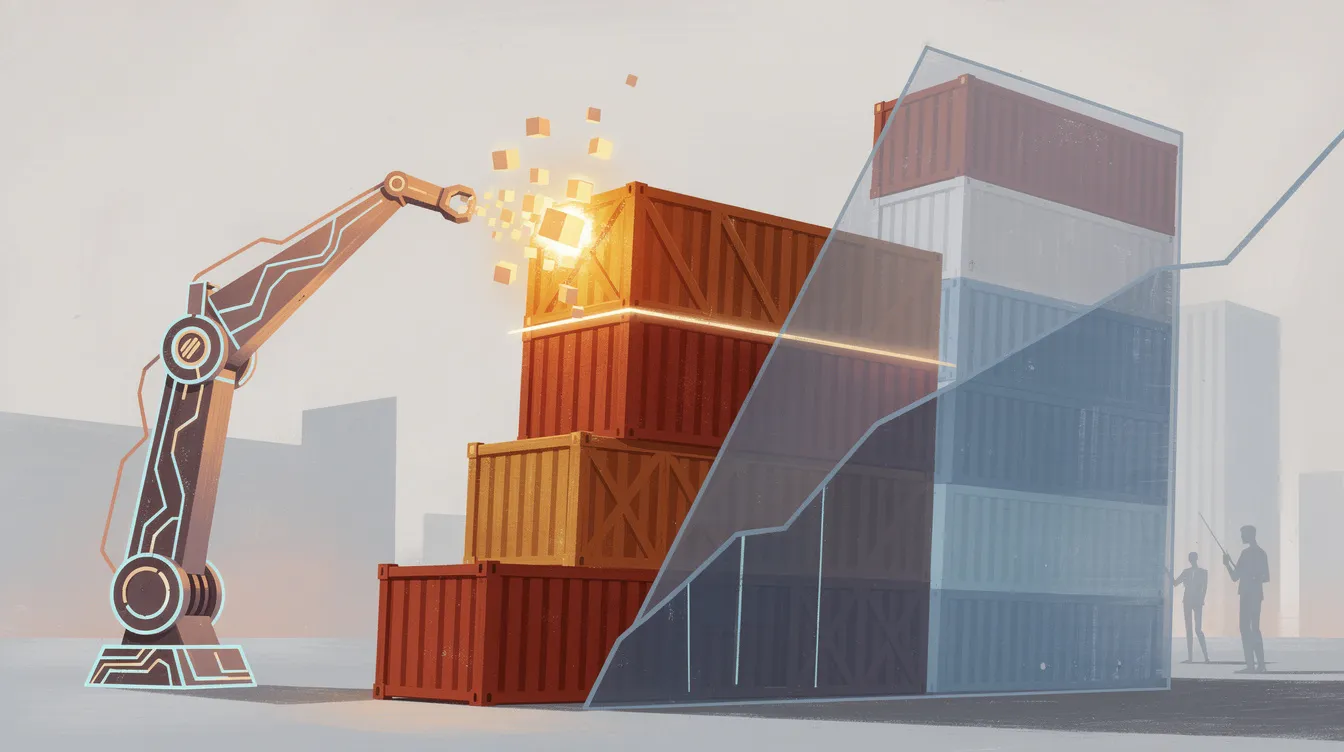
Singapore has raised its 2026 economic growth forecast to around 6%, after revised data showed gross domestic product expanded 6.1% year on year in the third quarter. The Ministry of Energy, Trade and Industry (METI) said stronger-than-expected global demand for artificial intelligence-related production and exports had lifted the outlook.
The revision followed an advance estimate of 5.4% for the quarter. Growth for the first nine months of 2026 was 6.2%, according to the ministry. Separately, Enterprise Singapore raised its forecast for non-oil domestic exports (NODX) to 30%–32% for the full year, from 14%–16% previously.
The figures describe an economy receiving a large external-demand boost, with less strength in some consumer-facing businesses. For foreign investors and traders, the distinction matters: Singapore’s headline expansion is closely tied to the global electronics and AI investment cycle, while domestic spending indicators have been softer.
Electronics and trade lead the upgrade
Manufacturing grew 8.5% year on year in the third quarter, down from 13.2% in the previous quarter, while wholesale trade expanded 14.5%, its fastest pace since the fourth quarter of 2010, according to figures reported by The Business Times. METI said electronics and precision engineering benefited from AI-related demand; wholesale growth was led by machinery, equipment and supplies, including telecommunications and computer-related goods.
Export data show the concentration of that momentum. Enterprise Singapore reported that NODX rose 45.8% in the third quarter, extending 27.4% growth in the second. Electronics shipments jumped 117%, including increases of 83.2% for integrated circuits, 166.3% for personal computers and 313.7% for disk media products. Non-electronics exports grew 20.8%, with specialised machinery and non-monetary gold among the contributors.
“Downside risks remain in the global economy.”Beh Swan Gin, Permanent Secretary for Trade and Industry
For the first three quarters, NODX grew 27.6% year on year, which Enterprise Singapore described as a record. Shipments to the United States rose 74.4% in the third quarter, those to mainland China 46.6%, and those to Taiwan 58.5%, the agency said. The export forecast for 2027 is lower, at 5%–7%, partly reflecting comparison with this year’s unusually high base.
The upgrade comes after a run of strong quarterly readings. InsideASEAN has reported earlier revisions to Singapore’s 2026 outlook as AI-linked demand supported manufacturing and exports. The latest figures extend that pattern, while the government’s new 2027 forecast signals that officials expect the pace of expansion to ease.
Growth is uneven across the economy
METI expects GDP to grow 2.5%–4.5% in 2027. Permanent Secretary Beh Swan Gin said committed AI investments should keep related demand “relatively firm” in the quarters ahead, but that growth in new AI investment is expected to moderate from its high level in 2026. The ministry also expects slower growth among key trading partners, including the United States and China.
Economists cited in The Business Times and The Straits Times put the AI cycle at the centre of both the current strength and the risks to next year’s outlook. UOB, DBS and Maybank each raised their 2026 GDP forecasts to 6.1%. Their 2027 projections ranged from 3.4% to 4.2%, within the government’s forecast band.
“normalisation from an exceptionally strong base rather than evidence of an impending downturn”Selena Ling, OCBC chief economist
OCBC chief economist Selena Ling said the expected slowdown should be viewed as “normalisation from an exceptionally strong base rather than evidence of an impending downturn”. She also identified the durability of AI investment as a key uncertainty. Economists cited by The Business Times pointed to possible delays in data-centre projects, concerns about investment returns and tighter controls on advanced chip exports as factors that could weigh on future demand.
Beh said METI’s initial assessment was that the effect of a new US rule on AI chips would be “manageable” for Singapore. He cited limits on new data-centre investment and the fact that most data-centre operators in Singapore do not serve remote access. He also cautioned that a sharper correction in financial markets could spill over into broader economic activity.
Domestic indicators were weaker than the headline GDP figure. Private consumption grew 2% in the third quarter, its slowest pace in three years, according to Maybank economists cited by The Business Times. Retail trade contracted 2.7% and food and beverage services fell 2.1%, while accommodation grew 0.9%. Beh attributed weakness in retail and dining partly to residents spending more overseas and lower inbound travel; he also cited the strong Singapore dollar as a contributing factor.
Maybank economists said tech-related sectors accounted for an estimated 75% of third-quarter growth, describing the expansion as “K-shaped”. OCBC’s Ling cautioned against treating strong aggregate growth as evidence that conditions were equally strong for businesses and households. She noted that resident unemployment edged up to 3% and retrenchments rose to 4,800 in the quarter, according to The Business Times.
For Singapore, a trade-dependent economy and regional business hub, the near-term figures are therefore unusually exposed to the investment decisions of global technology companies. The official forecasts and economists’ estimates point to continued growth in 2027, but at a slower rate; the sources identify the pace of AI spending and the strength of external demand as the main uncertainties.