Myanmar
Rohingya Poetry and the Struggle for Identity: Farooq's 'A Lost Bird'
In his poignant collection, Farooq captures the Rohingya experience of displacement and resilience through deeply personal poetry.
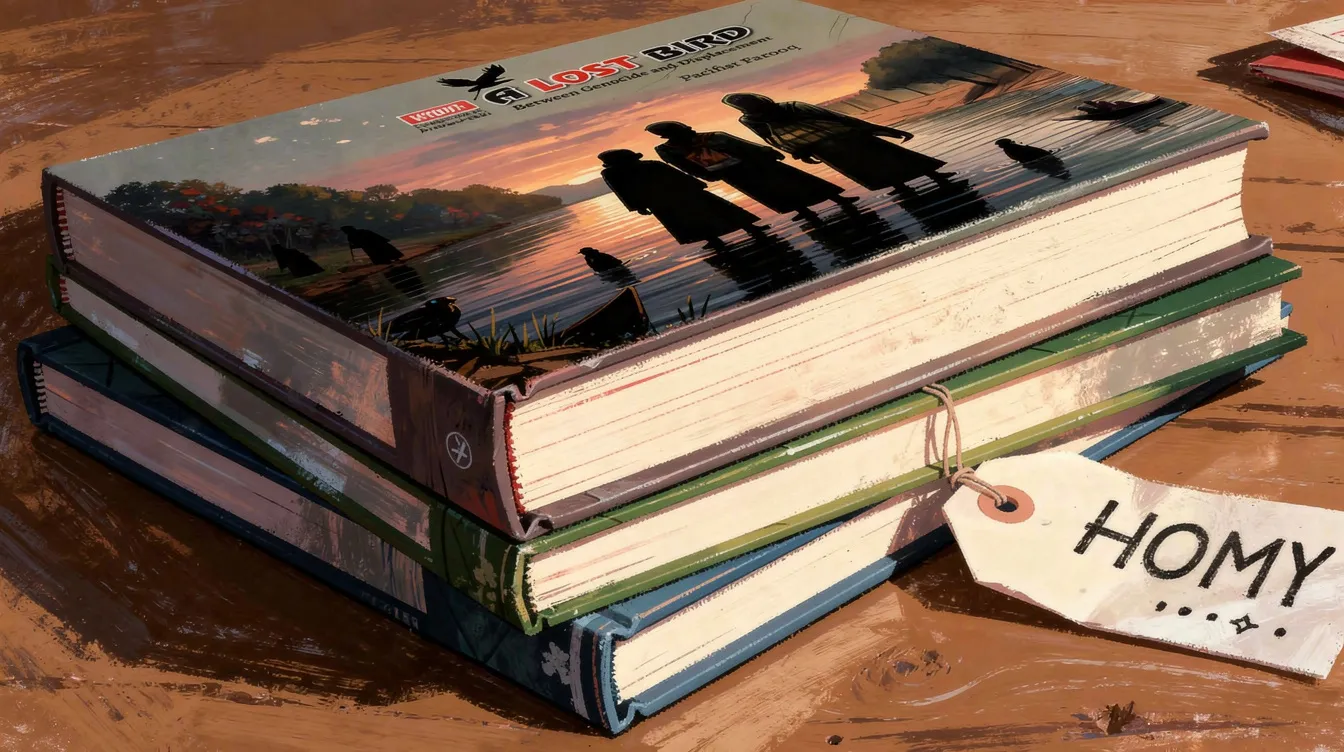
In the poignant collection A Lost Bird: Between Genocide and Displacement, Rohingya poet Farooq addresses the profound dehumanization faced by his people through a lens of humanity and poetic restraint. The collection, dedicated to his mother and six sisters, intertwines themes of faith, family, prayer, and love, capturing the essence of the Rohingya experience.
Farooq, who fled the military clearance operations in Myanmar's Rakhine State in 2017, wrote much of this collection while living in refugee camps in Cox's Bazar, Bangladesh. His journey took a darker turn when he faced death threats, forcing him to seek refuge in Malaysia in October 2022. His poetry resonates with the ongoing plight of the Rohingya, especially as Myanmar's military, led by Min Aung Hlaing, continues to face international scrutiny for its actions against this ethnic group, which the U.S. has labeled as genocide.
“Writing our own stories and telling what we have been through in the color of our own words is an act of revolution.”Mayyu Ali, poet and genocide survivor
In his poems, Farooq often juxtaposes ordinary moments with the extraordinary circumstances imposed on him and his community. He writes lines expressing the stark contrast between the simplicity of childhood games and the harsh realities of violence and loss. The poet's work reflects a deep yearning for connection and understanding, as he grapples with feelings of being trapped in a world that denies him freedom. He also expresses the frustration of being unable to travel despite holding the necessary documents.
Farooq’s poetry serves not only as a personal narrative but also as a broader commentary on the Rohingya experience. In “History,” he poignantly addresses the systemic discrimination faced by his community. His work transcends mere lamentation, embodying a commitment to grace amidst adversity. The U.N. has reported ongoing land seizures by the Arakan Army, further complicating the Rohingya's struggle for recognition and rights.
“Justice for the Rohingya is not merely a political issue but a fundamental matter of policy and human rights.”Daw Zin Mar Aung, NUG Foreign Affairs Minister
As the International Court of Justice (ICJ) prepares to deliver a crucial ruling on allegations of genocide against the Rohingya, the urgency of Farooq's message becomes even more pronounced. The National Unity Government (NUG) of Myanmar has emphasized that justice for the Rohingya is not merely a political issue but a fundamental matter of policy and human rights. Daw Zin Mar Aung, the NUG's Foreign Affairs Minister, has stated that the future of Myanmar must ensure justice and equality for all ethnic groups, including the Rohingya.
Farooq's collection highlights the importance of storytelling as a form of expression amid chaos. As he navigates his identity and the complexities of his people's history, Farooq's work invites readers to reflect on the broader implications of displacement and the human spirit's capacity to endure.