Laos
Laos Leaves the UN’s Least Developed List as China Trade Looms
The country graduated from the UN category on 24 November, but turning investment and trade into a more diversified economy remains a challenge.
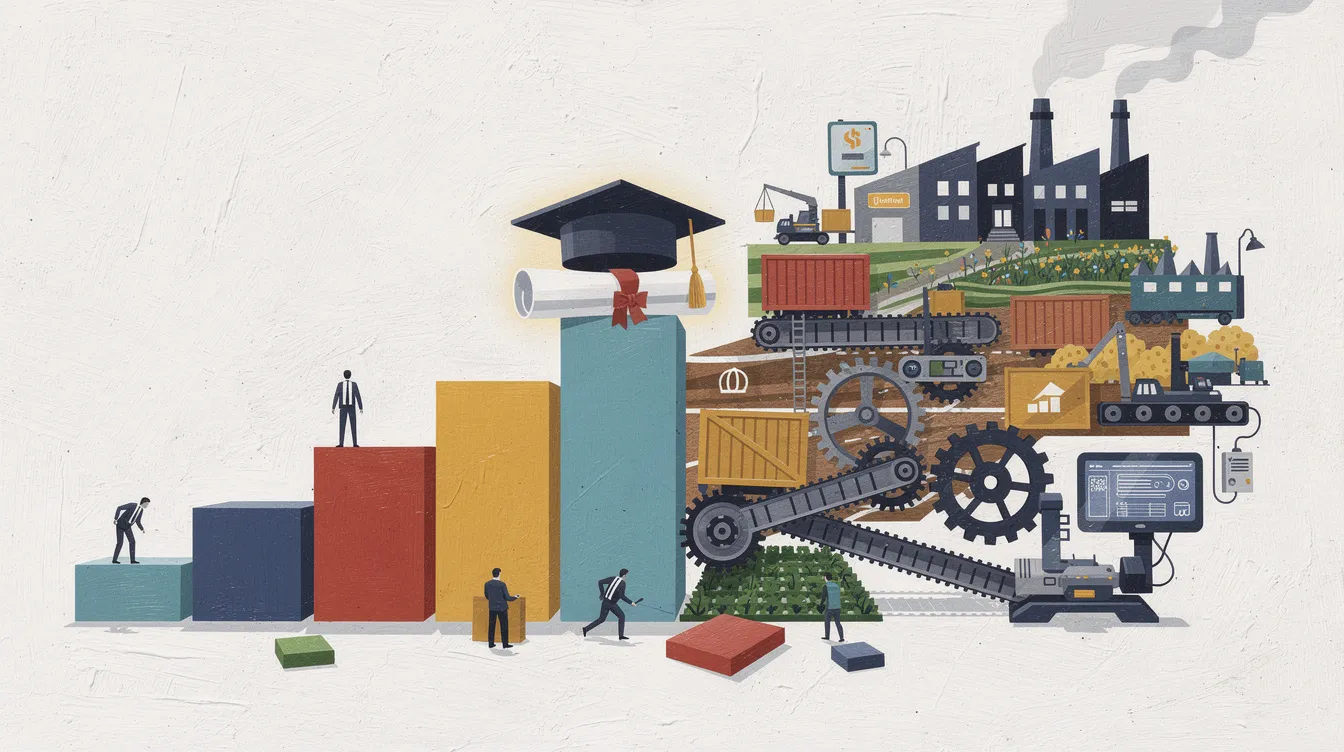
Laos graduated from the United Nations’ least developed countries (LDCs) category on 24 November, following gains in income, health and education, according to UN Trade and Development (UNCTAD). It is the first country in Southeast Asia and the ninth worldwide to graduate, the agency said.
The change in status comes with a harder task: turning investment and trade opportunities into a more diversified economy and productive jobs. Nikkei Asia reported that sustaining growth will depend heavily on trade with China, while Vientiane is seeking to broaden its growth base through tourism and logistics.
For a landlocked country of about 7.5 million people, transport links are central to that effort. The China-Laos Railway connects Vientiane with the Chinese border and onward routes into China. Nikkei Asia reported that Chinese capital is also helping build skyscrapers in Boten, a border town in northern Laos. Such projects sit alongside a wider question for policymakers: how much of the investment and trade generated by new links can support businesses and employment within Laos.
Graduation and the gaps that remain
UNCTAD’s Productive Capacities Index offers one measure of the work ahead. Laos scored 37.8 in 2024, above the LDC median of 29.3 and equal to the Asian LDC median, but below the 47.1 median for developing economies outside the LDC group, the agency said.
The index covers eight areas. Laos exceeded the LDC median in six, particularly in energy, information and communication technology, and structural change. But UNCTAD said private-sector development lagged behind all three comparison groups, while human capital remained below the medians for Asian LDCs and other developing economies.
UNCTAD has supported Laos on productive capacity and trade policy. Its vulnerability profile identifies domestic enterprise development, education and skills as priorities for longer-term growth. The agency also calls for a different approach to natural-resource-based development, backed by industrial policy and structural reforms, to diversify the economy and create more productive jobs.
Growth alongside financial constraints
The economy grew by 4.8% in 2025, while average inflation eased to 7.7%, according to figures cited by UNCTAD. The World Bank’s October 2026 outlook, also cited by the agency, projected growth of 4.1% and inflation of 8.3% for 2026.
UNCTAD said higher fuel, transport and logistics costs were adding to business expenses and reducing household purchasing power. It attributed some of the cost pressure to the conflict in the Middle East. Public debt also limits the government’s room to fund development: public and publicly guaranteed debt was estimated at about 87% of GDP in 2025, the agency said. Interest payments absorbed 16% of public spending that year, compared with 10% for health and education combined.
China’s role in Laos’ economy is part of this wider debate. Nikkei Asia described trade with China as a key factor in sustaining growth. A separate Lowy Institute analysis argues that Chinese lending contributed to Laos’ debt crisis and says the country needs substantial debt relief. That is the institute’s assessment; the available reporting does not establish a single agreed account of the crisis or its resolution.
UNCTAD’s graduation announcement sets out the next priorities as diversification, productive jobs and improved livelihoods. The agency says stronger domestic enterprises and investment in education and skills will be needed to address gaps in productive capacity.