Indonesia
Mount Bromo Fires Continue to Rage Amid Human Activity Suspicions
The ongoing wildfires at Mount Bromo have expanded significantly, prompting authorities to close tourist access and deploy extensive firefighting measures.
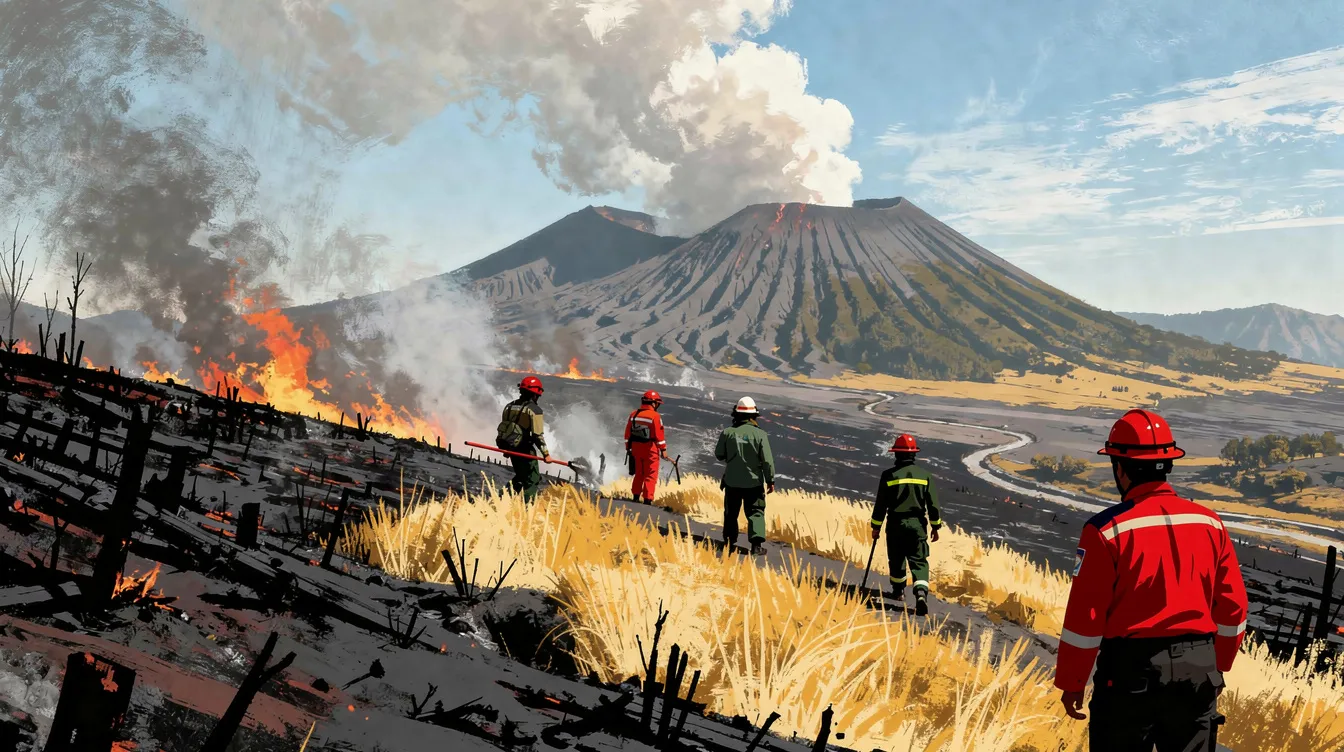
Fires in the Mount Bromo area have intensified over the past week, burning approximately 520 hectares and threatening the iconic savanna, a popular tourist destination. According to Rudijanta Tjahja Nugraha, head of the Bromo Tengger Semeru National Park (TNBTS), the fires are likely linked to human activity rather than natural causes. He noted that the initial outbreak occurred in the Blok Bantengan area, where visitors may have inadvertently started fires to keep warm during cold weather.
Despite extensive firefighting efforts, including the deployment of three helicopters for water bombing and ground teams equipped with fire trucks and drones, the flames have continued to spread due to high winds and dry vegetation. Daryono, a member of the Indonesian Disaster Experts Association (IABI), highlighted three key factors complicating fire control: extreme weather conditions, strong winds capable of crossing natural firebreaks, and an abundance of dry grass and shrubs in the region.
“The fires are likely linked to human activity rather than natural causes.”Rudijanta Tjahja Nugraha, head of TNBTS
According to reports from Indonesian media, the situation has escalated, with firefighting teams battling the flames for over a week. As of August 8, the fires have burned through significant areas in both the Probolinggo and Malang regencies, with the Indonesian National Disaster Mitigation Agency (BNPB) noting that the total area affected could still increase as assessments continue. The BNPB reported that the rugged terrain has made ground access challenging, necessitating aerial firefighting efforts as the primary means of combating the blaze.
Indonesian coverage stressed the operational challenges faced by firefighters, particularly the steep and difficult terrain of the Bromo caldera, which has hindered ground operations. Abdul Muhari, head of the BNPB's data and information center, emphasized that air operations are crucial for reaching areas that are otherwise inaccessible. He stated, “This condition makes aerial operations one of the key efforts to reach areas that cannot be optimally accessed by ground routes.”
In response to the escalating situation, the Indonesian government has warned of strict penalties for those found responsible for causing the fires. The Minister of Forestry, Raja Juli Antoni, emphasized the need for accountability, stating that investigations into the causes of the fires are ongoing. However, it remains uncertain when tourist access to Mount Bromo will be restored, as the situation continues to evolve.
While Indonesian outlets have framed the fires as a significant environmental crisis requiring immediate action, they also highlighted the community's role in the outbreak, suggesting that human negligence may have contributed to the disaster. In contrast, the initial coverage from the regional perspective focused more on the firefighting efforts and the immediate response to the incident.
“High winds and dry vegetation are complicating fire control efforts.”Daryono, member of IABI
Experts have called for a long-term approach to fire management in the region, advocating for a comprehensive strategy that goes beyond reactive measures, as emphasized by the IABI. Meanwhile, Raja Juli Antoni reiterated the importance of community support in fire management, appealing for public cooperation and prayers to ensure favorable weather conditions for firefighting efforts.